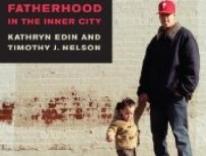
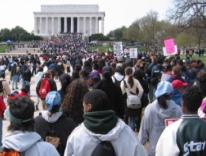
The men who tell their stories in 'Doing the Best I Can: Fatherhood in the Inner City' know that they don’t look much like Ward Cleaver or Cliff Huxtable.
'Religion Without God' is a lovely swan song. It is short—it’s based on the Einstein Lectures delivered at the University of Bern in 2011—but eloquent and rich.
Williams astutely alerts us to Evdokimov’s proposition that the vows of a religious are analogous to Christ’s response to the temptations in the desert.
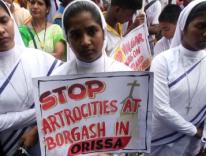
Not many Christians in the West are aware that in many parts of the world Christians still risk their lives just by going to church to celebrate the birth of Christ.
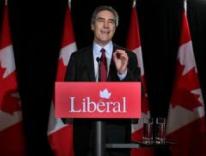
Ignatieff’s constructive approach to politics, like his commitments to democracy and social justice, remains untainted by the bitter experiences he describes.
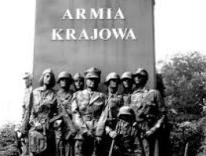
'Story of a Secret State' promises an insider’s perspective on Poland’s Home Army, the largest resistance organization in Nazi-occupied Europe --- and delivers it.
As with many of Auden’s longer poems, 'For the Time Being' is a slippery beast. Whenever you think you’ve got a hold of it, it goes off in another direction.
Christianity can be described primarily as intellectual and dogmatic only if one sets aside lots of evidence. That’s precisely what Geza Vermes does in this book.
Alice McDermott's latest novel is a compelling accounting of a life that begins in Depression-era Brooklyn and winds its way to the late-twentieth-century suburbs.
It is a mark of Antonin Scalia's pioneering influence that originalism and fidelity to text have become a staple of the Supreme Court’s interpretive methodology.
Nowhere is the sickness of privatization more apparent than in public education, where "reformers" promote it in the guise of the pursuit of excellence.
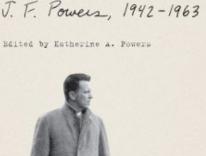
The trademark Powers irony is at work even in his daughter’s narrative arc, for sweet as the award must have been, it was hardly a launch to smooth sailing.
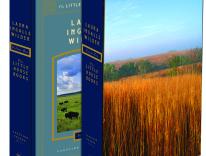
A new edition of the Little House books from the Library of America stakes a claim for Wilder’s work as an enduring part of the country’s literary heritage.
As Andrew Bacevich sees it, Americans have mutated into passive spectators, not active citizens, across a wide spectrum of once-sacred civic responsibilities.
"For Discrimination" offers the bravest and most honest defense of affirmative action in a long time (maybe ever), and for that we are in Randall Kennedy’s debt.
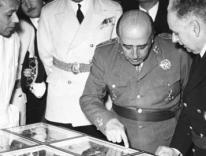
Four decades after Franco’s death, relics of the past are finding their way into Spain's museums, where they can be both preserved and politically neutralized.
In 'Waiting for the Barbarians,' Mendelsohn has collected essays originally published in the New York Review of Books, the New York Times, and elsewhere.
A conversation on our most egregious death-avoidance tactic: the disappearance of the dead themselves from the rituals at which their presence is indispensable.
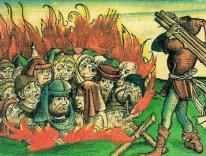
In this brilliantly argued intellectual history, David Nirenberg asks how influential figures in the Western tradition have thought about Judaism over the millennia.
The end of the Communist era and access to long-closed archives opens a window into the largely untold suffering of Poland from 1939 to the fall of the Iron Curtain.
The first thing to note about Andrew Koppelman’s new book is is that word “American”—sitting awkwardly beside the abstract concept of “religious neutrality."
The issues that gnaw at George Scialabba relate primarily to political economy. For an avowed man of the left, “the last three decades have been bitter medicine.”
'The Myth of Persecution' puts Candida Moss in the ranks of historian-physicians who seek to heal the ills of Christianity via the therapy of revisionist history.
The tug-and-pull of polarities forms an enduring reality of public discourse. David Cannadine’s stimulating book attests to the workings of this remorseless process.
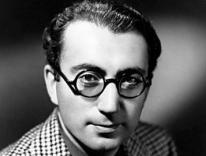
Rouben Mamoulian, original director of the movie version of 'Porgy and Bess,' is forgotten. In '“On My Way,”' Joseph Horowitz endeavors to restore his reputation.
Briskly analyzing the nexus of Christian epistemology, inquiry, and education, Kenneth Garcia proposes a more constructive understanding of academic freedom.
'America’s Unwritten Constitution' is a novel and often persuasive analysis of how our written Constitution blends with an unwritten one to form a coherent whole.
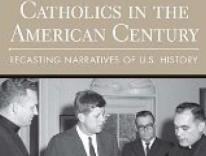
'Catholics in the American Century' gathers essays exploring how Catholic experience and perspectives enrich our understanding of the broader American experience.