The most debilitating conceptual limitation in Whitmarsh’s story is an unawareness of what “theism” is—or, how “classical theism" differs from polytheistic myth.
In Robin Lane Fox's biography of St. Augustine, Augustine doesn’t convert to Christianity; he converts to whatever you get when you put aside worldly ambition.
Early stories of Jews, Christians, and Muslims; the politics of celibacy and marriage; reflections from Cardinal Kasper; afterlife and wealth in early Christianity.
In his examination of imaginative pictures of the afterlife and the ways in which Christians disposed of their wealth, Brown traces two distinct lines of development
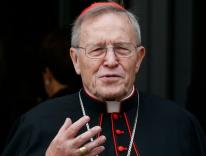
From the Cardinal called a "clever theologian" by Pope Francis, this volume of Walter Kasper's writings characterize the nature of religious belief in late modernity
Patrick Jordan brings an ease to his subject that comes from true friendship; he weaves together his living sense of Day’s personality with major themes in her work.
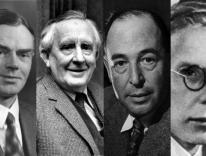
Philip & Carol Zaleski bring to life the Oxford literary club who smoked, drank, argued and midwifed books that became classics of fantasy, apologetics, and poetry.
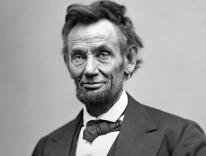
Lincoln is a riddle because we are a riddle to ourselves. We are his heirs, for good and for ill. We cannot escape his legacy, and we don’t know what to make of it.
When Pope Francis issued a formal “bull” instituting the current Year of Mercy, he included in its appendix a lengthy informal interview with an Italian journalist.
Robert J. Shiller and George A. Akerlof examine influences on the marketplace beyond supply and demand, and wonder: Why didn't economists see the 2008 crash coming?
Gary Gutting's new essay collection covers a wide swath of topics, including God, free will, art, education, consciousness, happiness, and the limits of science.
Like Twain’s mother, scrawling her thoughts on little scraps of paper, Scott Simon distilled his long hours in the ICU into clipped reflections, rich with meaning.
Cathleen Kaveny raises concerns about divisive behavior in religious discourse and critiques efforts by scholars to explain the resulting polarization.
Marsden’s “biography of a book” traces the development of 'Mere Christianity' from a series of BBC radio talks into a religious "antidote for the attention to self."
A full-length biography was on the minds of neither the author nor the subject met. But Roberts asked Chittister about her personal life. They began at the beginning
Writer David Means talks about ignorance and grace, the nature of time, the lasting effects of Vietnam, and how he came to write his new novel, 'Hystopia.'
In two new books, Hazareesingh and Bell incorporate American views into the 20th century struggles between republicans and Catholics in France over "basic freedoms"
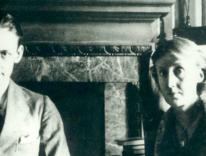
Sarah Bakewell’s latest work subjects (mostly French) existentialist philosophers to scrutiny both as thinkers and as human beings marked by their moment in history.
Lurking beneath the main concerns of 'Zero K' is a story of filial conflict, though moving portrayals of interpersonal relationships are not exactly DeLillo’s thing.
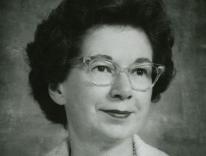
Beverly Cleary captures a child’s perspective in a way that is totally convincing and never condescending, and feels authentic even several decades on.
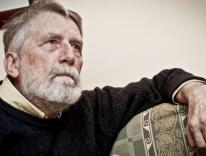
Simon Leys’s Catholic sensibility is never insistent, and never descends into preachiness. As he said of Confucius, sometimes it can be better to stay silent.
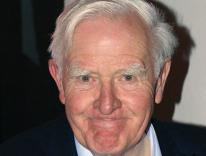
Adam Sisman's new biography of le Carré—cartoonist, actor, mimic, linguist, expert skier,and spy—is intelligent, thoroughly researched, and tediously repetitive.
There is no release or relief in poet Dan Burt's story, just a stark and pervading sense of emotional sclerosis from the streets of Philly to the halls of Cambridge.
Barry’s new novel—featuring John Lennon as protagonist—meditates on place, grief, and longing, ranging across a century’s worth of literary and popular references.
Rather than a triumph, Dionne says "the history of contemporary American conservatism is a story of disappointment and betrayal.” But is his diagnosis correct?
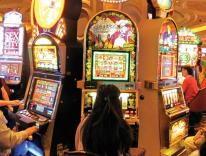
Slots, video poker, and other gambling machines are often described as games, but they're a sinful rejection of the goodness of the world and a failure to rejoice.
Among the merits of Roy Foster’s new book are the ways in which it moves past myths and conventional accounts to bring alive the intellectual ferment of the Rising.
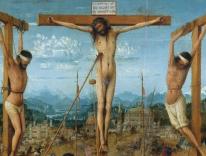
Fleming Rutledge probes “the strange new world of the Bible” to its mysterious and scandalous depth in the crucifixion of God's son, and diagnoses our deepest need.
The stories in Colum McCann's collection each have thirteen sections that build slowly, surely toward denouement. By the end, a shift in perspective has taken place.
Many take Frost’s 'The Road Not Taken' as an American affirmation to choose one's own path. But in David Orr's reading the twenty-line poem is instead about limits.
"War and Peace" is called the greatest novel ever written, but it’s like sticking a “Kick me” sign on the book. Readers can’t help wanting to take issue with it.
Why are there more versions of 'Anna Karenina' (1878) in 2016? According to some translators "the best" will never be available and so translation must continue.
Paul Lisicky's book is a memoir of love and friendship, and how sometimes their boundaries blur. But it's also a book about literary ambition and its discontents.
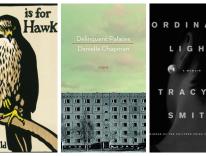
How to describe the almost-madness of loss? Macdonald uses hawk-taming, Smith "ordinary" poetry about death, and Chapman "Christian love of existence."
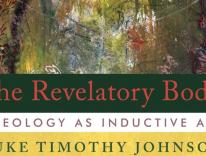
Luke Timothy Johnson provides an important alternative to the “theologies of the body” on offer among those thinkers elaborating themes fashioned by John Paul II.
It is the purpose Michael N. McGregor’s biography of Robert Lax to move him out from under the shadow of Merton’s personality and give him his own place in the sun.
Terry Eagleton gives a witty and insightful tour of hope’s complicated linguistic terrain that carefully avoids proposing some once-and-for-all grand Theory of Hope.