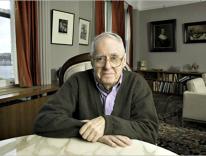
In his final book, the late Peter Gay expands familiar notion of the Romantic rebellion against Enlightenment rationality, to the focus on artistic self-expression.
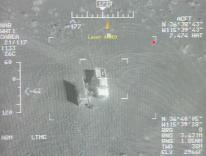
Andrew Cockburn's 'Kill Chain' examines the disastrous political effects of the U.S. military's targeted assassination practices--and the true motives behind them.
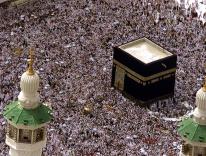
Unlike past Eurocentric taxonomies of world religions, the latest Norton anthology aims to let six major, living, international religions speak...in their own words.
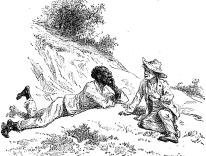
Iranian author Azar Nafiri defends the value of canonical American literature—its imagination and humanity—against Common Core, market analyses, and Babbitt.
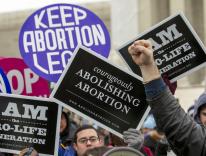
Charles Camosy believes we are “on the verge of a new moment in the abortion debate," politically capable of compromise. But has he misunderstood Catholic teaching?
Pinckney's short history deals with basic things—Reconstruction, Ku Klux Klan terrorism, crude political machinations like Plessy v Ferguson—white people can forget.
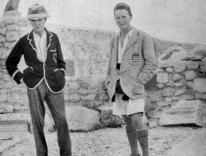
The pro-British kings archeologist-turned-spy-turned-colonel T.E. Lawrence helped establish in Arabia, Iraq, and Transjordan made "Arab unity" a "madman's notion."
Is humanity better or worse off believing in the sacred? Kitcher has not provided new reasons for declaring the death of God, but he certainly makes it seem foolish.
It might be tempting to call D’Ambrosio’s essays confessions. But he rejects that label. The self of his essays is “more like a perspective, an angle of vision..."
William Deresiewicz not only critiques the idea that college education is about learning marketable skills; he also revives the quest for meaning, self, and soul.
This integrative, enjoyable "book for beginners" still may hold surprises for scholars: nuns absolving sins, petitioners humiliating saints, a woman pope, and more.
Mailer, Trilling, Macdonald, Kazin, Maxwell, Bellow, Auden, O'Hara—men with public moral concerns, who seized power to shape American literature. But who were they?
Baxter reads fiction to “see bad stuff happening.” He writes characters who get into serious trouble, and face their own "human wreckage" at someone else's request.
Kevin Kruse convincingly claims that the association of patriotism with Christianity comes from a libertarian reaction in American business to the New Deal.
“New atheists” like Richard Dawkins have made a splash with aggressive attacks on religion. But Michael Ruse, philosopher and reflective atheist, is not impressed.
Posner’s attempt to intertwine Vatican finance with a history of the papacy—"rampant corruption, pervasive nepotism, unbridled debauchery"—isn't neutral, or correct.
How can we choose to have agency over our lives when we are bombarded by choices? Crawford proposes a way to reclaim your attention span and thereby reclaim yourself
Appy’s view is that American exceptionalism is an obnoxious and dangerous delusion, and his broadside against it recounts a litany of Vietnam atrocities.
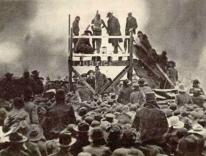
This story is fascinating in its own right, but what makes the shootings of these four Jews a worthy subject of Timothy Ryback's arresting new book is their timing.
The humorous tone of Lev Golinkin’s new memoir doesn’t prevent him from engaging with topics of deadly importance: tryanny, communism, anti-Semitism, and childhood.
Readers expecting a tour de force of church history shouldn't. The question for Wills is this: Why do we need the church or Pope Francis to remind us of God’s love?
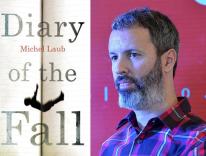
Through the eyes of a middle-aged alcoholic grandson of an Auschwitz survivor, Michel Raub's fifth novel contemplates the infinite ways humans torment each other.
Wendell Berry and Gary Snyder's correspondence narrates the tension between a place-based way of life and the travel schedule of a prominent writer, beautifully.
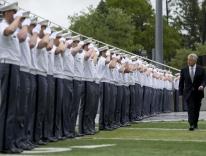
Samet’s memoir has a bone to pick with American society and the Army itself—both, she believes, failed her former West Point cadets, soldiers who never returned.
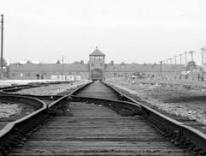
In Matthiessen's final book, a professor spends a week at Auschwitz with aggrieved Jews, guilt-ridden Christians, observant Buddhists, and analytical secularists.
If you can’t choose to have a child the way you choose dessert, how can you choose rationally? L.A. Paul reveals the problem of foresight and modern decision-making.
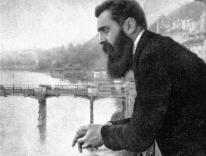
Tracing the political thought of Israel's founding father, Shlomo Avineri reminds readers that the Zionism of Herzl's time is very different from Zionism today.
In exposing Pope Francis's accomplishments, Austen Ivereigh presents “the concrete Catholic thing” as something that has the power to create true solidarity.
Tushnet's memoir illuminates a theology of friendship, the outward-looking call to love and serve, devotions to troubled saints, and a healthy anti-clericalism.
How can it be true both that a person can be virtuous regardless of faith, and that faith is crucial for how we live? David Decosimo presents "prophetic Thomism."
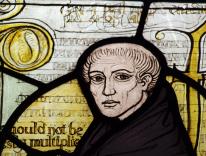
In Pfau's account, when 13th century Franciscan theologian William of Ockham separated reason from will, it was the beginning of the modern evacuation of the self.
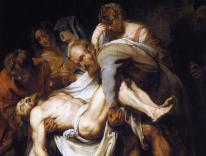
The Catholic painter Peter Paul Rubens presents a particular challenge to classification—decorative, theatrical, busy, pagan, and only superficially Christian.
Written before he and seven fellow monks were kidnapped and beheaded in 1996, this personal journal reflects story of Algeria in crisis and courageous spirituality.
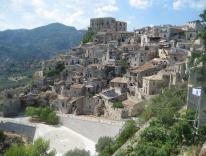
How can a civilization that produced Michelangelo and Fellini also have spawned the Mafia and Mussolini? And how can 'The Godfather' be an expression of ethnicity?
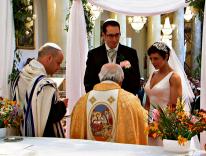
Since 1960, the number of interfaith marriages in the U.S. has more than doubled. Do couples considering marriage underestimate the significance of religion?
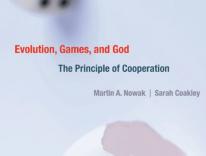
Evolution shows that humans aren’t only competitive. We can be cooperative and altruistic too—and we have a theologian and a mathematical biologist here to prove it.
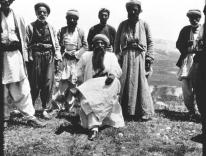
Ancient religions that have survived centuries are often the most persecuted: Mandaeans, Yazidis, Zoroastrians, Druze, Samaritans, Copts, and the Kalasha.
Philip Mirowski explains how neoliberals have survived and even flourished in the midst of the catastrophe they wrought, and how we, unknowingly, support them.
No one predicted that the most striking literary phenomenon of the early twenty-first century would be this six-volume novel by a Norwegian writer, about himself.
In James Carroll’s latest, Jesus actually—now as for the apostles—emerges from within the long, recurring history of Jewish persecution and bereavement.