If the Church itself does not recognize the full humanity of half its own members, how can it expect Silicon Valley and heads of state to respect its sermon on human dignity?
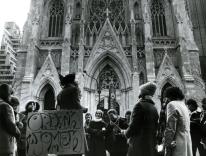
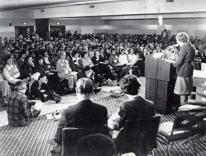
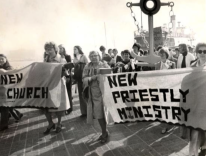
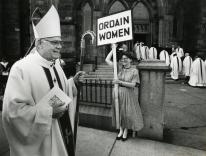
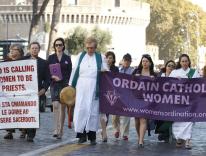
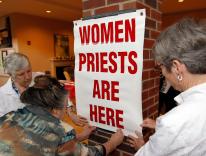
This May, the Women’s Ordination Conference will mark its fiftieth anniversary with another meeting in Detroit, where hundreds of Catholic women will gather to continue their fight for ordination.
"When a ninety-year-old Catholic mother dies, a man who’s been at the parish for fewer than six years puts on a robe, says a few words, and then we go home. And every time I think, you have no idea who you had here."
The false argument against restoring women to the ordained diaconate—that women cannot image Christ—is the cause of the disrespect for women on every continent.
If the Church wants women to be its allies, it will need to recognize them as protagonists—full subjects with the agency to respond to the call of the Gospel.
From the archives: The catechesis of the 1970s became the model of what not to do in passing on the faith. For years I was sympathetic to that analysis. But now?
Opening instituted ministries to women begins a new reckoning with an ecclesiology that has for a long time divided the Church too simply into clergy and laity.
“Authentic collaboration in the Church is possible only when women are seen as whole and necessary, not as challenges or threats to the ‘purity’ of clergy.”
While St. Ephrem of Syria did not explicitly call for ordination of women to the diaconate, he envisioned radical equality between the sexes in ministry.
Besides the federal government, Catholic Charities is the country’s largest social-safety-net provider. It’s now facilitating access to food and mental health care.