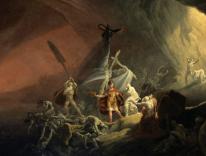
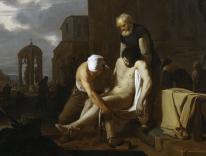
Seamus Heaney’s translation of the 'Aeneid' isn't just a fresh version of Virgil’s tale, but also a firsthand account of one who has passed to “nowhere.”
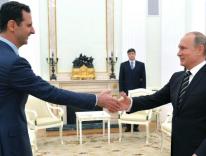
Three journalists with long experience in Russia try to untangle Vladimir Putin's high approval ratings from Russian citizens despite his brazen self-interest.
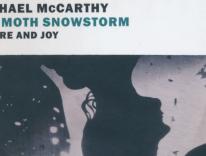
Michael McCarthy's lifetime of engagement with the natural world—fueled by joy and wonder—is recounted in this book of memoir, reportage, and natural history.
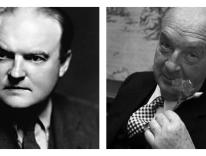
Alex Beam has been bold enough to write a book about the struggle between two mighty literary opposites of the last century: Edmund Wilson and Vladimir Nabokov.
Shylock Is My Name is both a retelling of Shakespeare’s The Merchant of Venice and a sequel to it. The book’s prose is well wrought and its plot enjoyably twisty.
Hans Boersma’s "Sacramental Preaching" places us in the drama of scripture, while Daniel James Brown’s "The Boys in the Boat" is a Depression-era melodrama.
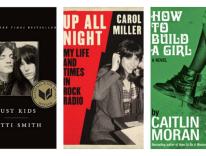
Three excellent reads on the road less traveled, young women who stepped off the path and made their way, machete in hand, to a career based on their own passions.
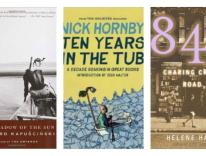
Books by Nick Hornby, Ryszard Kapuscinski, and Helene Hanff explore the art of reading, the boundary between fact and fiction, and travel by literature.
In "The Terror Years," Lawrence Wright offers a view of the War on Terror through the lens of the individuals and societies that have taken part in it.
Does pop music matter really? Is it “only rock and roll” or “all we have”? 'Love for Sale' misses out on a key opportunity to explore the deep questions.
'American Prophets' is a true exercise in hagiography in every sense of the word, detailing the lives of modern saints while extolling their extraordinary vision.
Diarmid MacCulloch wants us to understand the religious beliefs of centuries ago in their own terms, however strange they may seem to modern secular sensibilities.
In 'Success and Luck,' Robert H. Frank explains the human mind is just not designed to think rationally about luck and about how the successful got that way.
In 'The Practice of Catholic Theology,' Paul J. Griffiths writes about what it takes to be a Catholic theologian. More notable is what it doesn't take.
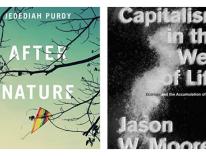
In their respective books, Jason Moore and Jedediah Purdy both reckon with ecological disaster under capitalism. But John Ruskin knew something they don't.
The story of a group of intellectually disabled men contracted for low-wage work in a turkey-processing plant gets the full telling it deserves in Dan Barry’s book.
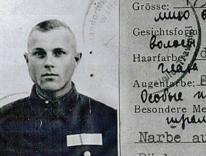
Lawrence Douglas’s immensely readable book absorbs the reader in the twists and turns of the legal saga of Ivan Demjanjuk, charged with Holocaust crimes.
In his new book 'Inequality,' Anthony B. Atkinson argues that we can’t reduce inequality by fiscal policy alone. We must also change how incomes are generated.