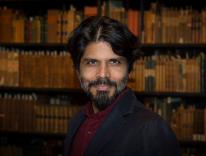
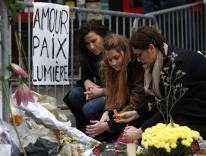
For Pankaj Mishra, a “nativist radical right” and “radical Islamism” have emerged against a common backdrop of economic decline and social fragmentation
Like nearly every historian of American Catholicism in recent decades, Kevin Starr wanted to demonstrate the centrality of Catholics to the American history
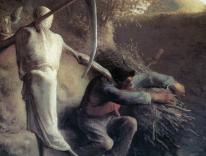
A pair of novels, a collection of essays, an analysis of economics and Christian desire, mystical short stories, and a compendium of works on the undead
Future Humans takes a sober look at the scientific evidence supporting the claim that humans are continuously evolving and might evolve into a different species.
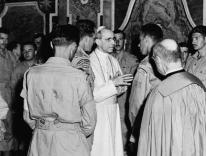
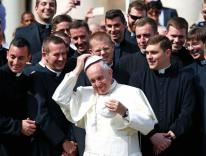
What standards should we use to judge figures of the past? No one evokes this question more acutely than Pope Pius XII. Two books assess his actions in World War II.
The opaque means by which the wealthy preserve their luxury at our expense is the subject of Brooke Harrington’s new book. What do wealth managers do exactly?
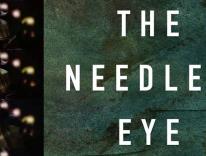
This is the novel you get when you cross the demonical complexities of Poe with the malignant banalities of Kafka, but De Maria has added a menacing ingredient.
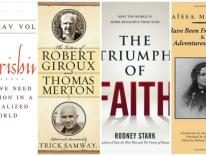
Luke Timothy Johnson reviews important theological books from 2016, including works by Robert Giroux, Thomas Merton, Raïssa Maritain, Miroslav Volf & Rodney Stark.
On John R. Bowlin’s account, the tolerant know when the act of toleration is the virtuous response to difference and when it is a mere semblance of the virtue.
In his new book, Kenneth Woodward opines on his journalistic career covering the ideas and personalities that drove not only religion, but the culture at large.
At a time when many Catholic parishes in North America are faltering, William Simon has set out to analyze ones that are thriving. How does a parish thrive?
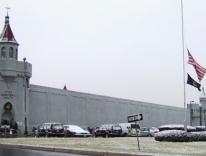
Heather Ann Thompson’s powerful book on the Attica prison uprising of 1971 forces us to think about how methods of incarceration are contrary to our core values.
Giorgio De Maria’s reissued novel is classic Italian horror: claustrophobic, nightmarish, tinged with perversions of Catholicism. It also presages our digital world.
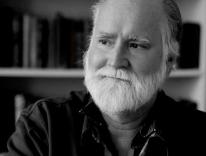
The critic and novelist John Berger argues that “the future has been downsized”—restricted to the mercenary parameters of finance capital and digital technocracy.