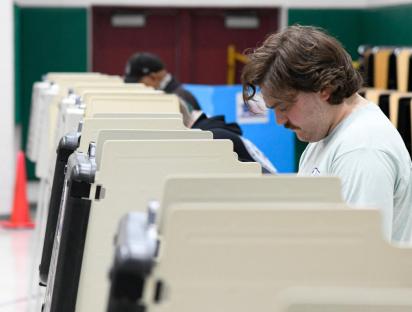
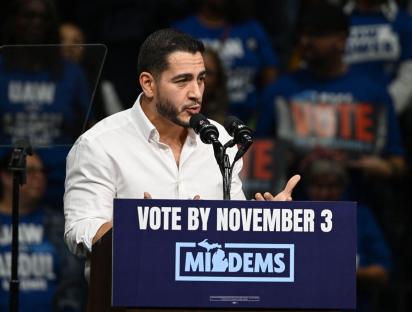
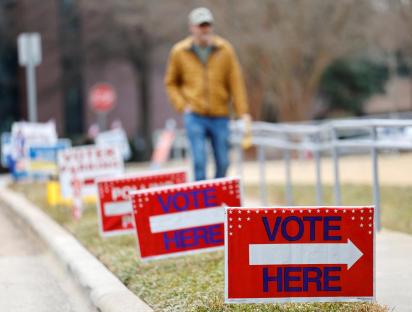
On the eve of the midterms, Democrats seem poised to enjoy a “blue wave.” But there’s still reason for the party to be anxious about its anticipated comeback.
"Constant lying ads, fear and disgust, a sense that yet more precious taboos will fall. Is there anything new to say about election season in my purple Midwestern state?"
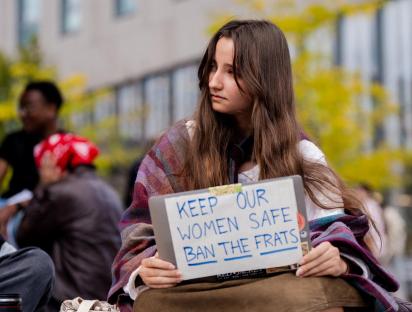
If Cornell really does want to lead the country in ending the culture of rape that Greek life facilitates, banning fraternities and sororities is the only viable path.
Through interviews with IDF soldiers and Israeli intelligence personnel, 'NAZA' explores how individuals rationalize their participation in mass slaughter.
Jacob Weisberg's new book profiles eight archetypes of Trump-era cowardice. But to escape our civic-cultural crisis, we'll need to do more than denounce hypocrisy.
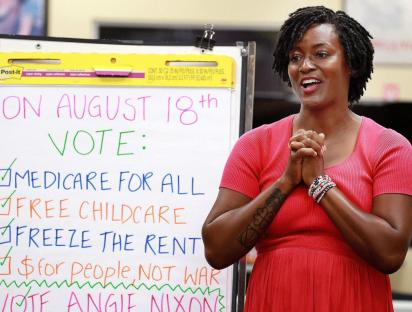
The most surprising insurgent this election cycle is in Donald Trump’s adopted home state. Can Angie Nixon show Democrats a new way to compete in Florida?
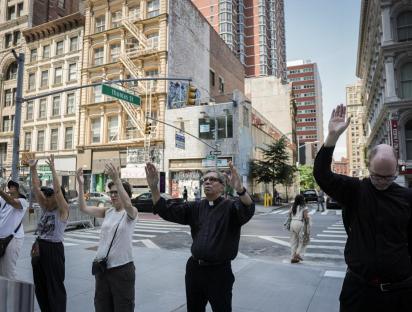
As all eyes turn to Lower Manhattan to mark the anniversary of 9/11, many will pass over the nearly two thousand local memorials made from salvaged World Trade Center steel.
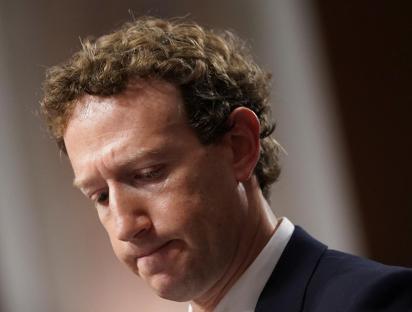
The $17 billion settlement against Meta provides important proof that tech’s self-congratulation can be challenged—and that one needn’t be a Luddite to challenge it.
A conversation with journalist and political science professor Peter Beinart about the deep ideological shifts within the American Jewish community since the war in Gaza began.
Ben Rhodes's new book makes an earnest case for the political power of words. But the degradation of our public life can’t be reversed by rhetoric alone.
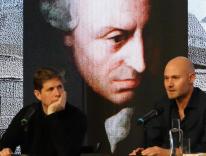
Three writers—a Jewish theologian, a legal scholar and intellectual historian, and a Catholic philosopher of religion—reflect on Omri Boehm’s call for a "radical universalism."
Three writers—a Jewish theologian, a legal scholar and intellectual historian, and a Catholic philosopher of religion—reflect on Omri Boehm’s call for a "radical universalism."