It is not every day that one comes across a gleeful celebration of the prospect of one’s own death. Louise Perry, often described as a “reactionary feminist,” is a columnist for the Wall Street Journal’s Free Expression feature. In a recent column, she looked forward to the ultimate demise of the Baby Boomers (“Boomer Christianity Is Dying Fast”). “Their confident world view was a gift from a different era,” she writes. “And it will, I fear, die with them.” But if the tenor of her column is any indication, it is not so much fear that she feels as Schadenfreude.
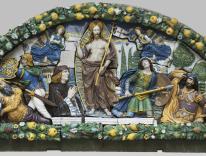
Like many conservative observers of religion, Perry detects a movement among young men toward a more virile Christianity. “American Christianity is masculinizing,” she writes. Looking back nostalgically at the spiritual fervor engendered by the Crusades, she detects a similar thirst for moral clarity and purpose among the young. There was nothing wishy-washy about the bros who stormed the Jerusalem barricades! She contrasts Pope Urban II’s 1095 leadership in the First Crusade with the “xenophilia” of current Christian leaders. “Nationalism and militarism” are hardly “contrary to the gospel.” One wonders if Perry’s enthusiasm for Urban II extends to the pope’s use of indulgences to recruit crusaders or to the crusaders’ massacre of Jerusalem’s Muslim population. President Trump’s crusade against illegal immigrants, she goes on, has a venerable Christian warrant. Contrary to Pope Leo’s convictions about welcoming the stranger, “people no longer find it obvious that a surplus is available to be shared with anyone who makes it to Western shores,” Perry writes. She seems sympathetic to Vice President J. D. Vance’s conviction that Catholics have a primary duty to care for family and their own community, not for immigrants.
Perry argues that Boomers, who grew up in the aftermath of World War II, embraced the values of Karl Popper’s “open society,” hoping that openness and toleration would prevent the re-emergence of 1930s-style authoritarianism. “Any whiff of fascist tendencies in citizens’ thinking would be immediately suppressed,” she claims. The “tendencies” of Joe McCarthy, J. Edgar Hoover, Richard Nixon, and Donald J. Trump seem to have been erased from the historical record as far as Perry is concerned. She reports on a recent sermon preached by a Catholic priest to a group of French paratroopers that “poured scorn on leftists and warned against those who would ‘take the place of our values.’” That, she claims, is the sort of ol’ time religion young people are looking for. “When the Boomers pass away, and a new generation assumes leadership positions, political change in the church could be rapid,” she writes. Younger priests, she notes approvingly, are very conservative, while “Boomer Christians are alarmed and bewildered by a return to the faith of centuries past.”
As a Boomer and a liberal, I beg to differ. The faith of centuries past neither alarms nor bewilders me. In fact, my wife tells me I am entirely too comfortable with “centuries past.” Apart from being extremely condescending toward older Christians, Perry’s analysis of the religious landscape is misleading. Reports of a dramatic religious revival, especially among young men, are greatly exaggerated. There has indeed been an uptick in conversions, but more people are still leaving the Catholic Church than joining it. Insofar as there has been a notable change in the religious landscape, it is that political polarization is now a motivating factor in religious affiliation. Whether ideological passions can sustain genuine religious commitment is doubtful.
More important, Perry doesn’t seem to understand how closely related the socially liberal views of Boomers are with the rightwing economic and political instincts she finds among the young. In his essay “The Tale of Two Reactions,” the intellectual historian Mark Lilla argued that the cultural revolution of the 1960s, deplored by the right, and the economic revolution of Reaganomics in the 1980s, deplored by the left, were both expressions of American individualism. The essentially libertarian ethos of both go hand in hand. The result is that our “notions of equality and individualism [have] been transformed to support a morally lax yet economically successful capitalist society,” Lilla wrote. “A political agenda making its peace with one revolution while rejecting the other will be doomed to failure.”
Perry’s expectation that the “political priorities” of Boomers will soon be replaced by a return to the “values” and “faith of centuries past” is as much of a pipe dream as the idealistic aspirations of some—but believe me, not most—of my Boomer generation. We are all captives of economic and social forces that will not easily be arrested, either by Pope Leo’s welcome political interventions or Perry’s imagined conservative revival. Boomer Christianity may be dying, but the prospect of its being replaced by a return of the old Crusader Christianity is dead on arrival. Our hedonistic and winner-take-all economy and culture has us all locked in an iron cage. That’s why people feel they have little or no control over their lives and mistakenly embrace those who claim “Only I can fix it.” Fixing it would take something deeper and more subtle than a crusading mentality or hostility toward refugees.
We welcome your comments about this article. Please send your response to [email protected].