As much attention as Trump’s mass-deportation program has received, it deserves still more. But the president has an uncanny knack for distracting us from one crisis by manufacturing another. ICE’s Operation Metro Surge, which in January left two protestors dead in Minneapolis and traumatized the entire city, already seems like a long time ago. In the months since it receded from the headlines, the president has started a war in the Middle East, banned major news outlets from the White House, experimented with various methods for interfering with the November midterm elections, and turned half of Washington D.C. into a demolition/construction site.
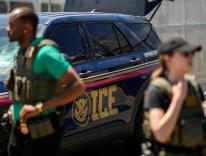
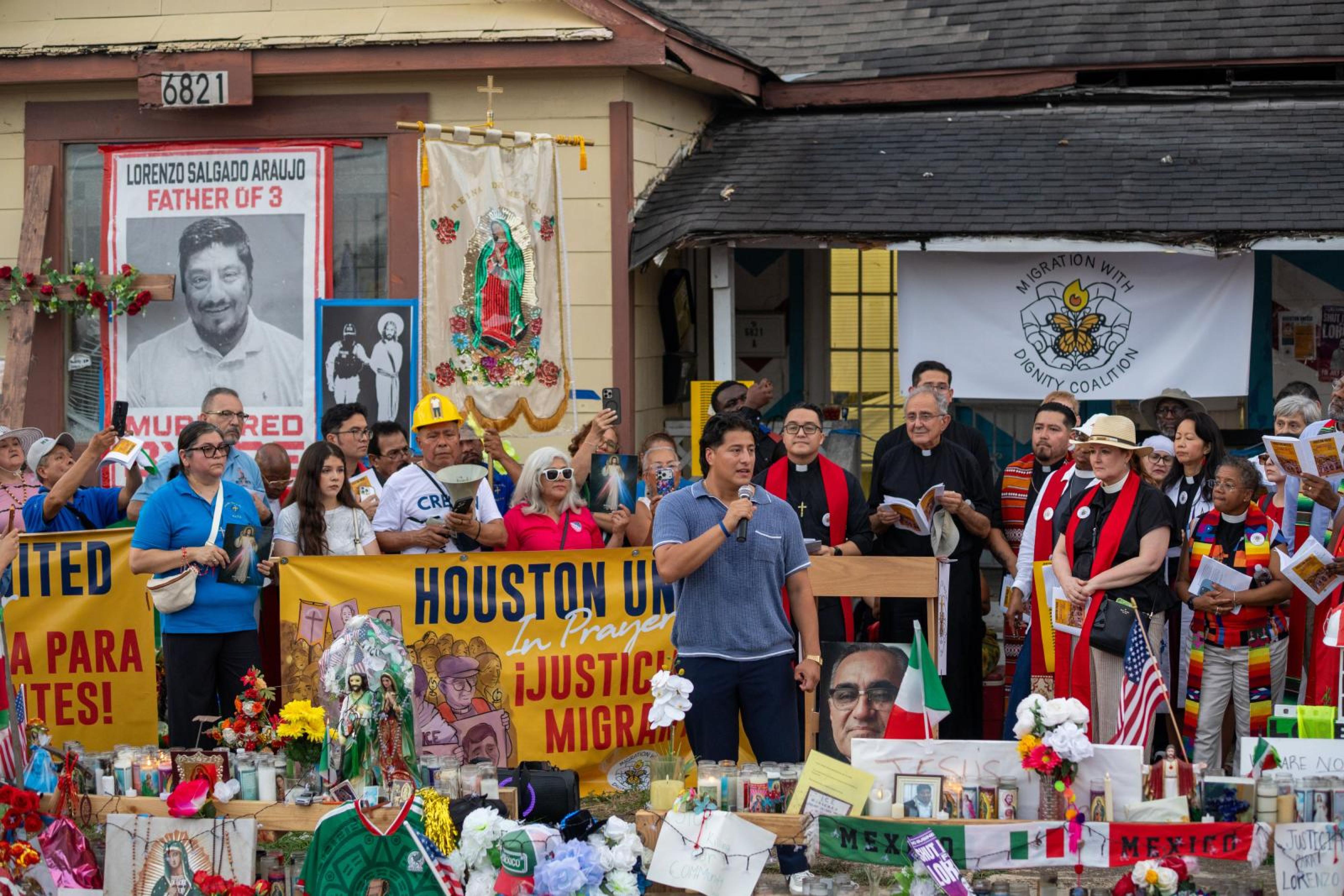
Who can be blamed, then, for failing to notice that the number of ICE arrests has actually increased in recent months? According to the Department of Homeland Security (DHS), the agency arrested 44,000 people in June, 50,208 people in July, and 50,925 people in August—a new record. That’s many more arrests than ICE made in the months when its operations were the crisis du jour in the national media. ICE’s immigration enforcement is now quieter, more targeted, and less spectacular, but every bit as cruel. In July, ICE agents shot and killed one man in Houston and another in Biddeford, Maine. In August, an ICE agent in Austin shot a Venezuelan DoorDash delivery driver while he was parking his vehicle. He is now being held in a detention center with a bullet lodged in his back.
Meanwhile, the number of people subject to immigration enforcement has increased dramatically because of the Trump administration’s decision to terminate temporary protected status (TPS) for the immigrants of thirteen countries, including, most recently, Myanmar and Haiti. As we go to press, about two hundred thousand Salvadorans are still waiting to find out whether their TPS will be extended. As it happens, El Salvador is one of the thirty-five countries to which the United States has deported immigrants from other countries. In return for having agreed to take (and imprison) hundreds of Venezuelan nationals last year, El Salvador’s president, Nayib Bukele, has asked Trump to keep the TPS protections for Salvadorans living in the United States—at least partly because the $9.2 billion they sent home last year was half of El Salvador’s gross domestic product.
Immigrants deported by the Trump administration to unfamiliar countries often suffer abuses even worse than those inflicted by ICE. In early September, The New York Times reported that two men the United States had deported to Equatorial Guinea were “hooded, bound, beaten with guns and shoved down a flight of stairs…by police officers at a remote hotel [in Malabo] where immigrants are being held indefinitely.” One of these men comes from Egypt, the other from Eritrea; neither has any connection to Equatorial Guinea. It is misleading to speak of this as deportation. Some U.S. officials prefer to call it “third-party removal.” A better term is “barbarism.”
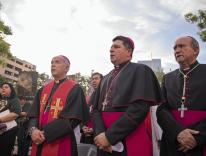
To its credit, the U.S. Conference of Catholic Bishops (USCCB) has risen to the occasion. A year ago it released a “special message” demanding an end to “indiscriminate mass deportation.” In a letter dated September 8, Oklahoma City archbishop Paul Coakley, the USCCB’s current president, wrote even more pointedly, imploring Trump to “avoid further endangering innocent human life by ceasing the deportation of large numbers of people to Haiti.” The bishops of Ohio, where many Haitian refugees live, have described the Trump administration’s treatment of this immigrant community as a “moral and social failure unfolding before our eyes.” And it’s not only bishops. Many prominent lay Catholics have spoken up. Ohio’s Republican governor, Mike DeWine, has condemned the Trump administration’s decision to strip his state’s Haitian population of its TPS. After dozens of Afghans and Iranians were “deported” to the Central African Republic this summer, Virginia senator Tim Kaine, another Catholic, released a statement calling the removals “a stain on our country’s honor.”
Unfortunately, some of the leading architects and defenders of Trump’s immigration policies are also Catholic, including J. D. Vance, Marco Rubio, and Trump’s “border czar,” Tom Homan, who famously urged Church leaders to “stay out of immigration because they don’t know what they’re talking about.” It was recently announced that Chad Pecknold, a prominent postliberal theology professor at Catholic University of America (CUA), would be going to work for the Trump administration as DHS’s new director of cultural outreach. This might seem like a strange career move for a theologian, but it will make sense to anyone familiar with Pecknold’s writing. What is strange is that a born propagandist who rejects the Church’s foundational commitment to welcoming the stranger was ever teaching theology at CUA in the first place, since CUA is the only university in the United States founded and overseen by bishops.
But Pecknold is not exactly an outlier: the current crop of postliberal Catholic authoritarians are notably impatient with episcopal authority. They are for it in theory, of course, but they are perpetually disappointed with the way it is exercised in practice. Will no one rid them of these meddlesome bishops who won’t shut up about mercy and hospitality? Don’t these churchmen know that their Jesus lived in a very different time, long before mass migration ruined everything? Welcoming the stranger must wait until there are fewer strangers around, or until they all look a bit more like us. Until then, less Jesus, please, and more ordo amoris.
This is the thinly Catholicized version of the nativism that the pope and the U.S. bishops have condemned. We hope that they continue to condemn it with all due firmness, and that voters remove it from power with all due haste.
We welcome your comments about this article. Please send your response to [email protected].