Catholic voters contributed to the blue wave in the midterm elections, but their shift toward the Democratic Party could hardly be called a tsunami. Exit polls indicated that Catholic voters overall were evenly split, with 50 percent voting Democratic and 49 percent opting for Republican candidates. This return to a divided Catholic electorate seems more like a course correction after Catholics, especially white Catholics, moved significantly toward Donald Trump in 2024. Latino voters also seemed to have gotten buyer’s remorse after shifting toward the GOP in 2024, and their move back toward the Democratic Party in the midterms was more dramatic. But observers caution that most Latino voters, especially young ones, still feel politically homeless. Still, the election results both reflect and possibly may predict some changes in the Church’s priorities and Americans’ perception of it. They also may signal an opening for the Democratic Party to make more overtures to Catholic voters in the future.
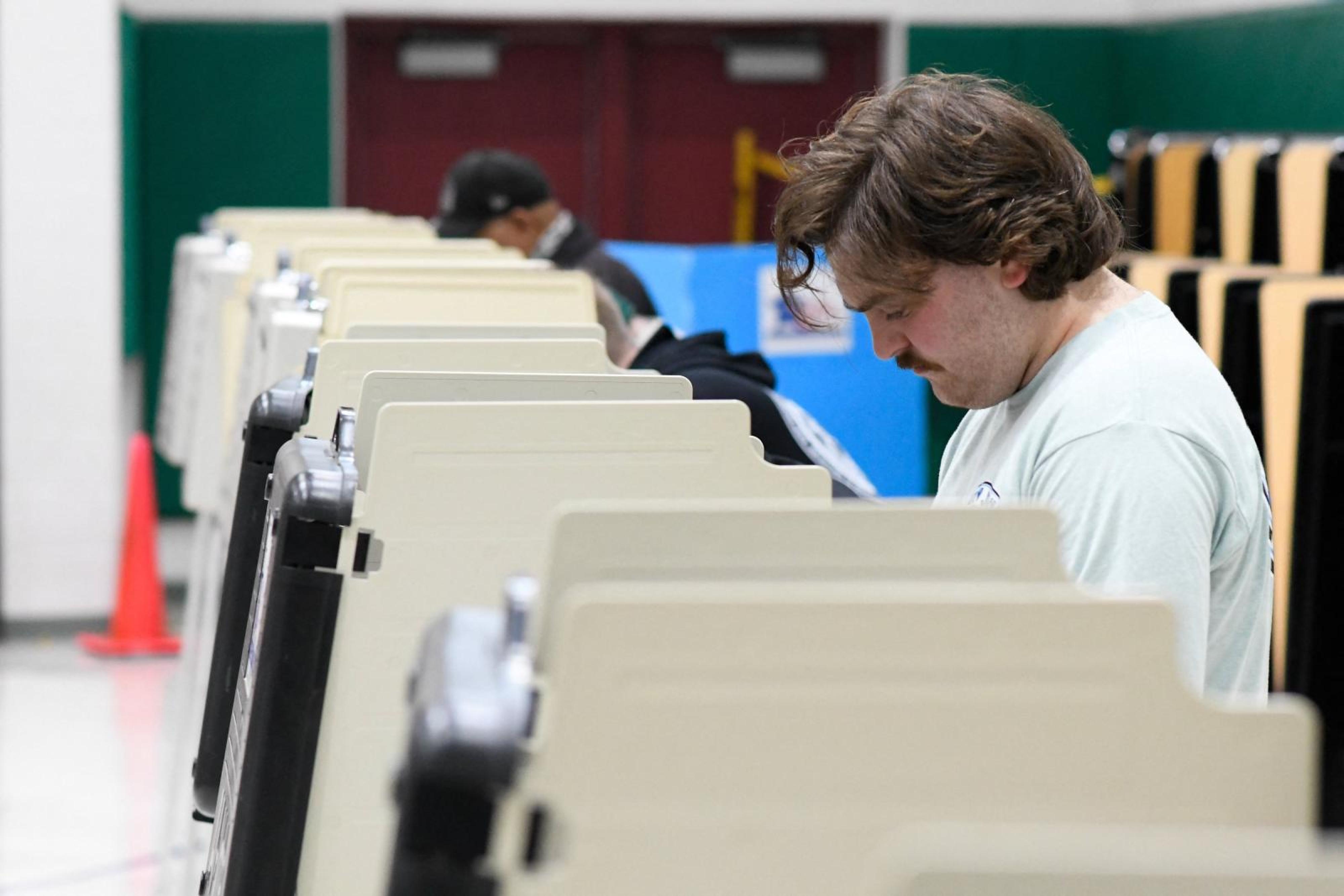
There’s no doubt that affordability and economic issues were the drivers of the Democratic gains among Catholics, Latinos, African Americans, young voters, and independents that led to wins across the country, including in red states such as Texas and Kansas. Dems not only took control of both chambers of Congress but also flipped five governorships from Republican control and racked up a slew of historic firsts, from the country’s first African American woman governor, Keisha Lance Bottoms of Georgia; to the first Muslim senator, Abdul El-Sayed of Michigan; to the first Native American woman senator, Peggy Flanagan of Minnesota, and governor, Deb Haaland of New Mexico. Turnout was high and generally reflected the country’s religious demographics. Latinos voted in record numbers; one analysis showed an 80 percent increase from the 2022 midterms.
Midterm exit polls show a Catholic shift to the left of anywhere from eight to sixteen percentage points since 2024. Those results show that Catholics remain “a powerful voting bloc,” especially since they reflect the general electorate, are swingable, and are spread out geographically, according to political scientist and researcher Ryan Burge. Unlike Evangelicals, who remain solidly Republican, Catholic voters “move from one election cycle to another,” he said. “Catholics show they are willing to vote for Democrats if the circumstances dictate that that’s the most prudent choice.” In this election, the prudent choice was to vote for change, given inflation, the war, and the price of gas and groceries, said Burge. “I think Catholics are swayed by the same things that sway the average American.”
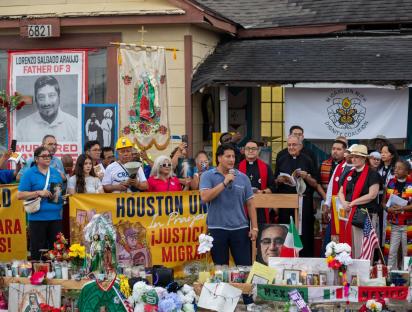
Latino voters also joined the blue wave, but many did so reluctantly and did not necessarily enjoy the ride, said Juan Miguel Alvarez, program director of the University of Notre Dame’s New Horizons program, which forms young-adult lay Catholic leaders. “It would be false to say that Latinos and young Hispanic Catholics have found a home in the Democratic Party,” he said. “A lot feel very politically homeless and frustrated by the two-party binary. It’s more having to grit your teeth and pick the lesser of two evils.” The economic issues that motivated other voters hit differently in households in which parents literally sacrificed everything to give their children a chance at the American dream of social mobility, Alvarez said. And the intentionally brazen and cruel immigration enforcement and detention was felt personally by young Hispanics who know family and friends who were detained, deported, or too afraid to leave home to go to work or church.
Alvarez does not believe a typical young Hispanic voter was significantly influenced by Catholic leaders’ comments about political and social issues. Nor were any solidly MAGA Catholics convinced to vote Democratic because the U.S. bishops spoke out against immigrant detention or because Pope Leo XIV called Trump’s war in Iran unjust. Yet it’s certainly clear that Republican appeals to culture-war issues were not successful, nor was tech-industry money, redistricting and voter-suppression efforts, and last-minute appeals from Trump himself. The video of some Catholic bishops praying over Trump in the Oval Office less than two weeks before the election may have backfired, reminding voters of the dangers of single-issue voting.
The U.S. bishops’ conference continues to insist that abortion is the “preeminent” issue for Catholics, but the politics of abortion have changed since the Supreme Court’s Dobbs decision overturning Roe v. Wade, making it essentially a nonissue for most voters. In the midterms, efforts to reject limits on abortion or protect abortion rights succeeded in three states and failed only in Idaho. Burge says that Catholics, like most voters, do not vote on “principled” issues such as abortion. “When is the last time you heard a politician talk about abortion? I can’t think of one time that a Republican candidate mentioned it, or even a Democrat mentioning Dobbs,” he said. Latino Catholics are more likely to have felt conflicted about Democratic positions on gender and sexuality, but in the end, other issues prevailed. As Burge notes, voters can worry about abortion and transgender people when gas is not $4.50 a gallon.
Corruption was also high on lists of voters’ concerns, perhaps indicating that commonsense decency may have motivated many choices in the voting booth, including those by religious voters. But whether that reflects Christian values per se is debatable. “Christian values are American values, generally meaning goodness and decency,” said Burge. For example, most voters were horrified by the Vivek Ramaswamy ad that implied that his opponent lied about being sexually abused by her mother’s husband. Ramaswamy lost his bid for Ohio governor by eight percentage points.
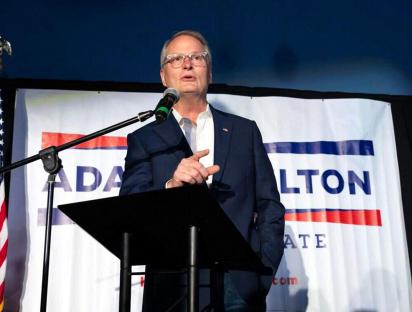
Many Democratic candidates were more comfortable with religious language in this election, especially seminarian and soon-to-be senator James Talarico of Texas, whose podium on election night read “Love thy neighbor.” Much has been made about a resurgence of the “religious left,” although a majority of Protestants, nearly 60 percent, still voted Republican in the midterms—the exception being Black Protestants, who maintain a wide Democratic majority. In Catholic circles, we have seen more talk about Catholic social teaching and some moves away from culture-war issues, although the day before the election, the U.S. Supreme Court held oral arguments in a case in which a Catholic school and the Archdiocese of Denver are arguing for the right to exclude LGBTQ children or even children of LGBTQ parents.
Evangelical and, more recently, conservative white Catholic voters have been defining the political narrative for at least a decade, and traditionalist and conservative Catholics have had an outsized voice in the U.S. Church. Will this election’s historic results—a leftward shift even among those who had previously voted for Trump, as well as the Democrats increasingly seeing religious voters as potential supporters—break the image of the Republican Party and Christianity as one and the same? I’ll be looking for any hints at the upcoming U.S. bishops’ conference meeting November 16–9, but it’s unlikely anything definitive can be said until after the 2028 presidential election. A lot depends on what the Democrats do in the next two years. Burge warns against over-indexing this week’s news: “One election does not a trend make.”
We welcome your comments about this article. Please send your response to [email protected].