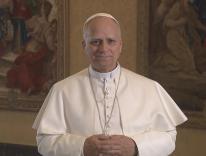
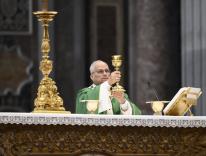
Pope Leo has focused on issues—immigration, economic justice, war and peace, and artificial intelligence—on which the American polity is hungry for moral guidance.
The Vatican now views the SSPX as an external schismatic issue. What remains to be seen is how Leo will deal with the issue of internal radical traditionalism.
Leo’s engagement with Europe refuses the familiar language of “Christian roots.” Rather, it positions the Catholic Church in opposition to imperialism.
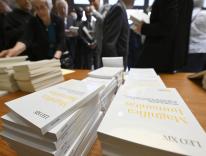
In 'Magnifica humanitas,' Pope Leo presents a genuinely universalist civilizational discourse, calling for a social order whose guiding principle is love.
If the Church itself does not recognize the full humanity of half its own members, how can it expect Silicon Valley and heads of state to respect its sermon on human dignity?
It is necessary to have a pontiff with a strong political voice. But what will Leo's political prominence augur for the prospects of a more synodal Church?
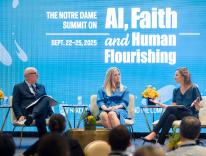
Pope Leo's call for disarmament leaves room for the possibility that AI can have good uses. But those uses can only be discovered by those who work for flourishing communities.
The moment has arrived for a new papal document that would offer a comprehensive Catholic condemnation of authoritarianism and a moral defense of liberal democracy.
Leo’s Catholic critics tend to focus on just-war theory, while ignoring the support of the last several popes for international law and a world governing authority.
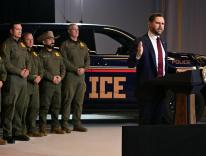
The clashes between Leo and the Trump administration underscore how U.S. Catholics have come to behave as though they are religious authorities unto themselves.
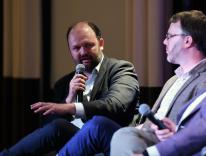
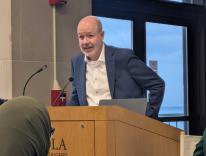
Moderated by editor Dominic Preziosi, three journalists weigh in on Pope Leo’s first year as part of the annual Cardinal Bernardin Common Cause Lecture series.
The growing number of adult baptisms in European and the United States has caught the notice of Church leaders who are attentive to even the smallest signs of revival.
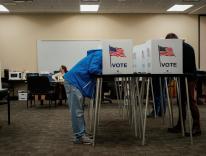
The Church is gaining credibility for speaking up for Gospel values in the public square—even when it means criticizing a president that nearly 60 percent of Catholic voters chose.
For Vatican theologians, the imagined obsolescence of humanity is not a historical prospect to be welcomed or feared, but an intellectual error to be avoided.
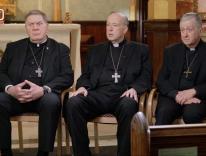
Many U.S. bishops remain unwilling to call out Trump's authoritarianism. They would be wise to draw lessons from the Church's history with Italian Fascism.
Leo possesses the mind of a mathematician and canon lawyer. He has the makings of an effective manager—even of a sprawling organization like the Church.
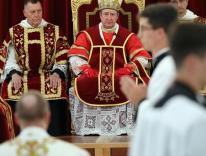
Despite the hopes of Catholic traditionalists, Pope Leo has not undone Francis’s limits on the Latin Mass, but other questions about liturgy remain on the synodal table.