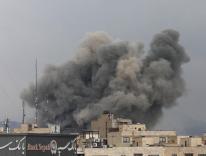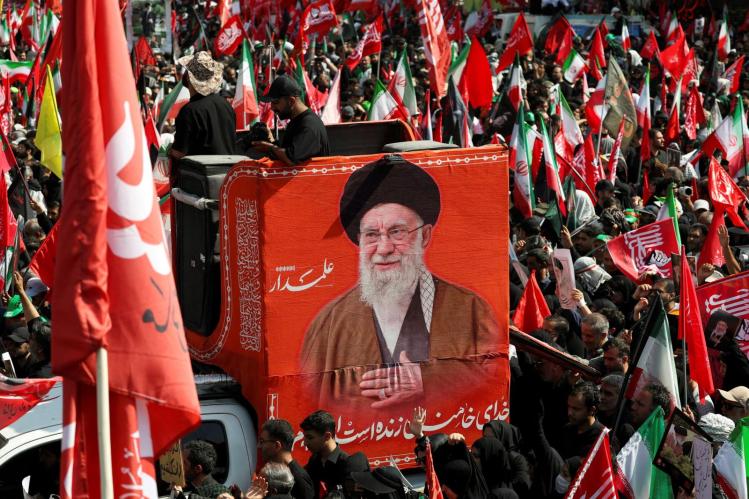
In the generation since 9/11, the United States has launched three major wars, all with the justification that they will protect the country and the world from Islamist terrorism. The latest, the Iran War, is proving hard to end and continues to threaten dangerous escalation, with the almost certain likelihood it will turn out to be yet another exercise in futility.
One way to understand the failure is to put it at the feet of Donald Trump alone. The egoist, fresh off his operation in Venezuela, thought he could finally solve the half-century-old Iran problem. In his hubris, he plunged into a conflict without a clear strategy, inevitably encountered fierce resistance from the Iranians, and stumbled into the supreme folly of an absurd presidency. Another view is that the war is just one more turn in the forever “global war on terror” (GWOT), which began righteously but decayed into senselessness because Americans thought they could outsmart their adversaries. The wars in Afghanistan and Iraq descended into an endless repetition of strategic “mistakes,” though there has been scant honest debate as to what exactly those mistakes were. The third and darkest perspective is that the GWOT has itself been an absurdity from the beginning—that jihadism is an intractable phenomenon resistant to both military force and nation-building alike.
Whatever the competing merits of these narratives, their common motif is arrogance trampling clear thinking and putting the United States in the role of Sisyphus, condemned to rolling a rock up a mountain for all eternity. Rescuing some clarity is key to breaking out of our Sisyphean historical moment. Successfully engaging in counterterrorism and supporting liberal forces in the Muslim world are not impossible goals.
You might like: George Scialabba on the United States and international law
Washington has failed to heed the wisdom of a man who foresaw 9/11 a generation before it happened, laid down an indisputable strategy for efficaciously responding to it, and warned about the mistakes likely to be made. In his seminal book Terrorism (1977), Walter Laqueur wrote:
If some major disaster were to occur as the result of international terrorism, pressure for “hitting at the center” will become overwhelming…. A really effective drive against international terrorism would be possible only if there were the determination to adopt the strategy…to “hit the center,” meaning the main sponsors of international terrorism.
He warned that this strategy must proceed from a clear vision of where exactly the center lies: “There is the danger of overreaction and of marshalling the efforts in the wrong direction.” Ironically, when Laqueur’s prophecy came true, it was the terrorists who hit the center, striking America’s financial and military hubs on 9/11. Yet Washington did not respond in kind, setting in motion a cycle of futility.
Al-Qaeda was given sanctuary in Afghanistan by the Taliban, but they had been put in power by Pakistani arms and Saudi money. This was the outcome of a tragic historical trajectory that saw fundamentalist states take advantage of the Cold War to propagandize Sunni extremism around the world. Allying with the Reagan administration during the Soviet-Afghan War, those states were able to control the CIA-supplied mujahideen. Their motive was to turn back not just the Soviets but also the socioeconomic reforms and secular cultural modernization that had been the principal twentieth-century trend in Muslim countries and that threatened the power of feudal elites.
When all this subversion culminated in a national catastrophe on 9/11, Washington should have immediately recognized that its alliances with Riyadh and Islamabad had been terrible mistakes. “Hitting the center” in response would have meant opposing the Pakistani and Saudi regimes’ malign influence among Muslims; their ideologies had misdirected so many minds and caused so many deaths. For a new war against those ideologies, America needed allies of conviction, not convenience.
In Asia, that would have meant secular, democratic India, which like Afghanistan had long suffered from Pakistani terrorist proxies. In the Middle East, it would have meant moderate secular regimes and civil-society advocates open to the American values of democracy, human rights, and religious tolerance. Supporting those forces would have constituted a clearheaded long-term strategy, and it would have hit the deeper, existential center.
But the Bush administration did not want to go there. Violating Laqueur’s prime dictum that “terrorism can only be understood in its historical development,” the administration’s attitude was epitomized by Deputy Secretary of State Richard Armitage. He confronted the head of Pakistani intelligence, Gen. Mahmud Ahmed, right after 9/11, and ordered his country to break with the Taliban. Ahmed resisted, telling Armitage, “You have to understand the history.” Armitage countered, “The history begins today.” With that Orwellian premise, the GWOT began its inevitably futile treks up and down the mountain.
A battle line was drawn against the Taliban/al-Qaeda duo with Afghanistan at the alleged center. Meanwhile, Saudi Arabia’s role in funding the Taliban was ignored, and evidence that its officials had aided the hijackers was suppressed. Pakistan was rewarded with billions in military aid for having purportedly switched sides, yet it went right on backing the Taliban.
It was then alleged that Iraq was another center posing an imminent threat, because it possessed weapons of mass destruction and also had ties to al-Qaeda—both lies. The invasion that followed, with all its catastrophic consequences, has been widely called a “mistake,” the marshalling of efforts in the wrong direction, just as Laqueur had worried. Yet, like the notion that Pakistan could ever be an ally against its chief proxy, it was not simply a mistake—it was a misdirection. Washington’s refusal to admit 9/11 had emerged from the jihadist milieu created by two of its allies doomed its strategy from the outset. Bush’s “freedom agenda” declared that American security depended on liberal values prevailing in the Middle East, but this was impossible as long as we stayed allied with the regimes that had raised jihadism to combat those values. The forever wars went on forever because the center was never hit.
In Afghanistan, successive administrations absurdly persisted in funding Pakistan’s drive to restore the Taliban and destroy the civil society being created there with Western support. When critics—including me in Orbis, The New York Times, and a 2015 article in these pages—proposed the obvious alternative of an American-Indian-Afghan alliance aimed at containing Pakistan, it was rejected.
In Iraq, an illegitimate war unleashed determined resistance, sectarian strife, the rise of ISIS, and opened the door to Iranian political and military influence there. The trillions wasted on the GWOT should have been used on economic development, support for civil-society advocates, anti-poverty campaigns, and education drives.
Now, we are told that we are finally hitting the real center, Iran, “the epicenter of terror since 1979.” This is simply not true. Sunni groups comprise the vast majority of jihadists, and account for a much higher death toll globally than do their Shiite rivals. For all the shouts of vengeance emanating from Tehran, it is the Sunni terrorists who are by far the greater danger at this hour: they cannot allow the Shiites to be seen as the only ones taking a stand against the United States and Israel.
What really matters in this crisis is not the Strait of Hormuz, Iran’s proxy militias, or its nuclear program, but whether Islamic extremism or a reconciliation with liberal modernity will be the future of the Muslim world. Right now, momentum is with the jihadists. Many see them as the only ones able to stand up to Western dominance, which has all too often meant destruction. Anger and despair over Gaza, Lebanon, and Iran has turned the Islamic Revolutionary Guard Corps, Hamas, Hezbollah, the Houthis, the Taliban, al-Qaeda, and ISIS into icons of resistance.
When Trump speaks of “allies,” he refers only to Gulf autocrats, not the Muslim masses whose hearts and minds are up for grabs. Reliance on fellow authoritarians has gotten Trump nowhere; they’re now scrambling among themselves to ensure the security he has been unable to deliver, as evidenced by the new defense pact between Saudi Arabia, Pakistan, and Turkey.
If a “clash of civilizations” is to be averted, the next administration must pivot to an engagement with Islam that is organized not around Tomahawk missiles that destroy schools, but by a reborn USAID that builds them, along with many other necessities. American diplomats must stop limiting their outreach to emirs and foreign ministers, meeting instead with responsible opposition figures, civil-society leaders, religious moderates, feminists, and dissident journalists. The United States should announce that it favors a far more equitable distribution of political and economic power in Muslim lands, beginning with political democratization and extending to the distribution of wealth derived from oil and other natural resources. And this outreach must be accompanied by an honest mea culpa not just for Trump’s reckless violence, but for misguided in American foreign policy in the Muslim world since 1945.
Albert Camus famously hailed Sisyphus as a hero who in a meaningless world found happiness in his absurd task. “The struggle itself towards the heights is enough to fill a man’s heart. One must imagine Sisyphus happy.” His toil creates meaning through intensity of living, not by achieving a final goal. Many disillusioned GWOT veterans have consoled themselves with this view. Yet in a deadly serious world, our endless failure has devastated large swaths of the Middle East, alienated Muslims, and directed American life away from its founding values. And we are not happy.
The gods condemned Sisyphus to his task, but we have chosen to continue down this viciously circular path of our own free will. The aspiration to defeat Islamic extremism is not absurd—our strategy to do so is. We must stop rolling the rock up the mountain and start sowing the fields.
We welcome your comments about this article. Please send your response to [email protected].