Sr. Erin McDonald’s first assignment as a poll chaplain was in Dearborn, Michigan, during the 2020 presidential election. She and a Jesuit volunteer sat at a table with welcome signs in English and Arabic outside a polling station in the heavily Arab American and Muslim community. At one point in the afternoon, a pickup truck with MAGA and Confederate flags circled the block several times. McDonald and her partner stood between the road and those in line to vote, putting their bodies between the passing vehicle and the voter line to encourage and support those who might have felt intimidated. The car quickly moved on. McDonald describes her actions as part of a poll chaplain’s duty to de-escalate and be a reassuring, calming presence during an election fraught with tension.
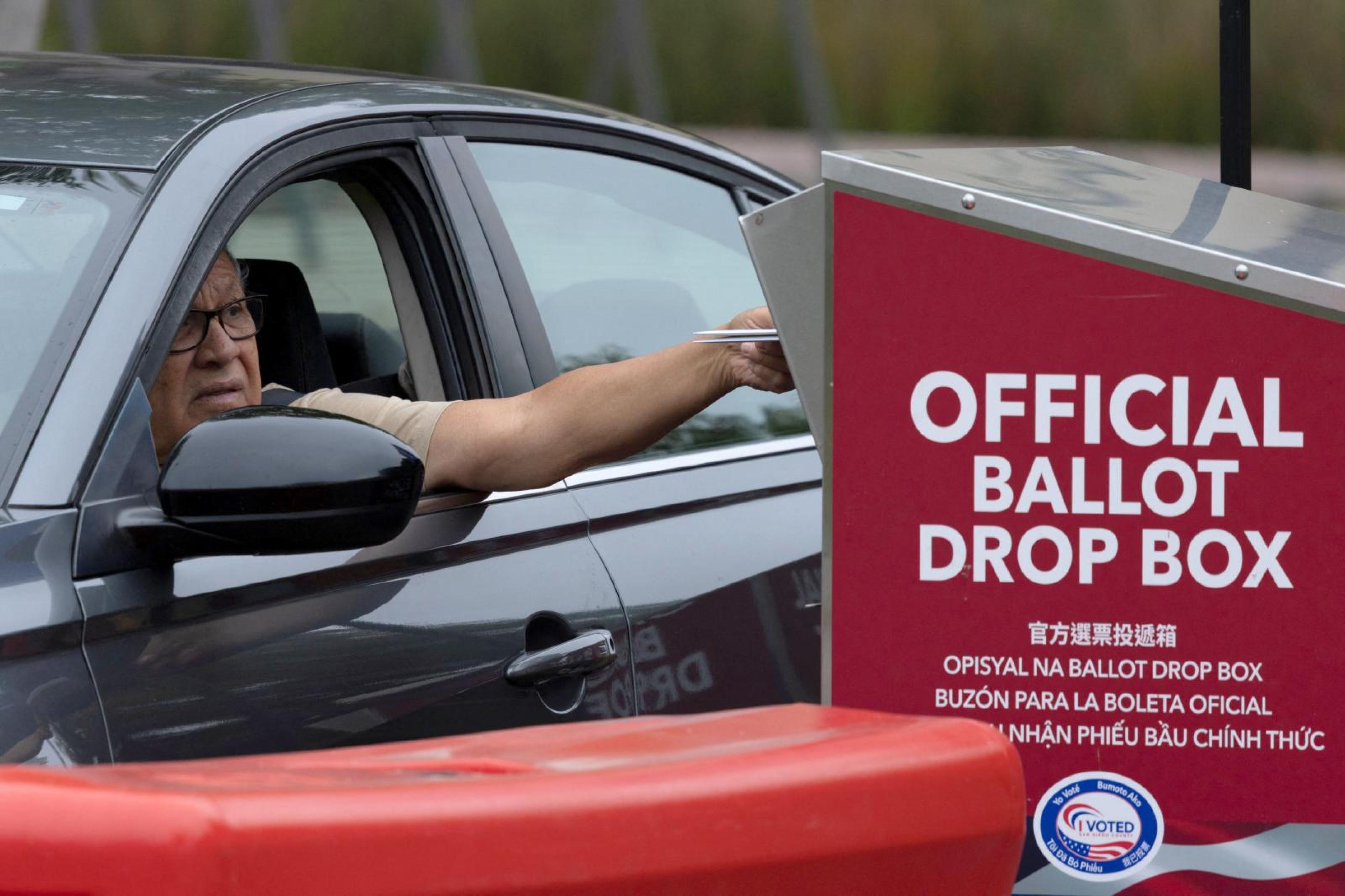
McDonald, a Sister of St. Joseph, will be serving as a poll chaplain again this year for the midterms—and she’s not alone. Organizations have been training nearly two thousand religious leaders in peacekeeping and de-escalation skills to send them to polls on Election Day, November 3, to help ensure free and fair elections. The threats to the electoral process are real: The Trump administration has used many tactics to intimidate voters, demanding voter lists and other personal information from states, filing lawsuits or threatening legal challenges, and making plans to deploy large numbers of election monitors or law-enforcement officers, especially in liberal-leaning areas. Misinformation, including bomb-threat hoaxes, has been a problem in the past, and individuals riled up by the rhetoric may take it upon themselves to personally intimidate voters at polls. And that doesn’t include any challenges to vote counting to come.
“People are afraid,” said the Rev. Jim Wallis, a cofounder of Faiths United to Save Democracy (FUSD), a nonpartisan, multifaith voter-protection campaign that grew out of the Turnout Sunday event in 2014 to mobilize African American voters and Sojourner’s “Lawyers and Collars” project. This year, the interreligious group has trained more than 1,200 poll chaplains for nine states identified as possible targets of intimidation or interference: Arizona, Georgia, Michigan, North Carolina, Ohio, Pennsylvania, Texas, Virginia, and Wisconsin. Poll chaplains will provide a “calming presence,” said Wallis, chair of Georgetown University’s Center for Faith and Justice. “They stand with people so they know they’re not alone.”
Several Catholic groups are partnering with Faiths United, but they are also deploying poll chaplains beyond the targeted states to ensure that every voter can cast their ballots free of fear, intimidation, or interference. Robert Christian, director of strategy for the Franciscan Action Network, sees poll chaplaincy as part of the order’s commitment to peacebuilding. “Without channeling differences through the democratic process, they are typically resolved through coercion and violence. We have this rich legacy of St. Francis and a Franciscan commitment to peace that can be lived out by supporting free and fair elections,” he told me. “More broadly, Catholic social teaching’s principle of participation says we are made for participation and have a right and responsibility to participate in society. In a democracy, that means helping democracy to flourish and to be safeguarded, so that authentic participation is happening.”
McDonald said the intensity around the Michigan Senate race between Democrat Abdul El-Sayed and Republican Mike Rogers, as well as persecution of migrants in the state, confirmed her desire to live out her “faithful citizenship” by being a poll chaplain. “There is reason to be concerned about the safety and accessibility of polling and elections this season,” said McDonald, who works in young-adult ministry and cohosts the Beyond the Habit podcast. “This is one small way to be able to participate in something that promotes peace and unity. It’s something that promotes our Catholic values of loving one another.”
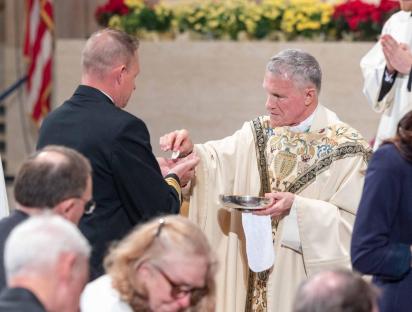
She plans to spend the morning before her shift in prayer and is participating in several election-related rituals and blessings that she says confirm her sense of mission as a poll chaplain, including a blessing ceremony with the U.S. federation of Sisters of St. Joseph. An increase in election-themed prayer services and other rituals this election season is helping all voters see the connection between faith and political participation, as well as emphasizing this election’s seriousness. Archbishop Edward Weisenburger of Detroit, whose mother was an election worker, joined other faith leaders in a blessing of poll workers and volunteers in October, telling those gathered that participating in democracy is an act of faith. But he also noted attempts at voter suppression, including closing polling stations in communities of color. “While some might say, “well, that’s just politics,’ I say it’s an affront to God,” the archbishop said. “Every voter should be able to fully participate in elections as a matter of human dignity and the common good.”
A nine-day election novena organized by Catholics in Communion will extend beyond election day, as a sign that the dangers of election interference continue until all votes are counted and certified and the new elected officials seated. The virtual novena began November 1 and continues each evening at 4:30 Pacific time/7:30 Eastern. Each evening will feature the U.S. bishops’ conference’s Novena for Faithful Citizenship, prayers of the faithful, and the latest election news and volunteer opportunities. “At a time when election workers are feeling concerned and frightened, [it] feels like there is a pastoral call for the Church to do this work,” said Annie Fox, the provincial assistant for social ministry organizing for Jesuits West and a Catholics in Communion organizer.
Catholics in Communion, a federation of Catholic groups that has focused on immigrant detention, has turned its attention to civic action around election safety, especially as communities of African Americans and newly naturalized citizens are being targeted with misinformation and threats to keep them from exercising their right to vote. Fox said marginalized voters have been most appreciative of a Catholic presence on those issues. “We have a responsibility and a theological mandate to do the things we can to protect participation and human dignity in the election process,” she said. “This is about serving the common good.” While only trained folks should serve as poll chaplains, all Catholics can informally encourage participation—by inviting fellow voters to Mass before voting, organizing rides to the polls, or welcoming voters if a Catholic church or school serves as a polling place.
Organizers also realize that protecting the electoral process no longer involves just Election Day itself but an entire “election season” that includes early voting as well as the counting process, which may take days or even weeks in some races. False conspiracy theories about election fraud have spread, especially about competitive races. There also may be attempts to interfere with, delay, or sabotage the certification process. Trump has laid the groundwork for questioning the results with false rhetoric about noncitizen voting, which in reality is extremely rare. And the administration has already intervened by suing to block Alaska from certifying results if the Republican Senate candidate loses. A judge has dismissed that suit.
Poll chaplains are encouraged to dress in clerical or other religious garb and will wear badges identifying themselves. Still, some are concerned about self-appointed poll watchdogs. Minnesota secretary of state Steve Simon said last month that without hard evidence of potential violence, self-appointed election monitors could have a “boomerang effect” of intimidating voters. But Franciscan Action Network’s Robert Christian believes poll chaplains won’t likely scare anyone. “I think if people see a seventy-year-old nun outside a polling station, it’s much more likely that they’ll be feeling good about walking into that polling station than worried that chaos is going to ensue.”
We welcome your comments about this article. Please send your response to [email protected].