The year 2026 marks the tenth anniversary of “crisis of democracy” literature. Brexit and Donald Trump’s election in 2016 occasioned a spate of articles and books heralding “the end of democracy,” the advent of the “post-truth society,” the coming of the next American civil war, and the return of fascism. As the legal scholar Jedediah Britton-Purdy once quipped: “Likely none of these books would exist—certainly none would be remotely the same—if Hillary Clinton had pulled a hundred thousand more votes out of the Midwest in 2016.” Yet, a decade later, this trend shows little sign of abating; indeed, it appears to be accelerating. During Trump’s first term and well into Joe Biden’s presidency, there was also sustained discussion about whether the faltering neoliberal economy would give rise to a new and more just political-economic order. There was much talk of a new New Deal or a Green New Deal. For various reasons, that discussion has receded.
During Trump’s second term, the resistance has struggled to find its footing, while political and existential despair has deepened. All this despite Trump being deeply unpopular, even among many of his 2024 voters. Political forecasters are now predicting that he will lose not only the House but also the Senate in this November’s midterm elections. If he does, it will have more to do with his own failures than with the success of the Democratic Party in coming up with a better message. Much of the liberal opposition to Trump remains committed to a politics of fear.
Pundits now warn of an end-times fascism brought on by advanced AI technologies that will not only destroy democracy but also kill off the human race. The apocalyptic dread over AI transcends traditional political divisions in the United States, with the emergence of a kind of left-right romantic reaction that calls for the new technology to be razed to the ground, while encouraging students, in the words of one professor, to “shut down the WiFi; scramble the cell signal; send them to weeklong retreats in the deep, dark woods.” That kind of apocalyptic rhetoric can have an adverse political effect. It may inspire not urgent political action but a kind of fatalism or even nihilism that leaves us with nothing but the resolve “to eat, drink and be merry, for tomorrow we die.” Whatever one makes of the potentially catastrophic consequences of AI, the grim predictions of its most pessimistic critics—whether they are on the left or the right—run the risk of promoting a deeply apolitical outlook.
But even the most serious crises do not have to lead to pessimism. As Or Rosenboim shows in her book The Emergence of Globalism: Visions of World Order in Britain and the United States, 1939–1950, even amid the horrors of Hitler’s war and the advent of nuclear weapons, many thinkers continued to imagine a better world and consider the political, economic, and international arrangements necessary to bring it about. In this spirit, I want to propose a much more hopeful, albeit highly speculative, way to characterize the social and political order emerging from the crises of neoliberalism and democracy: the idea of a Catholic Century.
What I mean by this is nothing triumphalist or even doctrinal. In fact, it does not even reflect any commitment to the Catholic Church—I am not a Catholic myself. Before I explain what I have in mind, a few preliminary observations are in order. First, much has been written about the decline of liberal Protestantism and the WASP establishment. One striking illustration of this decline is the changing religious composition of the Supreme Court. Whereas Protestants long constituted the overwhelming majority of its justices, today just two justices are Protestant: Ketanji Brown Jackson, who is nondenominational, and Neil Gorsuch, who was raised as a Catholic but now attends an Episcopal church. Before Gorsuch was appointed in 2017, there were no longer any Protestants on the Supreme Court.
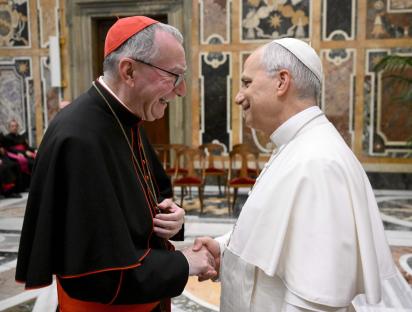
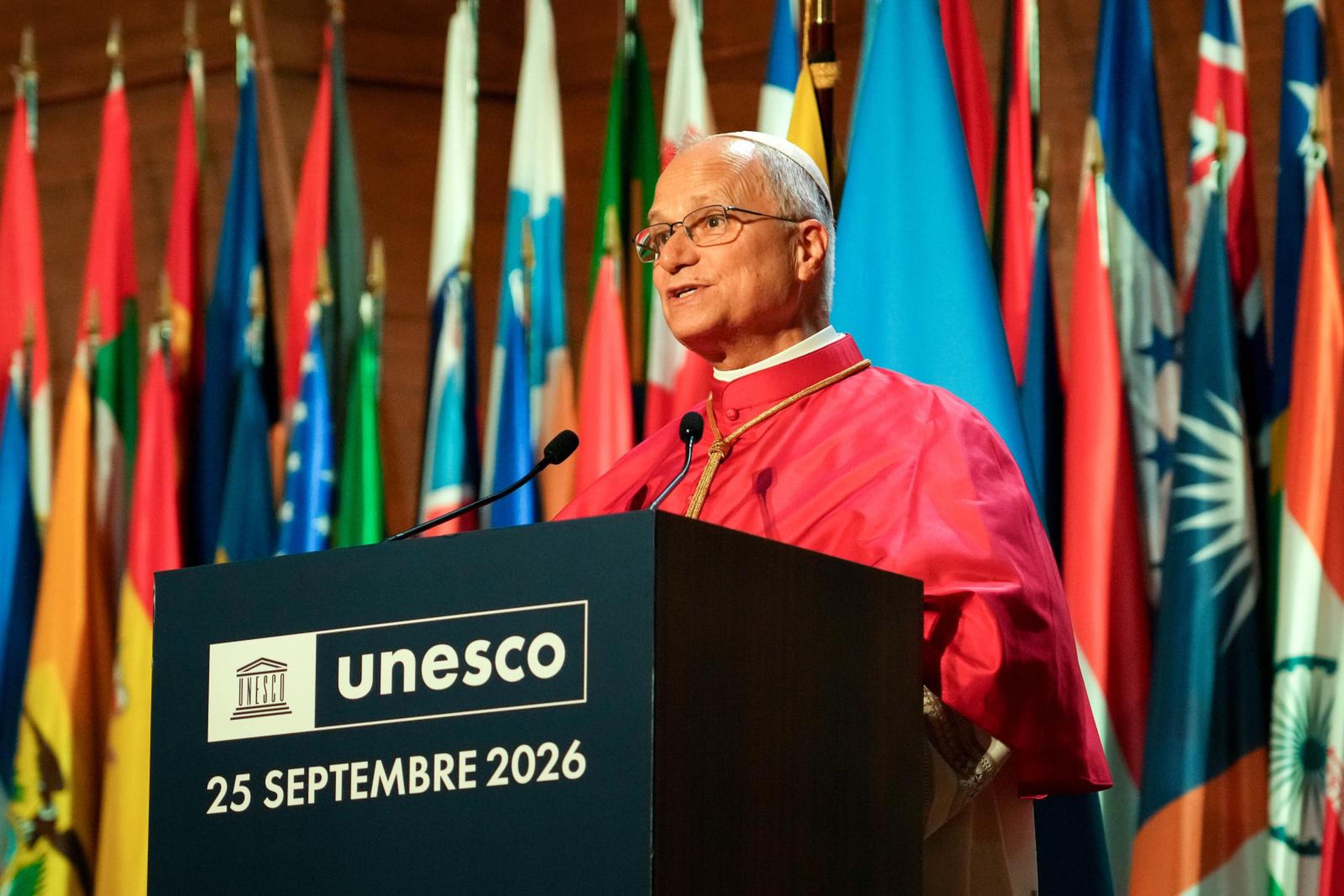
The really interesting question is why an institution once dominated by Protestants is now dominated by Catholics—six out of the nine justices are Catholic, and they span the ideological spectrum from the reactionary Samuel Alito to the liberal Sonia Sotomayor. Nor is this religious dynamic confined to the judiciary; it is also at play in the executive and legislative branches of the federal government. Consider the fact that three of the people most often discussed as likely presidential candidates in 2028—Vice President J. D. Vance, Secretary of State Marco Rubio, and Representative Alexandria Ocasio-Cortez—are all Catholics, despite their very different political commitments. Then consider the fact that the pope is now an American, and that he has been openly critical of the Trump administration’s policies.
Second, there is an undeniable connection today between religion and populism on both the right and the left, and there is no reason to think that it will go away anytime soon. The connection between religion and the right has received a lot of attention, of course, just as it should: Trump’s alliance with Evangelicals, Putin and Eurasian traditionalism, Orbán’s appeal to “Christian Democracy,” Brazilian Pentecostal support for Bolsonaro, Erdoğan and Islam, Modi and Hindutva, etc. But there is now also a religious influence, or at least openness to religion, on the left that is hard to deny. Consider the fact that in the United States, some of the most popular left-wing politicians are either Catholic, such as AOC, or Muslim, such as Zohran Mamdani and Abdul El-Sayed. Meanwhile, across the Atlantic, Andy Burnham just became the United Kingdom’s first Catholic prime minister. True, some of those politicians have a rather complicated relationship to their religious tradition. But it’s fair to say that the left is now far less hostile to religion than it was even one generation ago.
Third, the existential fear that the world as we know it is coming to an end—through civil war, an AI apocalypse, environmental destruction, or one of the myriad other dystopian scenarios that now dominate our social imagination—may help explain why some young people are returning to religious traditions in search of solace and solidarity. Anton Jäger’s much-discussed Hyperpolitics may inadvertently help explain this turn: if the collapse of civil association has left individuals politically agitated and socially adrift, organized religion may offer them a sense of belonging that few other institutions can.
By “the Catholic Century,” I do not mean Catholic dominance or a sectarian political theology like the one embraced by integralists, but rather an emerging political disposition marked by a shared commitment to solidarity, social obligation, and the common good, even if this commitment finds expression in sharply divergent political projects. To see what that might look like, consider two other similar notions. Henry Luce’s famous 1941 essay “The American Century” argued that the distinct civilizational features of the United States, such as mass production and consumer democracy, were becoming those of the entire world. Yuri Slezkine’s Jewish Century argued that a stateless people’s mobile, “Mercurian” existence was a rehearsal for what modernity would eventually mean for everyone.
But there is this difference: a Catholic Century wouldn’t be a matter of one people’s civilization, or one people’s condition, spreading throughout the world. While solidarity and the common good are key themes in Catholic social teaching, much more so than in many Protestant traditions, they are not the property of Catholics. It is not so much that Catholic thinkers invented those concepts as that they have often formulated them with the most depth and rigor. And again, we can see their influence across the ideological spectrum. Even Vance’s Catholic-inspired postliberalism is open to government intervention and much cooler toward laissez-faire economics than the Reagan fusionism that prevailed in the GOP until recently. So it is no longer only the left that is looking to move beyond neoliberalism. That left and right agree on little else but are both reaching for the state to control or counteract the market is itself a sign of what I mean by the Catholic Century.
This may also help explain the changing fortunes of American Protestantism. Liberal Protestantism has lost much of the institutional and associational infrastructure that once sustained its influence, while white Evangelicalism’s close identification with free-market conservatism over the past half-century leaves it ill-equipped to meet the demand for a broader social ethic committed to collective obligation and the general welfare. This makes the Catholic Church the default option for those looking for a Christianity that can help guide and support the struggle to build a different kind of politics—a politics that offers some hope for a nonapocalyptic future.
We welcome your comments about this article. Please send your response to [email protected].