When someone does something inconceivably wrong and destructive—like, say, leading Theranos or endorsing Republican Mike Rogers for Senate in Michigan—it’s hard not to resort to armchair psychology. In Nathan Fielder’s new documentary sensation You Can See Everything, there is a suggestion that because Elizabeth Holmes, founder and CEO of Theranos, seems not to understand Abbot and Costello’s “Who’s on First?” routine, she might not really understand how badly she was lying for years about her fraudulent company (it’s as much of a stretch as it sounds). Similarly, when Haley Stevens abruptly switched her endorsement from now senator-elect Abdul El-Sayed to Rogers, bafflement led to a lot of breathless speculation. Was she in thrall to her fiancé? Did El-Sayed hurt her feelings by disinviting her from a campaign event? Did Jimmy Fallon cause offense with a sketch about her and her awkward fiancé’s appearance on TMZ? Does she really believe El-Sayed is an antisemite?
Michigan voters themselves were the object of similar speculation in 2016 after they handed Donald Trump a pivotal win, spelling doom for Hillary Clinton’s campaign and the “Blue Wall” that was supposed to keep the Republican candidate out of the White House. The fall of Michigan and Trump’s election begot a decade of discussion about the pysches of white working-class voters. How could they be so irresponsible as to opt for a manifestly unfit candidate like Trump? Was it racism? Sexism? Russian interference? Were they just that angry and resentful about globalization and the decline of American manufacturing? Did Trump have some kind of cultish hold over them?
If You Can See Everything has a lesson to teach us (and, for all the movie’s entertainment value, that it is an open question), it might be about the limits of this diagnostic impulse, and about our real motivations for indulging it. You can drive yourself crazy trying to get into the head of someone like Holmes or your neighborhood Trump voter (or Trump himself), but it doesn’t change anything about what they’ve done. So why do we do it? Partly because it’s seductive the way any puzzle is, but it’s also a form of self-protection. We want reassurance that the world makes some kind of sense, that we can see through a deranged egomaniac like Holmes or Trump and their strange charisma, even as others let themselves be deceived. We also want to reassure ourselves that we aren’t implicated in what’s gone wrong. We stand outside it and could never find ourselves in the grip of a similar derangement or deception. What we really want to do is to explain it away.
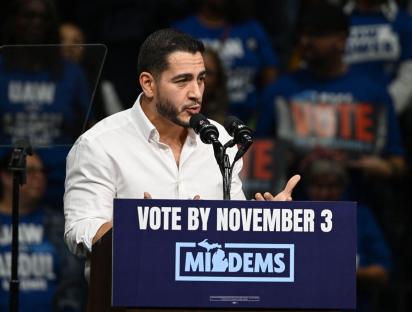
Despite his ample medical training and experience, El-Sayed resisted the diagnostic impulse when Stevens, his defeated primary opponent, seemed to lose her bearings during a misguided media blitz—about a race in which she was no longer a participant—and switched her endorsement. Amid an uproar among Democrats from Chuck Schumer to Bernie Sanders, she was never able to put together a coherent explanation for this decision. (She even had her own Fielderesque moment of awkward silence with Anderson Cooper during a difficult-to-watch CNN interview.) But El-Sayed mostly declined to comment on what he called “the intrigue.” “I actually don’t think about Haley Stevens,” he told reporters. “None of this matters.”
He was right. Stevens’s bizarre endorsement had no impact on the outcome of the race. Neither, apparently, did the months of anti-Muslim attacks on El-Sayed. Trump called him a “jihadist Muslim Brotherhood member”; the Michigan Republican Party hosted a press conference with signs accusing him of offering “SAFE HARBOR TO TERRORISTS”; even Nancy Pelosi seemed to agree with a characterization of his position on Israel as “antisemitic.” El-Sayed has forcefully opposed the American alliance with Israel that many older Democrats continue to hold sacred, but his criticism has always been directed against the state of Israel itself, not the Jewish people. A guilt-by-association campaign attempting to make him responsible for every word of commentary from controversial Twitch streamer Hasan Piker was similarly ineffective. So was the more than $39 million AIPAC spent to support first Stevens and then Rogers.
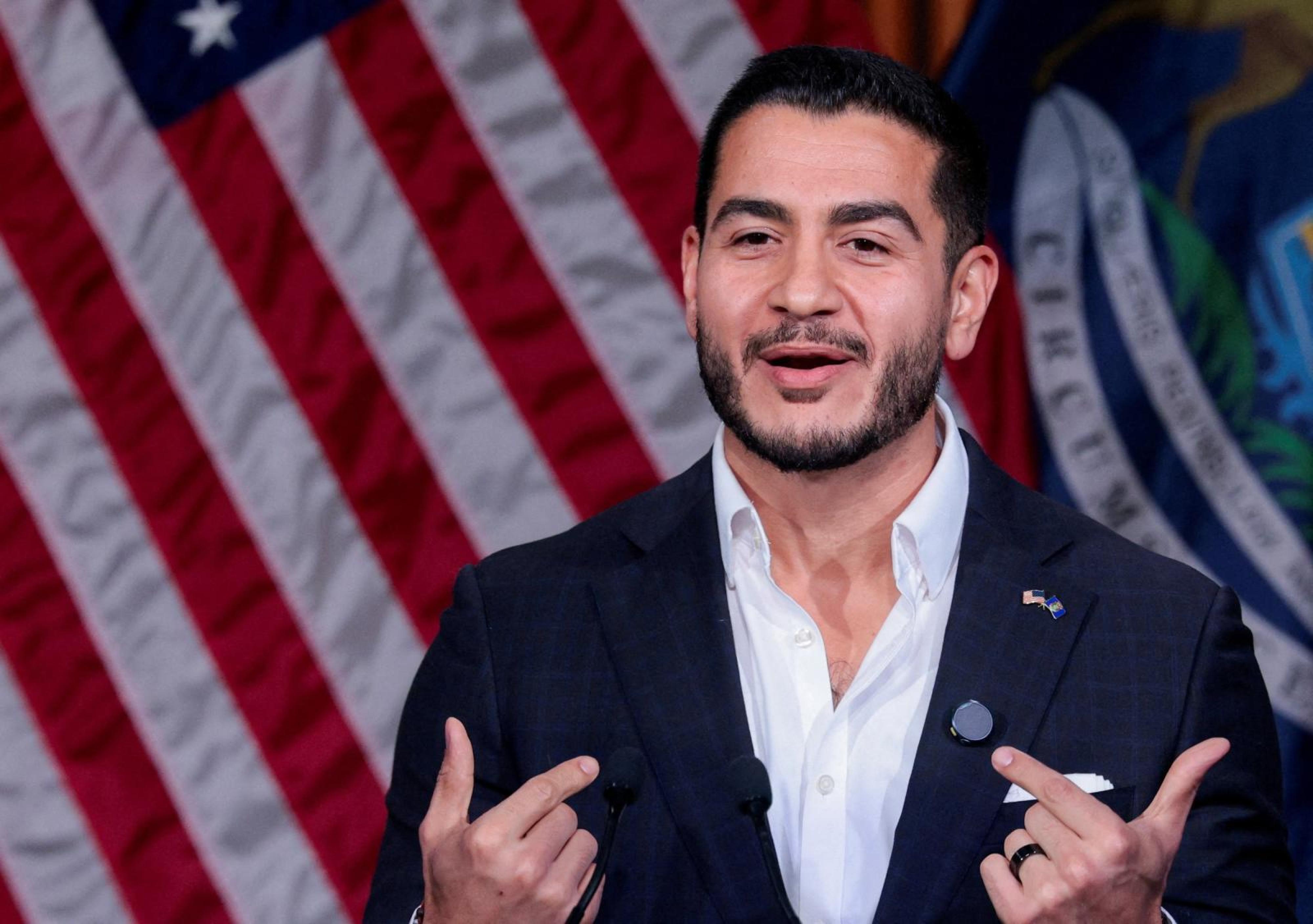
El-Sayed’s considerable and distinctive gifts as a politician helped him shrug off these distractions. He is exceedingly composed and well-spoken but not in the high-flown way of Barack Obama and his many Democratic imitators. El-Sayed’s style is more direct, combative, and quick-witted, sometimes almost peremptory. He is very good at dismissing what deserves to be dismissed, but he can also be conciliatory and eager to find common ground.
Unlike Zohran Mamdani, to whom he is often compared, El-Sayed wisely distances himself from the “socialist” label and the Democratic Socialists of America. Part of this is just a commonsense political calculus for Michigan, but he’s also developed a convincing and disciplined message focused on policy, not ideological labels. Medicare for All, campaign-finance reform, public preschool, and reining in corporate power are compatible with the kind of economic system we already have. They are modifications, expansions, and fixes that most Americans support, and they are part of a very mainstream American political tradition that goes back to the country’s founding.
In its ability to overcome distraction, El-Sayed’s campaign might serve as a symbol for a broader transition revealed by this midterm cycle. To put it in the most optimistic terms, we may be turning away not just from the Trump era but from a pathological way of doing politics that Trump manipulated to his advantage.
The “blue tsunami” was born of Democrats’ 2024 humiliation, which forced them, at least temporarily, to turn away from the culture war and focus instead on material issues. In an interview with 60 Minutes, El-Sayed blamed Democrats’ past focus on culture for the compromises they made with corporate power, taking many working-class issues off the table. “But politics isn’t about culture wars,” he said. “Politics is about the allocation of scarce resources.” El-Sayed was far from the only one to repudiate cultural politics in such stark terms this cycle. In an interview before the election with The New York Times, Gina Hinojosa, who was just elected governor or Texas, talked in similar terms about her engagement with Trump voters. “Culture wars,” she said “are not winnable because they depend on your personal experiences, your lived experience.” Democrats’ past attempts to analyze those experiences and theorize about how they led voters to Trump inevitably took place at an anthropological distance that only alienated those voters further and played right into Trump’s hands.
Just as El-Sayed refused to theorize about Stevens’s betrayal, he has refused to psychoanalyze or explain away Trump voters in Michigan. He instead made concerted efforts to meet them where they are. He tailored an ad to MAGA voters and ran it on Fox News and Newsmax, explaining that he had stood up to private-interest groups and was the real “America First” candidate. Mamdani similarly burst onto the political scene with man-on-the-street interviews with Trump 2024 voters upset about the economy and U.S. foreign policy. Scott Colom, who is, incredibly, on the verge of winning a Democratic Senate seat in Mississippi, made inroads outside a Trump rally in Corinth. Instead of trying either to reaffirm or to change voters’ cultural values, those candidates all engaged in a much simpler and more old-fashioned form of politics. They asked people what they wanted from their government and tried to convince them they could deliver it.
It may help that so many of these new Democratic candidates are Millennials. Of course, Millennials—including Mamdani in the heady days of the pandemic—are by no means immune to culture-war excesses. But, on the whole, their generation’s politics are perhaps formed less by the cultural touchstones that tend to inflect Boomer and Gen-X political attitudes than by dwindling material expectations and catastrophic policy failures—especially the disasters of 2001 and 2008.
September 11 was, of course, particularly formative for El-Sayed, who was sixteen at the time and was dealt the double shock of seeing his country attacked and his faith made into a scapegoat. He knows firsthand how cynical politicians can exploit collective trauma to foment xenophobia and culture war. This makes him a figure freighted, as Obama was, with symbolic power and expectation. He is the first Muslim Senator, elected shortly after the twenty-fifth anniversary of 9/11, at a time when public sentiment has turned firmly against our latest war in the Middle East and the alliance that got us into it. It’s enough to make you wonder exactly what’s going through El-Sayed’s head. I hope—and expect—he’s thinking less about the symbolism than about passing a new health-care bill.
We welcome your comments about this article. Please send your response to [email protected].