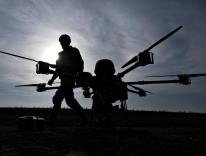
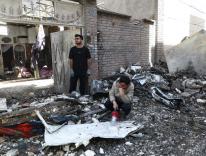
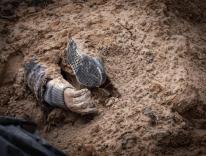
Through interviews with IDF soldiers and Israeli intelligence personnel, 'NAZA' explores how individuals rationalize their participation in mass slaughter.
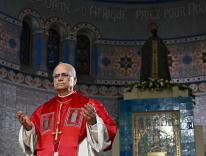
Leo’s Catholic critics tend to focus on just-war theory, while ignoring the support of the last several popes for international law and a world governing authority.
A conversation with historian of Islam Kambiz GhaneaBassiri about the Muslim community's response to ICE raids in Minnesota, the faith-based coalition behind Zohran Mamdani's mayoral victory in New York, and the war in Iran.
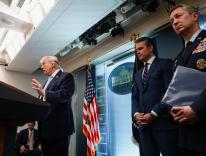
President Trump’s supporters have offered some implausible scenarios on the likely outcome of his war with Iran—as well as some wild justifications for it.
Our culture is marked by a competitive victimization. But perhaps we need to see what both secular and religious perpetrators of violence have in common.
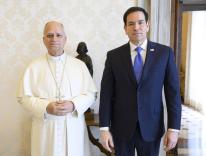
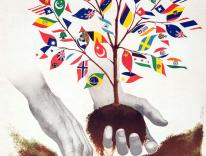
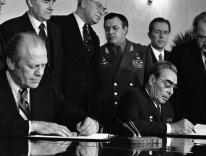
Fifty years ago, the Helsinki Accords reflected a bipolar world dominated by the U.S. Today, Pope Leo XIV faces a geopolitical environment that is far more unpredictable.
Insofar as Catholic neglect of the plight of the Palestinians stems from guilt about the Holocaust, it’s long past time to rethink how this guilt is addressed.
The complex, sometimes romanticized, but ultimately prophetic Catholic peace movement has critical lessons to teach today's America amid a genocidal war in Gaza.
Is nuclear deterrence the foundation of our national security, or is it an unnecessary expenditure dedicated to inexcusable potential violence? Commonweal authors debate nuclear deterrence versus disarmament.
Philip Metres’s newest collection of poetry speaks as eloquently as ever against empire—but he grounds the writing in this book in his own family’s story and history.