In 1969, William F. Buckley Jr. stood at the height of his powers. He had succeeded in helping install a genuine conservative in the White House, even if the ideologically loose Richard Nixon left much to be desired by Buckley’s activist base. A Republican victory opened new horizons for the American conservative imagination. For Buckley, who now counted himself as an informal advisor and confidante of the world’s most powerful man, it also opened up many new opportunities. A perhaps unexpected one came from Whitney Young, president of the National Urban League. In cooperation with Time magazine, Young’s organization was taking a handful of journalists on a weeklong tour of Black neighborhoods in cities such as Chicago, Los Angeles, Atlanta, and Washington. Buckley eagerly accepted.
It will surprise contemporary liberals that Buckley, who made no effort to mask his aristocratic disposition, enjoyed a warm reception in those Black communities. “Wherever they went, the one who got the most respect and was not treated like some patronizing honky was Bill,” attested one of the other accompanying journalists. Buckley later returned the adulation in a column: “The quality and the energy—and the charm—of the black leaders in all of these cities is a major marvel.” Among those leaders Buckley encountered was a twenty-seven-year-old Jesse Jackson, whom he’d later describe as “extraordinarily intelligent,” and someone who has “contrived a superb blend of rhetorical intransigence and analytical sobriety.” Following Dr. Martin Luther King Jr.’s murder, the young Reverend Jackson stood as “probably the most persuasive black leader on the national scene,” according to one 1969 New York Times report.
In autumn 1971, Buckley hosted Jackson on Firing Line for a cordial, if occasionally pedantic, conversation. Buckley, dressed in a sharp blue suit, spends most of the show settled into a pose familiar to Firing Line fans—one leg crossed over another, his head cocked to the side, listening intently, keen to seize on his guest’s next misstep. Jackson, for his part, is measured and meticulous with his words—he ably resists Buckley’s semantic traps and debate-club slipperiness. In one of the interview’s more memorable moments, Jackson attests to the recent surge in Black political participation following the passage of civil-rights legislation, which had resulted in scores of new Black elected officials. “Is the very fact that as much progress has been made…testimony to the flexibility of the American system, and its general hospitality to what it is that you desire to achieve?” Buckley asks. Jackson swiftly disabuses Buckley of his reflexive patriotism. “Well, it appears to be more hostile to change than hospitable.”
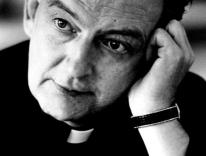
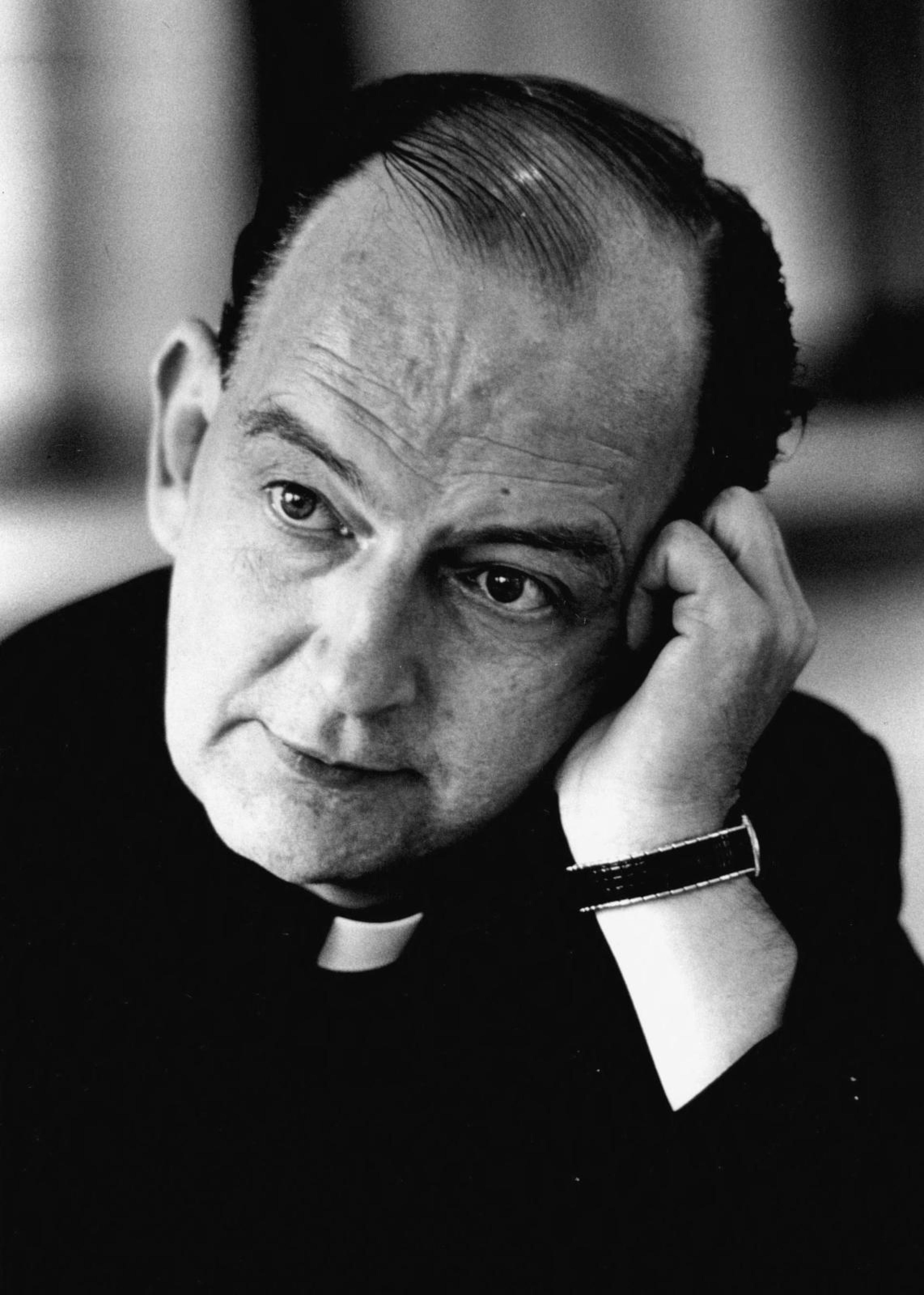
Some seven miles away from Buckley’s Upper East Side haunts, a thirty-five-year-old Lutheran pastor watched this episode of Firing Line with rapt attention. Richard John Neuhaus, who ministered to a Williamsburg congregation largely made up of poor African Americans, soon took to the Lutheran Forum to review the show. “Buckley’s presently irenic words cannot obscure the fact that the Black advances he now lauds were fought by him every step of the way,” he observes, before listing a series of civil rights–movement strategies and policies opposed by National Review over the preceding decade. “Buckley has fought…the very advances he now proclaims as evidence of the system’s success…. Such rewritings of reality, usually associated with Soviet historiography, boggle the mind.”
Jackson’s “genius,” on the other hand, lies in the way he “calls the bluff of the defenders of the system.” Not only does Jackson, in Neuhaus’s rendering, expose his bad-faith critics as such, but he also offers indispensable lessons to the next generation of movement leaders and activists. Jackson shows how they must defeat their political adversaries, “not through…declaring them to be sick and devoid of moral sensibilities, but through taking them at their word, taking them more seriously than they take themselves and forcing them to make good on the ideals they so lightly profess.” Neuhaus’s final assessment is scathing: “The truth is that Jesse Jackson, like Dr. King before him, is too fervently American for Mr. Buckley and his flock of patriots.” Shortly after its publication, Neuhaus sent a copy of his Lutheran Forum review to Buckley. What resulted would be a withering exchange (and one, to my knowledge, not yet reported or written on)—a young, pugnacious Neuhaus squaring up against a swaggering Buckley.
Yet before long, it would be Buckley’s, not Jackson’s, vision for the country that Neuhaus evangelized. By the mid-1970s, Neuhaus was flirting with conservative politics by way of conservative Christian theology; within two decades, he’d stand as a rock-ribbed conservative partisan. In 1990, he founded First Things, a right-wing Catholic-colored publication whose influence expanded throughout the decade; earlier that year, he had converted to Catholicism, and in September 1991, he was ordained as a priest. By the time George W. Bush assumed office, Neuhaus stood at the vanguard of an informal grouping referred to as the “theoconservatives,” or “theocons”—an ecumenical phalanx of activists and intellectuals committed to re-embedding religious virtue in American life. Especially following 9/11, the theocons matured into an essential constituency of the Bush White House, cheering the American invasion of Iraq and supplying theological grist for the neoconservative movement’s world-making vision.
On its surface, the story of Neuhaus’s ideological pilgrimage rhymes with the journeys of neoconservative stalwarts such as Irving Kristol and Norman Podhoretz. But in other ways, Neuhaus’s evolution from firebrand movement minister to the theological valet of President Bush is idiosyncratic. An instructive story, it demonstrates how the enduring flame of radicalism, in its different colors, can keep burning through political transformations—and offers one compelling vantage point from which we might understand the trajectory of faith and conservative politics today.
Three decades before converting to Catholicism and launching First Things, Neuhaus had answered another formative call—the call to urban ministry. In 1961, the freshly minted Pastor Neuhaus arrived at St. John the Evangelist, a small Lutheran Church in Brooklyn. The Church had been teetering on the brink of collapse, with a congregation hovering somewhere around two dozen worshippers. But under Neuhaus’s early stewardship, its fortunes reversed. Neuhaus’s passion and charisma, according to later accounts, rescued the church from extinction. Hardly twenty-five years old when he took the post, Neuhaus quickly displayed a prodigious capacity for urban ministry. He ambitiously evangelized among the local Black population, and the church’s congregation swelled.
As a pastor, Neuhaus bore witness to the reality of urban poverty. Members of his congregation doubled as emissaries for what Michael Harrington famously called “The Other America”—the underclass living impoverished, immiserated lives. Neuhaus observed how the yoke of racism structured the lives of his Black congregants. The status quo, he concluded, locked Black America out of any meaningful prospects or opportunities for social mobility.
Neuhaus’s political activity was limited until 1963, when King wrote his famous “Letter from a Birmingham Jail.” King directly addressed white clergymen abstaining from the fight for civil rights and found an eager audience in Neuhaus. He took King’s injunction so seriously that he deemed the civil-rights struggle to be the defining issue of his time. From that year on, he grew increasingly outspoken and plunged deeper into the movement. He attended the March on Washington, likely flanked by members of his majority-Black congregation; two years later, in March 1965, he marched from Selma to Montgomery in support of Black voting rights.
Neuhaus also threw himself into the antiwar movement. President Lyndon Johnson’s bombing campaign against Northern Vietnamese targets, “Operation Rolling Thunder,” was met with quiet acquiescence from most American clergymen. But swift and severe clerical opposition came from Clergy and Laymen Concerned about Vietnam (CALCAV), an organization founded by Neuhaus in 1965 that unified faith leaders from across confessional (and religious) divides. Neuhaus’s cofounders were Rabbi Abraham Joshua Heschel, the towering civil-rights leader and Jewish theologian, and Daniel Berrigan, the Jesuit priest who would soon grow into a household name due to his sensational antiwar civil disobedience. CALCAV became Neuhaus’s political anchor as the antiwar movement expanded into a broader countercultural and political force. Like many movement intellectuals and activists at the time, Neuhaus held that bloodletting abroad and racist systems at home were twinned, mutually reinforcing evils. He shared leftist intellectuals’ penchant for fiery, biting critique of American state power—the Vietnamese, as he put it, were “God’s instrument for bringing the American empire to its knees.”
Yet, even at the height of his antiwar militancy, Neuhaus could never fully disavow the American project—a limitation that could alienate fellow travelers in the movement. Neuhaus felt there were real stakes to surrendering the idea of America. Randy Boyagoda’s rich and probing (if faintly hagiographic) biography of Neuhaus, published in 2015, opens with a vignette from a 1967 antiwar demonstration. A group of activists packed the pews of St. John the Evangelist as waves of young men successively approached the altar and burned their draft cards. Neuhaus, presiding over the event, insisted that the antiwar activists sing “America the Beautiful”—a suggestion that stupefied them. To the protesters, the hymn was a taunting emblem of American imperial power. As Boyagoda writes, Neuhaus maintained that “prayer and protest could be joined to patriotism.” In fact, it was imperative for all those of conscience to “rescue love of country from war-making scoundrels and other ugly conservatives, or to remind myopic pacifists…that they were citizens called by God and by history to love and redeem their troubled nation.” The future of America’s ideals, for Neuhaus, hung in the balance—the movement could either salvage and renew them or let them decay into moral nihilism.
In the latter half of the 1960s, Neuhaus divided his days between ministry, writing, and the carousel of activities that occupies every movement radical: strategizing with allies; crisscrossing the country for retreats and conventions; meeting with politicians or policymakers; and, of course, taking to the streets. By the end of the decade, Neuhaus had drifted far from his ministerial responsibilities while his writing output soared. In 1970, he cowrote a book with sociologist Peter Berger titled Movement and Revolution—a project that, according to Boyagoda, materialized under the editorial eye of Midge Decter, the future matron saint of the American neoconservative movement.
Neuhaus’s essays in Movement and Revolution are bricolages that offer fleeting insights into his political consciousness at the time. The form of his own analysis, in some ways, mirrors his diagnosis of the protest movement: both are amorphous, scattered, and heterogeneous. But even through its frenetic form, Neuhaus can be deliberate, offering careful, detached observations of the movement, as well as searing critiques of the racist and imperial tendencies coursing through American statecraft. At one point, he even reckons with the possibility, and moral permissibility, of violent insurrection. The project proved easy fodder for critics. Jeffrey Hart of National Review dealt it an unsparing appraisal: Berger, is “bright enough,” according to Hart, but the sociologist is “browbeaten and bulldozed” by Neuhaus, a “glorious cliché-revolutionary Lutheran parson.”
Within eighteen months of Movement and Revolution’s publication, the protest movement, which had so recently blazed across the country and possessed the imaginations of millions of young people, dwindled. By late 1971, Neuhaus’s faith in “the movement” as such was shaken. Even as he remained committed to social progress and change—indeed, figures like Jackson still provided some cause for optimism—he’d grown jaded, disappointed by the apparent failure of a movement whose success felt, for many years, like an inevitability.
It was during this transition period that Pastor Neuhaus penned that searing Lutheran Forum essay. In March 1972, four months after the piece ran, Buckley sent Neuhaus a barbed response. “I’m not concerned to reply to your bombasts,” he writes, “but I do think you ought to consider an intellectual point before indulging yourself in believing that I was hypocritical with Jackson.” He challenges Neuhaus’s suggestion that recent Black progress was owed to legislation; he also takes issue with the claim that the progress was presently more exceptional than in previous periods. What follows is another of what Neuhaus had called Buckley’s “rewritings of history.” Buckley, in his own telling, had supported King’s actions in Montgomery and acknowledged the executive branch’s “clear duty… to intervene…[when] the Negro was denied the right to vote by virtue of his color.”
Neuhaus’s reply, sent a month later, is softer in tone, but nevertheless grabs on Buckley’s ambitious reinvention.
Your statement of your position is somewhat misleading…. I think it’s fair to say that many of the means by which blacks have advanced in the past fifteen years were opposed by you, and it therefore seems somewhat dishonest (in fact, although no doubt not in intention) to applaud those advances as evidence that the system works quite well without resort to the means whereby needed changes have been effected.
Neuhaus understates just how fervently hostile to the civil-rights struggle Buckley had been. For years, Buckley made no secret of his segregationist sympathies. One of his most noxious pieces was a 1957 essay titled “Why the South Must Prevail,” which poses the question of “whether the White community in the South is entitled to take measures as are necessary to prevail, politically and culturally, in areas in which it does not predominate numerically.” The term “measures” is, of course, a staid euphemism for the racial-terror campaigns that aimed to intimidate Black Americans out of civic life and ravaged communities across the Jim Crow South. Buckley’s answer is clear: “Yes—the White community is so entitled because, for the time being, it is the advanced race.” Buckley’s work endowed Jim Crow orthodoxy with a respectable gloss while ideologically fortifying it against challenges by Black civil-rights advocates.
Beginning in the late 1960s, he did rethink his earlier segregationist commitments. He even penned an essay for Look in 1970, after his National Urban League tour, entitled “Why We Need a Black President in 1980.” Yet his attempt to rewrite his own history, against reams of testimony to the contrary, is both brazen and easily disproved. Neuhaus’s original Lutheran Forum piece artfully describes the irony of someone of Buckley’s political history exalting the American capacity to cultivate Black progress: “A parallel might be Lyndon Johnson’s claiming his war policy a success because it produced marvelous fighting ability and national morale among the North Vietnamese.”
Still, Neuhaus strikes a cordial note in the conclusion of his letter, affirming, “I thank you for writing and assure you of my continued appreciation—more than the column or this letter may indicate—of what you’re doing.” This touch of geniality seemed to disarm Buckley, who, in his reply several weeks later, remarks on “the tone of your letter and your willingness to discuss these matters.” The debate continued, with Buckley maintaining “economic progress is the key to Negro advancement,” and such a thing is “best accomplished in a dynamic upward-mobile society of a kind conservative doctrine favors.” It’s not the case that “political enfranchisement of the Negro has resulted in his economic progress,” he argues. “There are too many anomalies.”
Neuhaus’s followup is brief. He questions Buckley’s “curious bifurcations of political from economic participation,” before extending an offer for lunch so that “we could pursue the matter further.” His disposition shades into fulsomeness, as he applauds Buckley’s “generous interest in the column…and for your good spirit…to clarify whatever misunderstandings may contribute to our disagreement.” He also appends another recently published essay, which appeared in an April issue of The Christian Century. Buckley accepts Neuhaus’s offer to lunch and describes the essay as “provocative and very well written,” before offering high praise: “You are blissfully in touch with the literature.”
That piece, “The Loneliness of the Long-Distance Radical,” is perhaps the most consequential, revelatory work of Neuhaus’s young career. A beguiling, elegiac autopsy of the protest movement, it also serves as a road map for radical politics in the 1970s and subtly foreshadows Neuhaus’s trajectory over the next four decades. “Perhaps it is because the movement said so much that it is now dead,” he writes, subjecting his own Protest and Revolution to an autocritique. The movement’s capacious remit, it seemed, once stood as a manifestation of its universal appeal, perhaps even its inevitability; but in reality, it couldn’t effectively contain its sprawling constituencies, nor could it effectively harness popular energy toward concrete ends.
The radical politics of the 1970s, Neuhaus argues, will not resemble that of the preceding decade. The present leaders have shed those shibboleths that structured the movement’s political culture in the late 1960s. “Their passion is not for maintaining the semblance of the movement, but for achieving the reality of change,” he observes. “They seek the liberation of the masses but do not put their faith in the masses.” Mass politics will not be the vehicle for radicalism—or as Neuhaus quips, “Radicalism is always a minority vocation.”
Jackson is held as an exemplar of the sort of authentic, committed leader emerging out of the protest movement. According to Neuhaus, the young reverend is decidedly not like those long-haired hippies retreating to rural communes or the faux-radical academics ensconced in the ivory tower. Jackson remains organizing on the streets, where he is “tired of playing more-radical-than-thou in black enclaves,” and instead is “summoning black and white to make a joint assault on the economic structures that keep the country separate and unequal.” He is steady and steeled—a figure, in this rendering, poised for leadership through the 1970s.
The movement isn’t entirely dismissed as mere ephemera, however. For Neuhaus, one of its lasting gifts would be in how it instilled in Americans a skepticism of the Pentagon and its war-making. “Generalizing from the Indochina debacle, the public has come to a new (though still inadequate) awareness of the global dimensions of U.S. political and military oppression,” he writes. But this outrage must not allow us to dismiss the actual existence—and future horizons—of American power in the world. “American empire, for better or worse, will not disappear quickly,” he maintains, “and it is the responsibility of those who care about justice to redefine the American empire for the better.”
Just as it was imperative to rescue “America the Beautiful” from the clutches of those bellicose creatures of conservative reaction, American power across the globe, too, must be moored in a moral vision that “answers the real needs of the majority of the people [in the Third World].” Otherwise, “the practitioners of the old politics and their military and corporation cronies will be glad enough to carry on as usual.”
Neuhaus’s most searing indictment of the movement concerns its theological vacuity. Its engagement with faith proved largely instrumental—he likens it to a “rummage sale on theology,” one in which activists “picked up at bargain prices the bits that lent a religious aura to their politics, and incidentally, demonstrated the ‘relevance’ of the church.” Churches, he argues, resisted the radical imperative for change, a missed opportunity that he blames on the theological unseriousness of movement leaders. If Christian radicalism is to have a future, Neuhaus writes, Christian radicals would be well advised to take seriously several factors—the future of the Church; the mystery and wonder coursing through human history; and accountability to those at the heart of the Church—“the community of water, Bible, bread and wine, of tears and hopes and terror of the trivial.”
Neuhaus would soon undergo a political metamorphosis. His startling turn toward the right has elicited a number of explanations. Robert George, a legal scholar and longtime satrap of the theocon clique, has argued that pro-choice advocacy repelled Neuhaus from his allies in liberal-left movement politics. In his useful book The Theocons, Damon Linker speculates that Neuhaus grew particularly disillusioned after the Vietnam War, when his leftist allies refused to condemn the human-rights abuses of the North Vietnamese. But “The Loneliness of the Long-Distance Radical” (which Linker also highlights) shows that Neuhaus’s grievances were long-simmering. The essay, so savored by Buckley, suggests that the ex-activist may never have dulled his radical tendencies but merely swapped one form of radical politics for another.
Neuhaus would soon launch a broadside against mainstream Christian theology, which, in his view, had been co-opted by liberal forces and evacuated of substance. In 1975, Neuhaus convened an ecumenical group of Protestant and Catholic clergymen and thinkers to affirm what is now known as the Hartford Declaration. The group condemned a set of thirteen theses, thought to be axioms of prevailing liberal Christian theology. These statements, branded “false and debilitating,” included such claims as, “All religions are equally valid; the choice among them is not a matter of conviction about truth but only of personal preference or lifestyle,” and “Religious statements are totally independent of reasonable discourse.” The Hartford Declaration sought to imbue Christian theology with structure and depth, and to revitalize it after a period of perceived malaise. Today, it’s remembered as Neuhaus’s first decisive, public step away from his erstwhile allies.
In the 1980s and ’90s, Neuhaus became increasingly consumed by the role of faith in American public life. He determined that faith had been infected by the secular pathologies of American culture and politics. Even as his efforts mobilized mass political constituencies—he was pivotal in forging an Evangelical-Catholic political bloc—the failure of the late-1960s protest movement had taught Neuhaus that his vision for the nation could not be achieved by popular energy alone. He’d internalized the axiom that radical politics would be a “minority vocation.” Instead, he began to leave his demotic and even democratic principles behind and engage more with Church leaders, conservative foundation presidents, policymakers, and politicians.
By the turn of the millennium, Neuhaus surfaced as an advisor to future president George W. Bush. Bush’s speeches became suffused with the moral preoccupations and obsessions that filled the pages of First Things. A 2005 article in Time reports, “When Bush met with journalists from religious publications last year, the living authority he cited most often was not a fellow evangelical, but a man he calls ‘Father Richard,’ who, he explained, ‘helps me articulate these religious things.’”
Father Richard became one of the Iraq War’s staunchest boosters—a prime example of the role theocons played in sanctifying Bush-era neoconservatism. His support for the invasion remained strident, even in the face of Pope John Paul II’s explicit opposition and repeated pleas for peace. Nor did the discrediting of the pretexts for the invasion dampen Neuhaus’s enthusiasm. In a 2005 First Things piece, Neuhaus heralds his patron-in-chief as someone who “has provided a fresh conceptual framework for America’s role in the world, and has acted upon it with remarkable energy.” From his 1972 essay, Neuhaus had maintained that the United States had a crucial role to play in the international order. But by the aughts, that role had been subsumed by Bush’s vision of a world made “more free” by military interventions that also happily advanced American interests, at least as the neocons understood them.
Neuhaus goes so far as to praise Bush for trying to bridge the gap between idealism and realism. “He believes, and urges us to believe, that idealism is realism. We do not have to choose between national interests (such as oil) or national commitments (such as the security of Israel) and our moral responsibility in world affairs; they are all of a piece.”
It would be difficult to overstate just how attentive to power Neuhaus was during this period. One anecdote relayed by Linker shows how much Neuhaus valued access and influence. In late 2002, Linker, then an editor of First Things, approached Neuhaus to pitch an essay sketching out a conservative case against the invasion of Iraq. “Oh Damon, that’s really not a good idea,” Neuhaus warned. “You don’t want to get a reputation for being unreliable.”
Buckley and Neuhaus never did meet for that lunch in spring 1972. Their first in-person meeting would finally come twelve years later, when Neuhaus, now firmly an ideological compatriot of Buckley’s, appeared on Firing Line to promote his book The Naked Public Square. Before long, Neuhaus and Buckley struck up a friendship, one that would last until Buckley’s death in 2008. Neuhaus, who also enjoyed a stint as National Review’s religion editor, would eulogize Buckley as a “friend for well over a quarter century,” and “a man of almost inexhaustible curiosity, courtesy, generosity, and delight in the oddness of the human circumstance.”
As for Jackson, Neuhaus’s reverence ultimately mutated into contempt. In 2002, he inveighed against the civil-rights leader, now cast as “an opportunist, an ambulance chaser, and a publicity hound, who has skillfully exploited the memory of the movement by turning it into a lucrative extortion racket for shaking down corporate America.”
Since last year (Buckley’s centenary and the occasion for the publication of Sam Tanenhaus’s massive biography), much has been made, rightly, about Buckley’s abiding imprint on American conservatism. But seen in another light, the conservative ecosystem looks even more markedly influenced by the late Neuhaus. “Secretary of War” Pete Hegseth and his theocratic convictions are now steering the nation’s trillion-dollar defense budget. Whether or not Neuhaus would have approved of Hegseth’s actions and rhetoric, Hegseth’s conflation of nationalism and Christianity, as well as his repeated references to “radical Islam” and the “Christian West,” are inheritances from Neuhaus. What’s more, a cross-confessional coalition of conservative Christian activists—the fruit of Neuhaus’s indefatigable political-organizing efforts throughout the 1990s—now wields incredible force among Republican lawmakers. In recent years, it’s notched sweeping wins that have delighted Neuhaus’s ideological heirs: the overturning of Roe v. Wade, the dismantling of DEI, and conservative education reforms in the name of “parental rights.”
The conservative movement grows ever more uninterested in even the illusion of democracy, let alone its practice. That might seem at odds with Neuhaus’s one-time commitment to promoting religious discourse in the public square. But Neuhaus’s suspicion of mass movements has evolved among postliberal conservatives into a hostility toward democracy itself. Even a figure like Bishop Robert Barron—who possesses a tragically pale shade of Neuhaus’s acuity—has borrowed a page from the theocon playbook by ingratiating himself to political power.
The final section of Neuhaus’s Christian Century essay shares, with unfeigned affect, the substance of Christian radicalism. “Until wars end and the prisoners are released, until the blind see and the hungry are fed, the social action thing will not have been done,” Neuhaus writes. “Each generation will be renewed by Christian radicals who find their home among the wretched of the earth, their truth along the fault lines of every social order, and their hope in the promise that the dice of the Kingdom are indeed loaded on the side of the poor.”
By the end of his life, Neuhaus had wandered far from that kind of radicalism, in favor of another kind. Though he continued to minister to poor and working-class congregations, he seemed most at home in the company of the powerful—those who plan wars, cut taxes for the rich, and blame “the culture of poverty” rather than unjust economic systems for the growing number of Americans who can’t afford health care, adequate housing, or even healthy food. Thanks to the politics Neuhaus adopted—the kind he once condemned in his exchange with Buckley—the United States has become a crueler country, its dice more heavily loaded against the downtrodden.
We welcome your comments about this article. Please send your response to [email protected].