After decades of campaigns to convince Catholics that the GOP is the only party for religious voters, the 2024 election seemed to confirm that to be Catholic in the United States is to be Republican. No longer was the Catholic vote evenly split, with any slight advantage helping to determine the winner—a reality that had led E. J. Dionne Jr. to quip a quarter-century ago: “There is no ‘Catholic vote.’ And yet, it matters.” Instead, by 2024, white Catholics were starting to resemble white Evangelical voters, with nearly two-thirds of white, weekly Mass-attenders opting for Trump. He even made significant inroads among Hispanic Catholic voters.
But while a majority of white Evangelicals continue to support the president, Catholic confidence in Trump has been tanking. Even before Trump started insulting Pope Leo this spring, support for his job as president had declined among white and Hispanic Catholics, according to polling in January by the Pew Research Center. Faith in Trump’s ethics was particularly low, with only 34 percent of white Catholics—and a mere 14 percent of Hispanic Catholics—giving him high marks. Then, after the public tiff over the conflict in Iran and other issues in early summer, a majority of U.S. Catholics chose the pope over the president. Leo’s favorability remained high, while polling found that a majority said Trump had been too critical of him.
Could Catholic Trump voters finally be coming to their senses? Few of them have likely escaped suffering under Trump’s second administration. If their community hasn’t been hit with violent government thugs detaining innocent family, friends, and neighbors, they have undoubtedly felt the economic consequences of Trump’s tariffs, the administration’s cuts to government programs and services, and another mind-blowingly expensive “forever war” that no one asked for. Meanwhile, Trump’s priorities seem to be focused on renovating the White House, adding billions to his personal wealth, and flirting with a third term in office.
Here’s an idea: Since Catholic voters were pivotal in helping re-elect Trump, they could now step up to start trying to fix this mess. The country needs Catholic voters to step up in the midterms to help put at least some limits on Trump’s power. Decisive wins in November would dismantle the GOP’s trifecta on the presidency, House, and Senate, and allow a Democratic majority to block presidential appointments and Republican legislative moves. The midterms are shaping up to once again be the most important election of our lifetimes.
Stephen Schneck, president of a relatively new Catholic political action committee, believes Catholic voters have “Trump fatigue” and are “swingable,” which could bring Catholic vote tallies in the midterms back to the fifty-fifty mark of previous decades. And since Catholics and former Catholics make up about a third of the electorate, they could have a significant influence, especially in key districts that have sizable Catholic populations.
“The Catholic vote is critical, and it’s up for grabs because it isn’t cemented to either political party at this time,” Schneck told me. Republicans know this, which is why Trump-supporting organizations such as CatholicVote.org are organizing in key states to defend their 2025 gains—gains even they admit are now threatened by skepticism toward ICE after Church leaders have publicly criticized violent and unfair detentions. Says Schneck: “It’s critical for Democrats to be in the game too.”
His super PAC, Catholics for the Future, which is inspired by the Church’s social-justice traditions, plans to focus on moderate white Catholic voters in crucial House races in northeastern Pennsylvania, Wisconsin, Iowa, Michigan, and Ohio. Schneck believes the political salience of some hot-button cultural issues has dropped, and voters, including practicing and cultural Catholics, are more focused on so-called kitchen-table issues, such as inflation and “affordability.” One of the PAC’s social-media commercials features a large family sitting down for dinner—a crucifix with Palm Sunday fronds on the wall in the background— discussing how expensive it is to make Sunday “gravy,” as Italian Americans call it, as a result of tariffs and inflation.
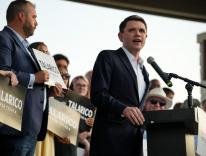
Trying to reach moderates in purple states is a traditional strategy, but another Catholic political organization is going broader. Catholics Vote Common Good, the Catholic outreach of the progressive Evangelical group Vote Common Good, also believes faith voters will be key this election. They are doing outreach to Gen Z Catholics, funding postcard-writing and billboard campaigns, and making a slew of endorsements in national and state races across the country. Among its sixty-six endorsements so far are support for Senate candidates James Talarico in Texas and Sherrod Brown in Ohio.
“Things have changed dramatically since 2024. It’s a lot more dire,” said Denise Murphy McGraw, the group’s national co-chair. While economic issues are important, she believes faith voters also are particularly concerned about the morality of violent immigration enforcement, international conflicts, and cuts to the social-safety net. Their strategy: “love thy neighbor” messaging. “We are talking about the Beatitudes and Catholic social teaching and looking out for one another,” she said. “I think it’s a winning message.”
Nonpartisan Catholic outreach in advance of the midterms includes “get out the vote” efforts, two of which also connect political involvement with Christian love. NETWORK’s “See. Love. Vote.” project is working with more than sixty partners to provide information and resources for voters. The goal is to reassure overwhelmed citizens that “checking your voter registration is an act of love,” said Laurie Carafone, executive director of NETWORK Advocates for Catholic Social Justice. NETWORK’s separate lobbying group also will be providing side-by-side comparisons of candidates, with special attention to Catholic social-justice issues.
The Ignatian Solidarity Network is promoting civic engagement with high-school and college students through its “Voting Is an Act of Love” project, with a focus on community to build accountability. The group will organize mail-in voting parties, walks to drop off ballots, and election-day prayer services, said Jon Gromek, director of justice formation and action. “Voting is still one of the things that can bring people together, if we approach it as a shared responsibility of loving our neighbor,” he said.
A growing number of Church leaders and organizations are drawing on the Catholic social tradition to defend democratic institutions, including free and fair elections. On the anniversary of the Voting Rights Act last month, Bishop Daniel Garcia of Austin, Texas, released a statement expressing the U.S. bishops’ support of voting rights and noting that “recent developments” have communities of color worried about “fair representation and future participation in the democratic process.” A new federation of Catholic organizations, Catholics in Communion, which had been focused on a Christian response to detention centers, is now turning its attention to the midterms, rooting its civic action in Catholic social teaching.
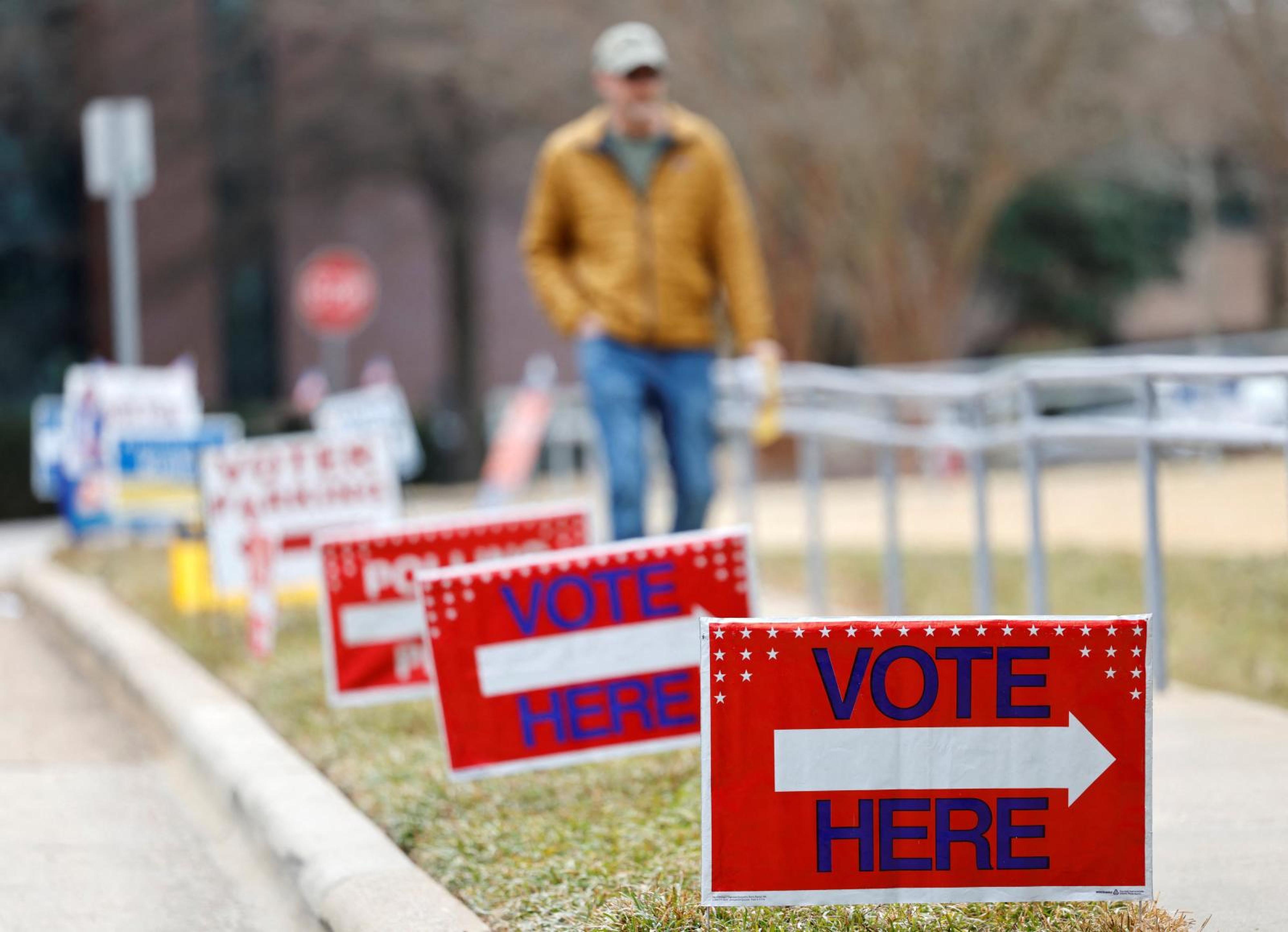
“This isn’t about the Church turning more liberal or conservative. That’s the wrong frame. It’s about how the Church is returning to its roots,” said Joseph Tomás McKellar, executive director of the faith-based community-organizing network PICO California, during a recent virtual press briefing sponsored by Catholics in Communion. Among those speaking was Archbishop Thomas Wenski of Miami, who urged Catholics to cast their ballots in this election. “We have to just keep on telling people in the pews to vote,” he said, noting low-turnout statistics, especially during midterms. “Because if we don’t vote, then the other voices will prevail.”
Catholics will continue to minister to and accompany migrants, McKeller said, but will also accompany voters, especially those who are feeling vulnerable this election. Expect to see processions of voters dropping off their ballots, Catholics serving as poll chaplains, and more Church leaders speaking out about the sacredness of free elections, he said. A two-day virtual conference on “Participation/Dignity/Elections” is scheduled for September 16–7 and will feature remarks by two U.S. archbishops and a cardinal from the Philippines. “We have seen concerted efforts to intimidate and threaten voters, and we think the Catholic Church—everyday lay leaders and clergy—have a role to play so that everyone who can vote feels safe to do so,” McKeller said.
Catholics’ involvement in protecting voting rights is an issue of religious freedom and reflects Church teaching about participation and human dignity, said Richard Wood, a sociologist of religion and president of the Institute for Advanced Catholic Studies at the University of Southern California. “I see the emergence of a reunified Catholic public voice in American public life that’s got the kind of clarity and courage to speak to the broad range of public issues we face in the country, as opposed to the narrower slice of issues in the past,” he said during the press briefing. That unified voice might be just loud enough to get a message across in November.
We welcome your comments about this article. Please send your response to [email protected].