Jacob Weisberg has brought impressive journalistic experience to bear on his Profiles in Cowardice, a provocative if necessarily incomplete assessment of a constitutional and civic-cultural crisis that has taken the United States to the edge of an abyss. The danger confronting us was characterized early this year by Rep. Ro Khanna, whose Silicon Valley district contains more than a few billionaires and tech lords and their companies. Khanna urged Americans “to ask ourselves how we have produced an elite that is so immature, reckless and arrogant.” How, indeed? How and why have so many political, business, civic, and cultural leaders who have known—and sometimes even warned publicly—that Donald Trump is criminally perverse succumbed so quickly to his seductions and intimidations at the expense of their own reputations and those of the institutions they lead?
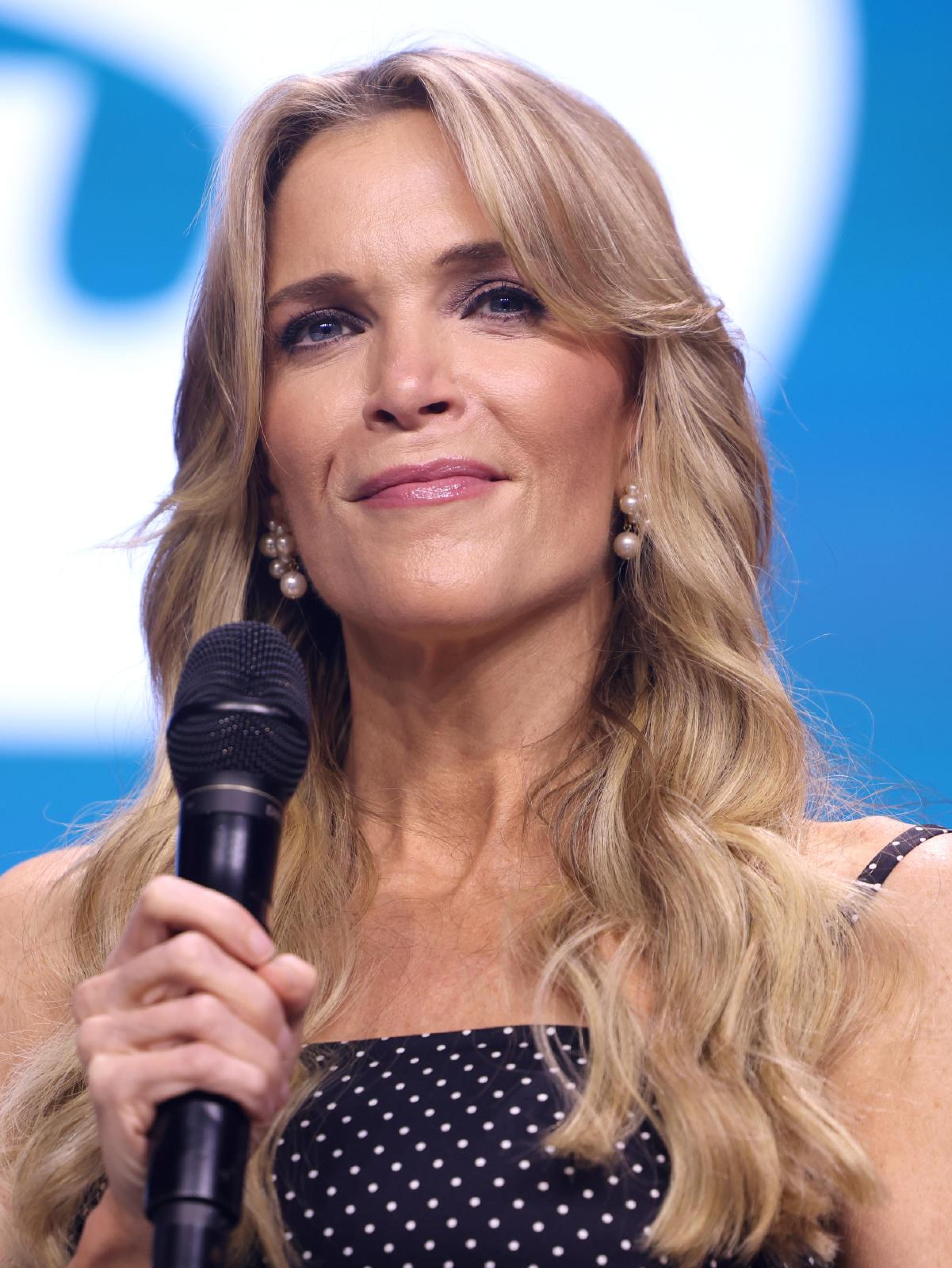
Weisberg poses that question in his profiles of eight prominent figures who professed their commitment to civic-republican values and policies during Trump’s first term but have slid into accommodating and even collaborating with his worst offenses during his second. These powerful cowards include Brad Karp, a former chairman of the social-justice-oriented law firm Paul, Weiss, Rifkind, Wharton & Garrison; Jeff Bezos, the founder of Amazon and now also the owner of The Washington Post; Megyn Kelly, the FOX News broadcaster who stood up to Trump briefly in 2016 but now bullies people on his behalf on her SiriusXM podcast; Sian Beilock, once a “politically correct” president of Barnard College but now the ideologically pliable president of Dartmouth, who has bowed to the White House’s outrageous demands; Stephen Schwarzman, the Blackstone private-equity mogul who has been Trump’s emissary to China and one of his most reliable domestic enablers and apologists; and George W. Bush, who seems to dislike Trump but has been inexcusably silent about him.
Weisberg also profiles Sen. Mitch McConnell, the former Republican Majority Leader, who blocked Trump’s impeachment after the January 6, 2021, assault on the Capitol, leaving any punishment for his actions that day to the discretion of the Supreme Court. Chief Justice John Roberts, presented by Weisberg as a smooth-talking but ideologically intransigent operator, would go on to orchestrate the 2024 decision in Trump v. United States, which granted Trump “presumptive immunity” against prosecution for his “official” acts.
Weisberg’s gruesome survey has unusual resonance for me. In the late 1960s, when Yale president Kingman Brewster Jr. was demonstrating a true profile in courage with his role in the civil-rights and anti–Vietnam War movements, I was an undergraduate at Yale, living at one of its residential colleges, Davenport College. I was just a few entryways down from a sophomore named George W. Bush, who cheerfully handed me his dry-cleaning every week during my freshman year, when, for my sins, I took a pocket-money job in the Yale Student Laundry. Later, Bush became president of DKE, the fraternity one of my roommates belonged to. Also in Davenport was my classmate Stephen Schwarzman, the future cofounder of Blackstone. In his book, Weisberg reports that Schwarzman made a fatuously self-important speech to the class of 1969 at our fiftieth reunion dinner in 2019, and he footnotes a Yale Daily News account of my interrupting Schwarzman from the floor loudly enough for hundreds of classmates and their spouses to hear me say, “That’s enough, Steve. You’ve displaced tens of thousands of people from their homes.” Among our classmates, the reaction to my interjection was mixed—ranging from “How rude!” to “I’m glad you said what I was thinking. Somebody had to say it.” The episode prompted me to write an exposé of Schwarzman’s malignant m.o. a few months later.
Another unusual personal resonance: in 1983, before Brad Karp was chairman of Paul, Weiss, one of that firm’s partners, Arthur Liman, advised me in submitting an affidavit that proved pivotal in derailing attempts by Republican prosecutors to indict Chuck Schumer for having deployed State Assembly staff to work on his first congressional campaign. When Schumer sat on my apartment sofa one afternoon, pleading for help from me and my girlfriend, who ran his district office, I decided that he was in the right, and I said so in a self-published “brief” titled “The Truth About the Schumer Case,” which was circulated widely among journalists, prosecutors, and jurists, helping Liman convince the Department of Justice to quash the proposed indictment. (Last month, when Schumer, by then the Senate minority leader, delivered a pre-election bombshell on Trump’s efforts to rig the 2026 midterm elections, some Paul, Weiss lawyers and I had reason to be grateful.)
Weisberg’s profiles prompt a few more-general observations. First, it’s easier to condemn hypocrisy and cowardice than it is to stop accommodating them. Conventional institutions that exercise power discreetly and sometimes duplicitously stand at odds with noisy democratic vitality, but both are necessary in any effective liberal-democratic politics. What matters isn’t only how powerful figures like those depicted in Profiles in Cowardice lose their balance, but also why so few of them think and act like the principled senators who John F. Kennedy retrieved from across American history for his 1956 bestseller, Profiles in Courage. Weisberg’s play on Kennedy’s book title drives the “why” question home, even when his answers are incomplete and sometimes merely hortatory. “The eight people featured in this book are exemplary in a negative sense,” he writes, because “they’re characteristic, in different ways, of the breakdown of civic leadership and professional principle under Donald Trump.” We need to know more about who—and what—is driving the breakdowns in disciplined integrity and public trust.
Second, political and social renewal may require not only dramatic upheavals but also the kind of dogged, incremental work and deep cultural rebuilding that is undermined by global economic, technological, and demographic riptides. Those riptides will continue long after Trump himself is gone. Weisberg mentions honorable American holdouts against the disaster of Trump’s second term: principled federal judges, intrepid journalists, far-seeing philanthropists, and wise culture-weavers. But I wish Weisberg had more to say about why some of those fighting the good fight stick it out, while others succumb.
Third, lone dissenters who stand up to power sometimes empower others to do likewise. If a culture of courage is well-nourished and disciplined, it can spread quickly. Even massive failures of nerve can provoke rare prophets to acts of exemplary defiance that strengthen resistance, as in Rosa Parks’s decorous but firm refusal to move to the Black section in a racially segregated bus. She drew nationwide attention strategically as well as peacefully, in concert with advocates who highlighted our need to cleanse the rule of law itself. ICE needs to be countered that way now.
Finally, Weisberg rightly characterizes the mindless pandering, snake-oil peddling, and poaching at the top of American society as “exemplary in a negative sense.” The rot may rouse us and may even shame some who’ve been feeding Trump’s cravings for power and adulation. Restorative justice is hard to craft and sustain in a divided, dispirited society, but Americans haven’t yet sunk to the level of Cicero’s ancient Romans, who he feared had become “too ill to bear our sicknesses or their cures.”
Weisberg offers two seemingly contradictory but valid lessons: On the one hand, courage can indeed be stimulated by leaders and thinkers who, like the philosopher Immanuel Kant, have done some thinking for themselves “without the shelter of public opinion.” On the other hand, for it to become effective, courage has to become “not just personal but public, not just reactive but contagious…. To sustain fragile democratic systems that make dissent possible requires relying on not just expressions of moral courage…but examples of professional commitment. Not just speaking truth to power, but exercising power ethically from within.”
A collective dissent that affirms justice rather than merely denouncing hypocrisy is stronger when it takes full account of the odds against justice itself. Martin Luther King Jr. famously observed that “the arc of history is long, but it bends toward justice.” Note that he did not say how long. Human nature hasn’t changed enough since Romans yielded to the emperor Augustus or Germans succumbed to Hitler’s ravings that we can be confident that enough Americans will reject an effort by Trump to rig the 2026 midterms or the 2028 elections, possibly with help from the Supreme Court. Never assume things can’t get worse.
The best of our republic’s founders studied the historian Edward Gibbon’s account of ancient Romans’ decline into subservience to the wily and cold-hearted Augustus and to “a slow and secret poison” that spread into the vitals of the ancient Roman republic until its citizens lost “the public courage which is nourished by the love of independence, the sense of national honor, the presence of danger, and the habit of command.” John Adams may have been channeling Gibbon when he wrote that
when the people give way, their deceivers, betrayers, and destroyers press upon them so fast, that there is no resisting afterwards. The nature of the encroachment upon the American Constitution is such as to grow every day more and more encroaching. The people grow less steady, spirited, and virtuous…and every day increases the circles of their dependents and expectants, until virtue, integrity, public spirit, simplicity, and frugality become the objects of ridicule and scorn.
Is this what has happened to us? Trump is counting on it. He’s pushing various “slow and secret” poisons quickly and brazenly. Neutralizing them will require more than the “gotcha” bombshells and viral denunciations. The more reckless Trump’s lying becomes, the more likely it is that Americans will have to choose decisively between sharing in his delusions and stage-managed emergencies and opposing them and him by generating profiles in courage against daunting odds. In Davenport College, I encountered not only Stephen Schwarzman and George W. Bush but also Garry Trudeau, who in his early cartoons for The Yale Daily News was inventing the fictional Mike Doonesbury and associates, whom he presented as ethical and pragmatic, disciplined and free of cowardice. Are there many Doonesburys left in this country? We’re about to find out.
We welcome your comments about this article. Please send your response to [email protected].