Interested in discussing this article in your classroom, parish, reading group, or Commonweal Local Community? Click here for a free discussion guide.
Toward the beginning of his career, the philosopher Jürgen Habermas, who passed away at ninety-six earlier this year, wrote an essay titled “The German Idealism of the Jewish Philosophers.” Rebutting the conventional putdown that Jewish thinkers were at best second-rate, Habermas insisted that they had been full participants in German thought from the days of Immanuel Kant and Moses Mendelssohn. “The German Idealism of the Jews produces a critical utopia,” Habermas maintained. As an example, he cited Hermann Cohen, a disciple and interpreter of Kant at the turn of the twentieth century who traced many of his deepest philosophical breakthroughs to the Hebrew Bible and brought a Jewish and Kantian humanism to bear on the issues of his day.
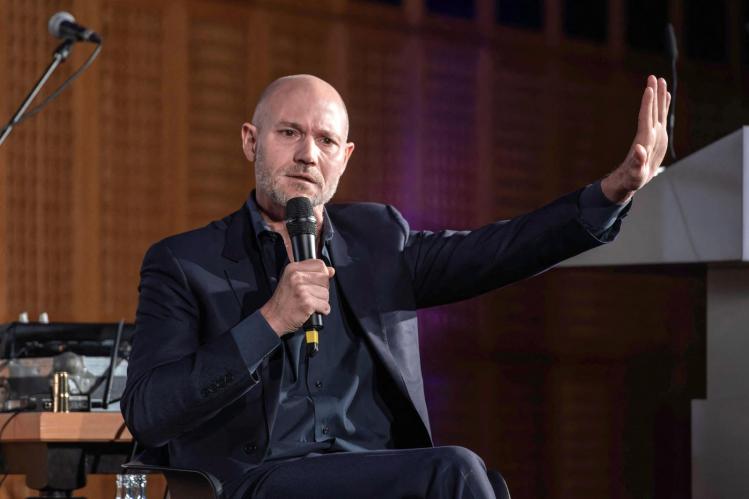
Omri Boehm is an Israeli philosopher who teaches at The New School in New York City. He is best known for his left-wing positions on Israel-Palestine, calling for a binational state and criticizing Israel’s war in Gaza. That criticism led the organizers of a German ceremony commemorating the liberation of Buchenwald to rescind their invitation to Boehm, who had been scheduled to speak at the event. Radical Universalism presents many of his positions in beautiful and clear terms. Beginning with an epigraph from Hermann Cohen, Boehm articulates a critical utopia born of the communion of biblical ethics and Kantian philosophy.
Boehm’s framing of our current ethical quandaries is attractive. The Enlightenment that Kant envisioned as an emancipatory process risks being appropriated by the right, which sometimes poses as the center and majority. The right stands up, at least selectively, for universalism in public debate about free speech and identity politics. It can do so, Boehm argues, because at least some parts of the left have renounced its historic universalism. In this rhetoric, progressives themselves have provided “the most comfortable way to bury uncomfortable universalist commitments” by allowing their enemies to feign allegiance to them or misrepresent what they require. “The fight against systematic injustice and fake universalism,” Boehm concludes, “can only be carried out in the name of true universalism.”
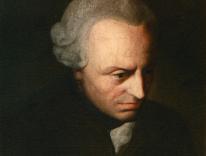
Which is what, exactly? In Radical Universalism, Boehm insists on going back to Kant, and through him to a biblical account of both a universal law that is “not man-made” and a human obligation to follow its dictates—rather than even divine authority.
He devotes one chapter to reprising a prior book on Kant’s response to Benedict de Spinoza, whose Enlightenment rationalism led in a nihilist direction. Boehm goes on to fault much of modern liberalism, from John Dewey to John Rawls, for effectively forsaking Kant’s radicalism by renouncing universalism. Interestingly, Boehm claims that something like Kant’s position undergirded the attempt of radicals in American history to target racial injustice, from John Brown and Abraham Lincoln to Martin Luther King Jr. and W.E.B. Du Bois. Dewey, meanwhile, followed Oliver Wendell Holmes Jr. in a nihilism born of the conviction that the Civil War and Reconstruction’s quest for radical justice had been a divisive mistake.
Boehm goes on to reprise the argument of another earlier book on the Abrahamic sources of radical universalism. He pays special attention to the biblical episode known as the “Binding of Isaac,” when, in Boehm’s interpretation, Abraham disobeys God’s order to sacrifice his son. “The idea that justice transcends any authority,” Boehm explains, “is Abraham’s original innovation.” After all, he abstains from murder in the name of a justice that no authority, even God’s, can contravene. For the same reason, Kant asserted that Jesus Christ did not possess special authority as the son of God but merely as an exemplar of the morality that binds humans and nonhumans alike. “Even Jesus Christ,” Kant wrote in the Groundwork of the Metaphysics of Morals, “must be compared with our ideal of moral perfection before he is recognized as perfect.”
Of course, the Binding of Isaac is open to multiple interpretations. Boehm—like Cohen before him, not to mention other Jewish thinkers such as Emmanuel Levinas and Moses Maimonides—sees it as vindicating ethical law above even God’s command. More famously, Søren Kierkegaard suggested that the story was about the need to suspend ethics in the name of higher faith. But it doesn’t matter much whether Boehm’s reading is right, since his entire point is that the authority of justice is not like the authority of the Bible or tradition or someone’s say so. For Boehm, Abraham is merely illustrative of philosophically independent truth.
You might like: Christian Göbel on the Church's censorship of Kant
It is a good thing, too. For in the Bible, if Abraham was a dissident, it was still in the name of obedience in another form. In the monotheism Abraham founded, the law consists of God’s commands, at least to start with. Abraham disobeyed divine authority, but in the name of God’s own prohibition of murder. Kant took things further, insisting that what grounds all obligations is not anyone’s dictate, not even God’s, but instead human freedom. This makes it puzzling that Boehm insists Kant “modernized the idea of following a law that is not man-made.” On the contrary, the only law humans should follow, according to Kant, is one they make by and for themselves. That is why he retrieved the term the Greeks coined to describe cities—“autonomy”—and applied it to individual human beings, who have no obligation other than to live out their own freedom, their own way, under laws they make for themselves and in recognition that all value comes from free acts. Unlike the lawgiver of the Hebrew Bible, Kant’s lawgiver is humanity itself.
One of Boehm’s friends once asked him what all this means for politics. In response, he mentioned some of the good causes he has stood for in Israel and in international disputes about Israel. But Boehm is a philosopher above all else, and what troubles me about his argument is the way it treats Kant as if he were the only universalist in German philosophy.
The history of modern thought has been as much a debate about which universalism matters as about whether to accept or reject universalism. Boehm’s framework conceals this. Yet Jacques Maritain, a thinker this magazine introduced to American readers, considered neo-Thomism the true universalism—and rejected Kant’s thought as a theory of subjective will rather than objective reason. And even within the German idealism that Kant launched, G.W.F. Hegel strenuously attempted to save Kant’s universalism from its ethics of rules (which Hegel denounced as a Judaic form of legalism) in order to reclaim its emancipatory spirit as an institutional and social project in history. Karl Marx, heir to German idealism, also staked out his own universalism.
It is surprising that Boehm deals with none of this. He sees his foes, rather, as the rationalism of Spinoza alongside the nationalism of American identity politics and Israel’s indifference to peace with its neighbors. That is noble of course. But intellectually, the energy of our time is in the development of a new left that, if it pays respect to philosophy at all, treats Kant and neo-Kantians as shills for “liberalism” and treats Hegel, Marx, and their heirs as its gurus and guides. It seems like Boehm has at least one more book to write, one that would have to reckon with the fact that the political disputes in his Brooklyn neighborhood and among his students at The New School are most likely disputes within universalism. It is not obvious that Kant has the last word in the long Jewish tradition of renovating German philosophy.
The challenge Boehm’s friend makes about practicality is also important. Boehm wants his Judeo-Kantian humanism to have a real-world payoff. But what he offers as a vision of radically universalist politics in Radical Universalism is slight. He refers readers to an earlier book, Haifa Republic, in which he articulated a Middle East peace plan close to the age-old binationalist hopes of the B’rit Shalom intellectuals of midcentury Israel-Palestine. But binationalism has never found many takers. Boehm appeals somewhat naively to international law and perpetual peace. But it has turned out that the law was made not so much to be broken, as the old saying has it, as to be interpreted by government and military lawyers in whatever way they wish. Meanwhile, peace has to be reclaimed after its appropriation in the name of all manner of complacent programs—from 1990s fantasies of the end of history on the global stage to the failed Oslo peace process in Israel/Palestine regionally.
The most interesting practical things Boehm has to say are about the Gaza War, which caused him to be canceled in Germany for daring to imply that not just Jews but also Palestinians could claim to be victims of injustice. Though ambivalent about whether Israel’s onslaught since 2023 has been genocidal, Boehm is clear about the extreme turpitude of his country’s acts without denying the criminality of Hamas’s attacks. Disarmingly, he also insists that political thought has to move beyond condemnation of current events, however much they may deserve it.
After October 7, Boehm remarks, the philosopher Judith Butler initially called for “asking what form of life would release the region from such violence as this,” before justifying Hamas’s armed struggle—as if doing so were the sole alternative to accepting Israel’s claim to be acting in self-defense. Boehm is right that we need more concrete plans for a peaceful region and globe. But after Kant’s ethics and politics were hijacked in the last generation for liberal complacency and neoliberal purposes, it is understandable that many in this generation are giving his successors a hearing. Boehm will need to explain why they should listen to Kant instead of Hegel and Marx as he tries to persuade them to adopt the biblical, peace-loving version of German philosophy that Radical Universalism reclaims.
To read all the contributions to the symposium, click here.
We welcome your comments about this article. Please send your response to [email protected].