America is where socialism goes to die. So goes a familiar refrain recently echoed by Donald Trump—but not only by him. Frightened by the ascendance of the Democratic Socialists of America (DSA), right-of-center Democrats are borrowing from the GOP’s playbook by promoting a new Red Scare. The Atlantic, that venerable redoubt of centrist conventional wisdom, now regularly publishes antisocialist screeds, which read like upmarket versions of The New York Post’s primal scream that “AMERICA HATES SOCIALISM!”
Are they wrong? Unlike many other advanced democracies, the United States has never had a socialist head of state. Even many socialists have expressed skepticism that the red rose could ever blossom in capitalism’s heartland. As long ago as 1906, Werner Sombart grumbled that socialism had little chance to thrive in America, because American workers had it too good: “On the shoals of roast beef and apple pie, all socialist utopias flounder.”
Sombart’s assessment was misguided. In his seminal history American Democratic Socialism, Gary Dorrien observed that, from slavery and Jim Crow to the Battle of Blair Mountain, America has seen more than enough exploitation and class conflict to engender socialist sympathies. It’s not that the United States has had no need for socialism, but that various social forces have kept it from taking root.
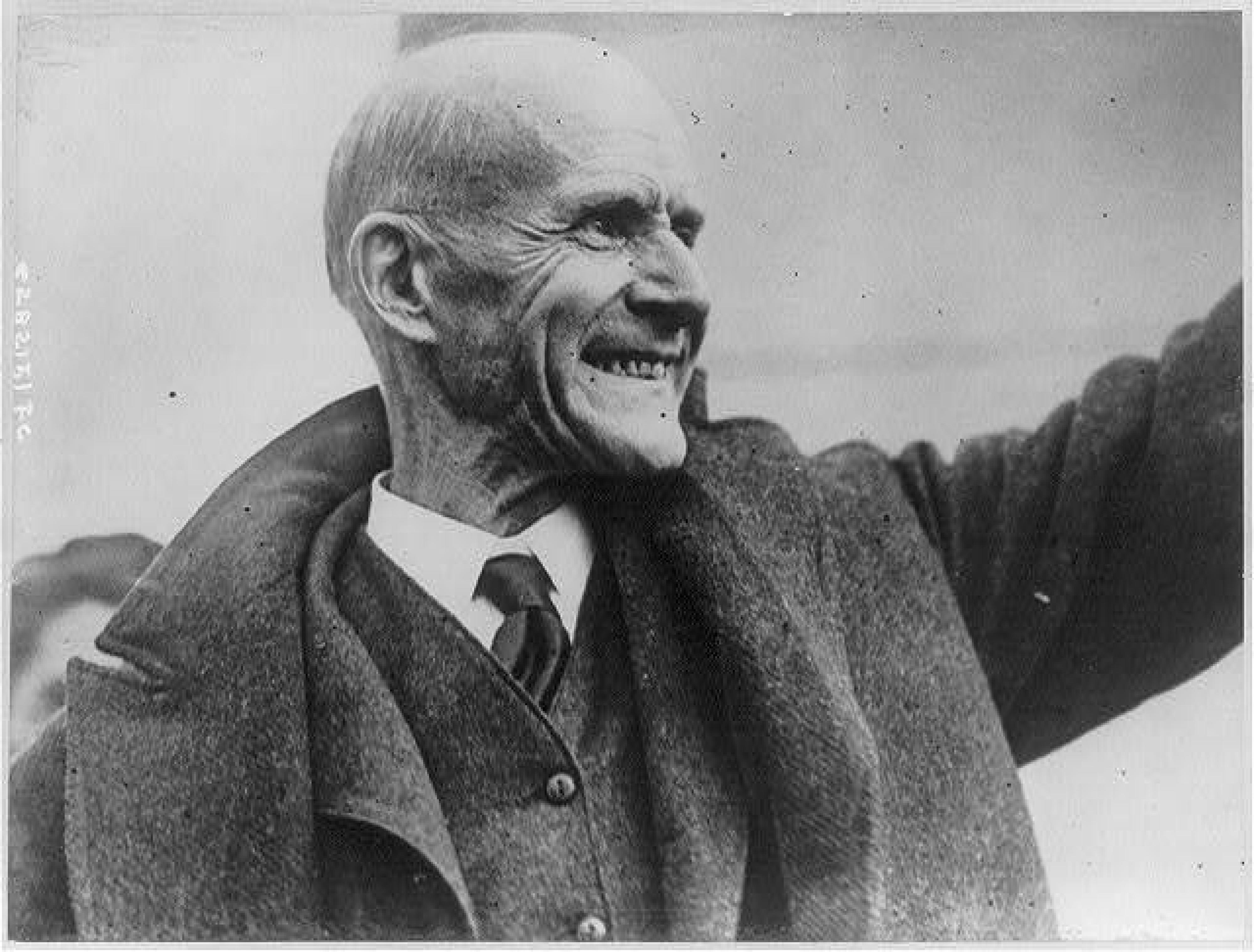
In his path-breaking new biography, American Socialist: The Life and Legacy of Eugene V. Debs, former Jacobin editor Shawn Gude looks back to a time when the left thought it had a chance to go mainstream. For most of that period, it was led by Debs, the Socialist Party’s five-time nominee for president of the United States. He became a household name throughout America, especially after being imprisoned for speaking out against the First World War. During the second half of the twentieth century, with the rise of the New Left and then the triumph of neoliberalism, Debs became a historical footnote, but in recent years his reputation has enjoyed a major rebound, with Bernie Sanders and Zohran Mamdani both citing him as an inspiration.
Debs did not have the social background one would expect for a radical who would one day become a political prisoner. Born into a solidly middle-class family, Debs aspired to become a “masterful man.” Describing a “studio photo taken around 1880,” Gude writes that Debs was “the picture of ambition: white bow tie, dark three-piece suit, face slightly turned, gazing off with a contented expression, as if peering into the future and liking what he saw.” Debs began his career as a moderate reformer who saw a place for unions, provided they didn’t strike or cause too much trouble. Those centrist instincts extended to his views on race. He accepted a leadership position in a whites-only union and was not above employing conventionally racist rhetoric in his speeches. By the time he was thirty, Debs was living a white-collar life. He traveled widely, had a relatively happy marriage, and enjoyed the esteem of the well-heeled elements of society. He seemed set up for a life of middle-class comfort and respectability.
Debs’s transformation into a socialist began with his dawning horror at the gloves-off character of Gilded Age capitalism and Jim Crow racism. Debs witnessed workers struggling to get by and attempting to organize to demand better wages and conditions for themselves and their families. He saw corporate oligarchs crush unions by force, buy politicians, and rig the judicial system to produce favorable outcomes. After years of trying to work within the system, Debs concluded that the system was beyond redemption. As Gude writes:
If colossal businesses could glad-hand with judges and elected officials to legitimize their power over workers, could enlist state militias and federal troops as their private army, what had American liberty become except a well-adorned cover for corporate rule? If capitalism systematically elevated a class of people over the toiling majority, why wouldn’t the ardent believer in democracy damn it?
From the late 1890s onward, Debs identified as a socialist and poured his life into building a “cooperative commonwealth” where workers managed the means of production. This included those five presidential runs as the Socialist Party candidate. Gude’s book is admiring but not hagiographic, though he does tell us that Debs’s habit of giving total strangers money when they were in need won him a reputation for saintliness. But Gude also acknowledges that Debs was more of a moral leader than a skilled politician. He often struggled to keep the various factions of the budding American left in line and found it hard to coax new allies when they didn’t immediately get on board with the socialist crusade for justice. (Anyone who has been to a few DSA meetings will be familiar with the problems Debs had to deal with.)
Still, Debs did have some notable victories. In the 1912 election, the Socialist Party won almost a million votes—six percent of the total. Socialists had won
genuine strength in pockets of the country. In western Pennsylvania steel country, Debs rolled in 25 percent of the vote; in Oklahoma cotton country (where one Socialist-governed town draped a massive red banner reading ‘Debs for President in 1912’ from the village water tower), he picked up 32 percent and 16 percent of the state’s overall tally.
But the fledgling Socialist Party kept running into barriers set up by the two major parties, which sometimes even put their differences aside to run united campaigns against socialist candidates, and by a resolutely middle-class press.
Near the end of the First World War, Debs arrived at the unlikely climax of his political career. In the midst of the country’s first major Red Scare, Woodrow Wilson and the judiciary were in no mood to tolerate Debs’s calls for peace or his characterization of the war as a meat grinder for the international working class. Debs was convicted and sent to prison, running his 1920 campaign for president from a cell. That seemed an ignominious end for America’s most famous socialist, though it was not an uncommon fate for working-class organizers throughout the country.
As Megan Hogan proudly notes in her introduction, American Socialist is the “first ever trade biography” of the man, and it is likely to be the definitive study of Debs for a long time to come, as it deserves to be. Gude’s portrait of Debs is inspiring but never saccharine, and it does not glide over or rationalize its subject’s flaws and limitations. Given that Debs apparently enjoyed attention—even if he was too decent and disciplined to go looking for it—he’d no doubt appreciate this long overdue portrait. But were he around today, Debs would also likely be disappointed with how little has changed since his time. As Gude notes, union membership is now as low as the bad old days of the nineteenth century—a “mere 10 percent of the labor force, just a third of its mid-century peak.” The country is currently governed by a billionaire trust-fund baby who has cut taxes for rich and launched reckless wars while slashing SNAP benefits and Medicaid funding. Eugene Debs may be an inspiration for some prominent politicians, but most of the political forces he struggled against are as powerful as ever.
We welcome your comments about this article. Please send your response to [email protected].