Steadily declining support for the death penalty in the United States is a good sign. But 68 percent of Americans still say it’s morally justifiable for murder, and the number climbs to 85 percent among Republicans. Perhaps even more troubling is the tendency of some proponents to treat executions casually and the condemned with contempt or mockery. It is a strange kind of luxury in a country that should be questioning the belief that the killing of one person truly necessitates the elimination of another. A healthy society could easily conclude that it doesn’t.
But only a truly unhealthy society could permit the brutality and callousness we’ve seen in the space of two weeks: one condemned person was shackled to her hospital bed after a botched execution left her in a coma, and another faces the prospect of his execution by firing squad being livestreamed to a global audience under the orders of a United States cabinet official. Meanwhile, the president, members of his administration, and other public figures feel comfortable joking and preening about it all.
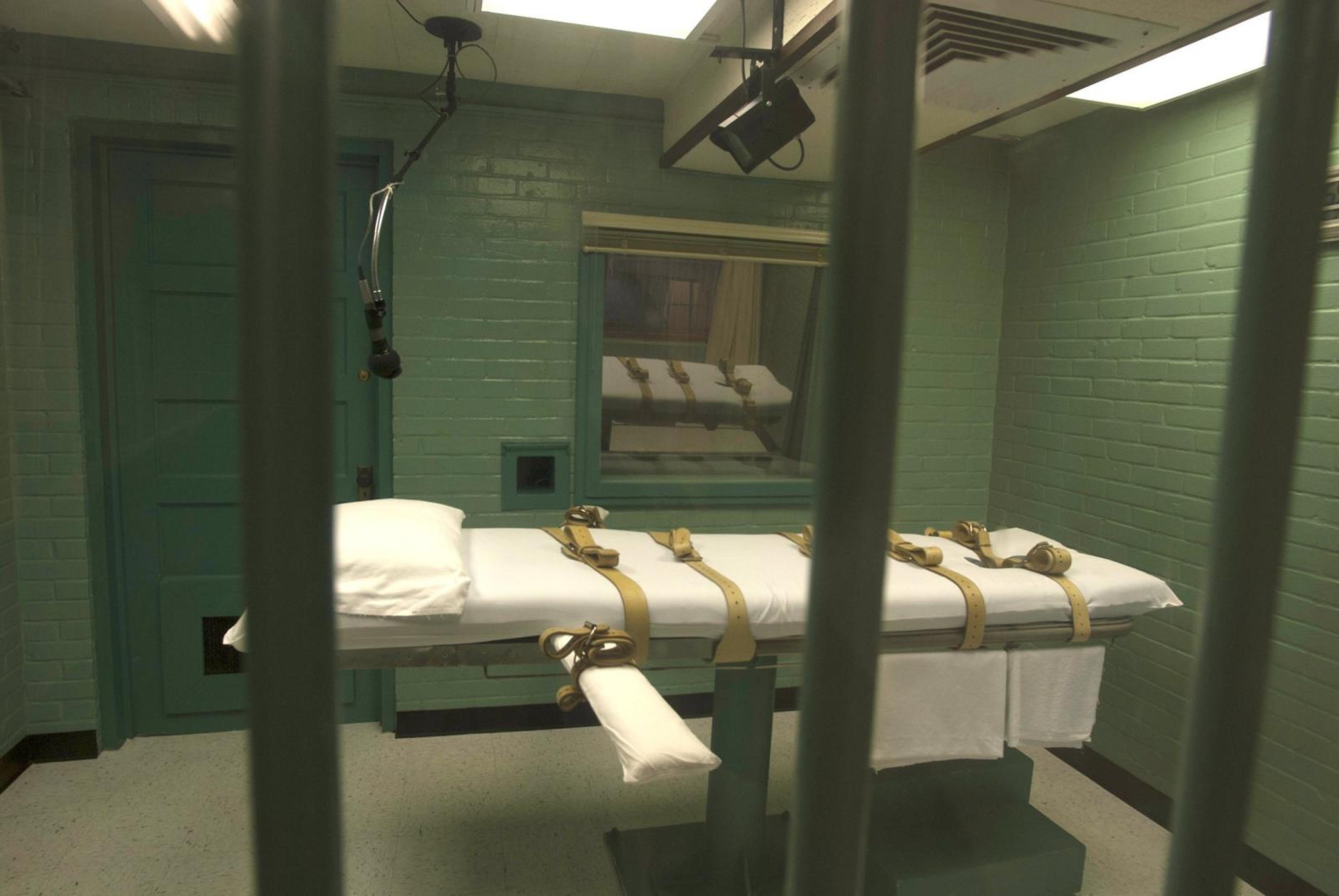
The details of Christa Pike’s ordeal are by now well known. Convicted of a murder she committed in 1995 at the age of eighteen, she was sentenced to death by lethal injection—the first woman to receive the death penalty in Tennessee in about two hundred years. As the only woman on death row, she spent most of her time in prison in solitary confinement. Pike has never denied her part in a brutal crime, and after years in isolation, she has said she now regrets her actions.
Tennessee officials knew that pentobarbital, the drug used in lethal injections, presented risks, likely to be compounded by a condition Pike suffers that makes it difficult to find a vein suitable for a needle. Two attempts to kill her, carried out over the course of an hour, were unsuccessful. A series of miscommunications delayed the arrival of an ambulance. She was admitted to the hospital unconscious and in critical condition; doctors briefly declared her brain dead. After recovering, she was returned to prison, where she continues to receive medical care. Tennessee has since put a moratorium on executions by lethal injection, but a second attempt at killing Pike has not been ruled out, with some suggesting the electric chair.
Who would ever think to make light of these events? Michael Knowles, for one. The Catholic political commentator and Daily Wire host who delivered the keynote at this year’s National Catholic Prayer Breakfast wrote on X: “Have the state executioners considered taking Christa Pike to the woods and crushing her skull with a rock?” (This is how Pike and her then-boyfriend killed their victim.) Conservative commentator Matt Walsh, for another. “This is ridiculous,” he said on X. “Just shoot her in the head.” Never one to be left out of the fun, Donald Trump cracked jokes about the matter with his former doctor, Texas Republican congressman Ronny Jackson, when asked about it by reporters.
Nidal Hasan, the former U.S. Army major who killed thirteen people at Fort Hood, Texas, in 2009, admitted guilt at his 2013 court martial and sees his impending execution as a path to martyrdom. Wounded himself during the attack, he will be in a wheelchair when brought before the firing squad.
Defense Secretary Pete Hegseth called the decision to livestream the execution a “no-brainer,” which left him just the right person to make it: the former Fox personality has an empty head and no moral compass. He likes to see the world in terms of civilizational struggle, an unsophisticated view evincing a limited understanding of history. His theocratically ornamented statements on the administration’s unjust war of choice in Iran reflect that. So, it could be said, do some of his many tattoos. One on his bicep reads “Deus Vult” (“God Wills It”), generally believed to be a Crusader battle cry. Another shows a cross with a sword and references Jesus’ words as recorded in the Gospel of Matthew: “Do not suppose that I have come to bring peace to the earth. I did not come to bring peace, but a sword.” Clearly not for him the God of mercy and compassion. In making the Hasan announcement, he clearly relished the prospect of having a man killed live in front of a global audience.
Calling for publicly broadcast executions is not unprecedented among people associated with the Trump administration. The late Charlie Kirk, venerated by many Christian and Catholic public figures on the right, advocated for them, and for good measure said that children should be forced to watch. Department of Homeland Security Secretary Markwayne Mullin has defended the plan, doltishly extolling Trump for “restoring America’s values.” Anecdotal reports from recent Trump rallies and other Republican campaign events suggest that many Trump supporters either approve or are at best indifferent. J. D. Vance seems to be among the latter: mum on the merits or legality of livestreamed execution, he says he probably won’t tune in. Trump of course seems untroubled, his curiosity possibly piqued by the potential of a livestreamed execution as a publicity coup—an instinct he would share with the ISIS terrorists who posted their gruesome video executions online.
Of course, there is no question that Trump will allow the execution itself to proceed. Recall that he reinstated the federal death penalty in his first term after a seventeen-year hiatus, then rushed to execute thirteen people in his final year in office. There had been only three federal executions in total between 1963 and Trump’s first term. There have been none since.
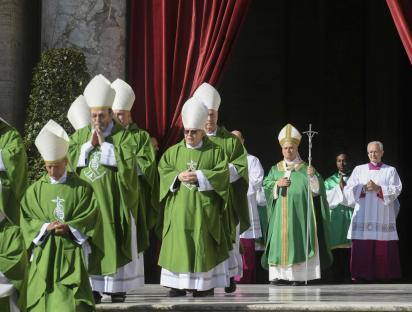
It’s reassuring that some elected Republicans have responded to Hegseth’s plan with revulsion. Some survivors of the Fort Hood shooting are also opposed. The U.S. bishops called it “a barbaric promotion of the culture of death,” and U.S. military archbishop Timothy Broglio has said that Catholic servicemembers should not be part of the firing squad. Chicago cardinal Blase Cupich issued his own statement, referring to the public execution as “performative barbarism” and “the pornography of a state-sponsored slaying.” He also rightly notes that it would only contribute “to the characterization of our nation as a violent, vengeful place.”
Who could disagree with that characterization? As of this week, thirty Americans have been put to death in six U.S. states this year, one since Pike’s failed execution. We are blowing up vessels in international waters, shooting at people in American cities suspected of being “fugitive” immigrants, and countenancing the daily toll of gun deaths as the necessary cost of personal liberty. Our nation is violent and vengeful, a posture readily and regrettably embraced—not to say celebrated—by the current administration and many of its supporters. “Forgiveness bestows grace,” Cardinal Cupich went on to note. The people who would benefit most from this reminder blissfully choose to ignore it.
We welcome your comments about this article. Please send your response to [email protected].