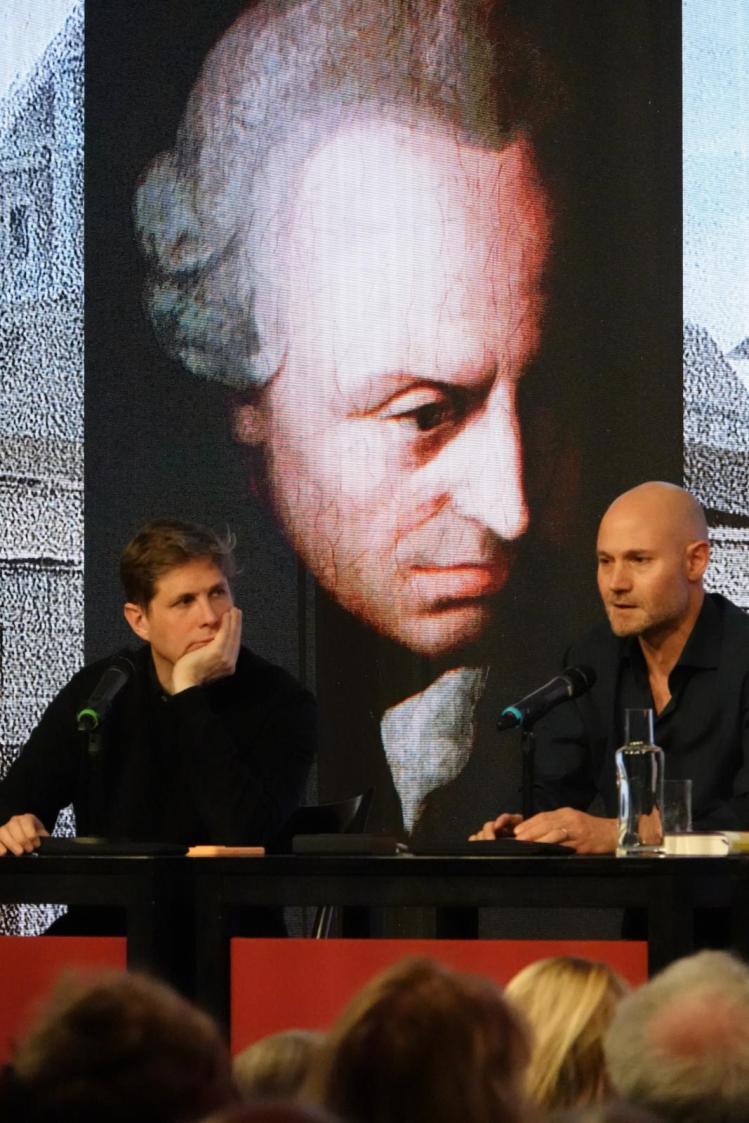
Even those of us who have forgotten most of what we learned in school about the Declaration of Independence can still likely recite its famous second sentence: “We hold these truths to be self-evident, that all men are created equal, that they are endowed by their Creator with certain unalienable Rights, that among these are Life, Liberty and the pursuit of Happiness.” In his recent book Radical Universalism: Beyond Identity, the Israeli philosopher Omri Boehm recalls asking his students at Yale whether they would endorse the claims made in that sentence. “The results were always the same: Everyone raised their hands immediately, not to say automatically. None of the Yalies, a group of almost exclusively American ‘white crème,’ as we sometimes called them—their parents were CEOs, senators, editors at The New Yorker—had any doubts about the truths asserted in 1776 by the Founding Fathers. Or, if they did, they wouldn’t let anyone notice. Of course, this was a pedagogical setup. Once the class unanimously committed to universalism, it was immediately confronted with the question of the origin of universalism…. What grounds the truths asserted in the Declaration’s legendary second sentence, let alone their self-evidence? Is it science? Faith? And if you can’t answer, is your conviction any better than automatic conformism or blind religion?” In his book, Boehm grounds a belief in human equality and a commitment to “radical” politics in the philosophy of Immanuel Kant and the moral example of Abraham—but only if that example is rightly (and esoterically) interpreted. Boehm argues that what makes all human beings equal is finally their shared duty to a moral law above any kind of personal authority, divine or human. “The father of monotheism,” he writes, “understood well that humans are the beings that follow the duty to justice and for that reason do not have the right to obey.” According to Boehm, this absolute “duty to justice” is what motivated such figures as John Brown, Abraham Lincoln, and Martin Luther King Jr. Today, in place of the partial solidarities of identity politics and ethnonationalism, this duty requires the unqualified solidarity of true “universalism.” We asked three writers—a Jewish theologian, a legal scholar and intellectual historian, and a Catholic philosopher of religion—to comment on Boehm’s timely and provocative argument.
To read all the contributions to the symposium, click here.
To access our discussion questions about the symposium, click here.