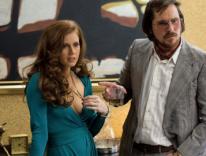
No moviemaker since Sturges has made the din of recrimination as funny as Russell does in 'American Hustle,' while Scorcese dazzles though 'Wolf' goes nowhere.
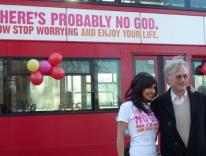
'Religion Without God' is a lovely swan song. It is short—it’s based on the Einstein Lectures delivered at the University of Bern in 2011—but eloquent and rich.
Williams astutely alerts us to Evdokimov’s proposition that the vows of a religious are analogous to Christ’s response to the temptations in the desert.
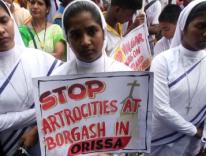
Not many Christians in the West are aware that in many parts of the world Christians still risk their lives just by going to church to celebrate the birth of Christ.
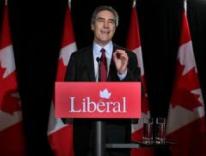
Ignatieff’s constructive approach to politics, like his commitments to democracy and social justice, remains untainted by the bitter experiences he describes.
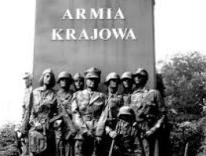
'Story of a Secret State' promises an insider’s perspective on Poland’s Home Army, the largest resistance organization in Nazi-occupied Europe --- and delivers it.
‘The Irony of American History’ shines a klieg light on the so-called war on terror and the current debate over the operations of our “national security state."
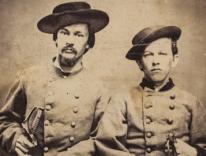
This powerful show constitutes a record of those often unnamed individuals of the Civil War era, documented through the then-new medium of photography.
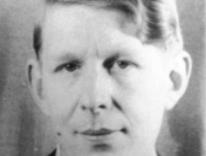
As with many of Auden’s longer poems, 'For the Time Being' is a slippery beast. Whenever you think you’ve got a hold of it, it goes off in another direction.
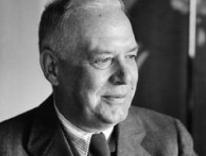
Did Wallace Stevens convert to Roman Catholicism as he lay dying in the summer of 1955? This question has provoked more controversy than one might expect.
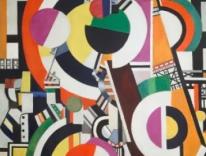
A vigorous and superbly contextual show, “Léger: Modern Art and the Metropolis”—at the Philadelphia Museum of Art—focuses on the artist's most experimental years.
Christianity can be described primarily as intellectual and dogmatic only if one sets aside lots of evidence. That’s precisely what Geza Vermes does in this book.