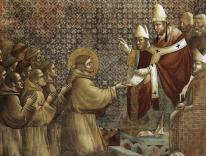
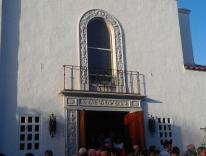
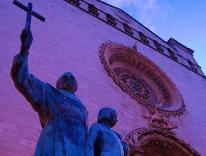
As Donal Cooper and Janet Robson show in this fascinating study, the Basilica of St. Francis in Assisi played a crucial part in promoting Francis and his mission.
The Second Vatican Council isn’t over yet, in the view of Robert P. Imbelli, who notes that the “reception,” and thus the event of the council, is continuing today.
With humor at the fore, 'Lost for Words' seems to arrive as a self-imposed respite from investigating the traumas of St. Aubyn's autobiographical Patrick Melrose.
The collapse of establishment Protestantism as the American civil religion, Bottum asserts, has left a deep void that sends ripples of unease through the culture.
All of us have our own imaginative lives that affect and are affected by our exterior worlds. The poet is someone who finds a language that expresses this truth.
This gloomy, powerfully acted series imagines the aftermath of a cryptic development: 2 percent of the world’s population has vanished, and no one knows why.
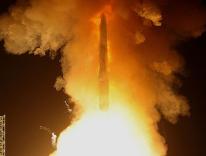
A frightening, journalistic take on nuclear-weapon history and mishap, and a frightening, philosophical critique of the existential dilemma of nuclear weapons.
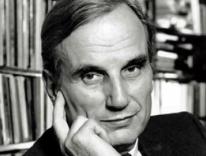
Fest’s absorbing memoir is an unprecedented attempt to take American audiences deep into Hitler’s Germany from the point of view of Germans who rejected Hitler.
A book on four U.S. clerics who were involved in an early-twentieth-century theological controversy that sent Catholic intellectuals scrambling for cover.
Vivian Maier was so obscure that her first public notice was a death announcement. Now she has the world wondering why she hid hundreds of photographs.
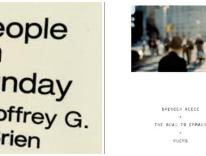
Two new collections of poetry from Geoffrey G. O'Brien and Spencer Reece both resist the "open-ended and often sloppy free-verse form of much contemporary poetry."
Gates saw himself as a manager working to get things done. But managerial skills used in the service of getting the wrong things done is of little help to anybody.
There are three key doctrines where Aquinas’s arguments lead to perplexing conclusions: immortality, creation, and the nature of God as both one and triune.
According to Thomas Piketty, the U.S. is the most inegalitarian nation in the world, and on current trends may soon become the most inegalitarian nation in history.