Alejandro González Iñárritu has made something that looks and feels unique, with a cast that works with such ensemble perfection I hesitate to single anyone out.
The via pulchritudinis is never far from me in my life as a Catholic, and it has been particularly with me lately as I’ve listened to Eventide by Voces8.
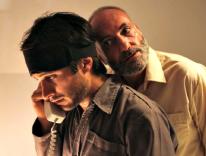
"Rosewater"—set in an Iranian prison—is painful, poignant, at times funny and humanizing. "Nightcrawler"—a monster movie that wants to be a social indictment—isn't.
The reduction of character and motive to diagrammable banalities seems of a piece with this film’s lack of interest in creating anything resembling human emotion.
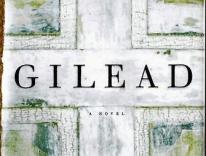
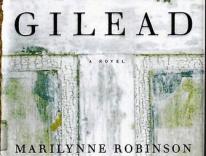
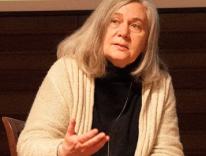
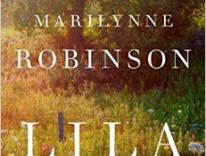
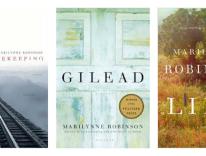
To her fans—and there are many, from critic James Wood to Barack Obama—Robinson shows that old-fashioned virtues like seriousness and simplicity are still virtues.
From its inception Amazon has sought to disrupt the traditional bookselling market. Now France is trying to disrupt Amazon while protecting independent bookstores.
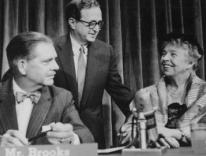
Solon Simmons sifts through 'Meet the Press's' archive to show how sharply Washington’s conversation over economic equality has changed over seven decades.
Jennifer Senior’s 'All Joy and No Fun' is more serious than its playful cover implies. Why do people have children at all now that having them is not a necessity?
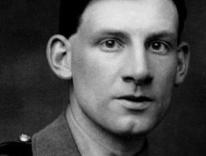
In her biography of Siegfried Sassoon, Jean Moorcroft Wilson posits that “a study of his life is a study of his age.” In fact Sassoon’s life spanned several ages.
The obsession with time lies at the core of Linklater’s singular new film, 'Boyhood.' In a sense it is misleading to call it new, since work on it began in 2001.
Rabbi Abraham Joshua Heschel was one of the most eloquent religious figures of the twentieth century—a “jeweler of words,” in the estimation of one colleague.
The mowers are at work on the hillside, / cutting brush with string trimmers and chattering saws, / and a haze of dust rises up around/ the crew as they labor...