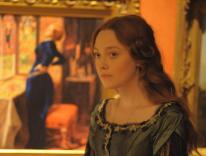
Emma Thompson has descried fairy-tale possibilities in the facts of Effie Gray's story; Kenneth Branagh does moderately well with an expedient "Cinderella."
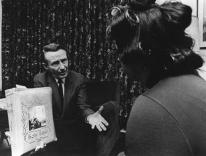
Mailer, Trilling, Macdonald, Kazin, Maxwell, Bellow, Auden, O'Hara—men with public moral concerns, who seized power to shape American literature. But who were they?
Baxter reads fiction to “see bad stuff happening.” He writes characters who get into serious trouble, and face their own "human wreckage" at someone else's request.
The resonances of "It Follows" are varied and strange, touching on subtexts sexual, ethical, and sociological. The horrors in " '71" are frightening for being true.
Feeling emotionally robust, moviegoer? You’d better be if you intend to see 'Leviathan,' the acclaimed Golden Globe winner and Oscar nominee for best foreign film.
Most biopics try to penetrate the mystery of what makes a great artist, but 'Mr. Turner' deliberately preserves that mystery, and seals it into our hearts and minds.
As mainstream news organizations were losing their claim on authority and trust, Jon Stewart used smarts and comedy to establish his own journalistic credibility.
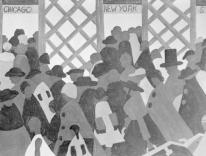
Lawrence painted what he saw and what he knew: strivers and beggars, children and prostitutes, gamblers and preachers, and above all women, like his mother.
Clint Eastwood's 'American Sniper' has provoked criticism from both right and left. It's awash in patriotic spirit, it glorifies war. It's also a pretty bad movie.
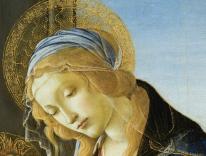
An exhibit pulls together an impressive collection of paintings, sculptures, and liturgical vestments to suggest the wide range of Marian images in Western art.
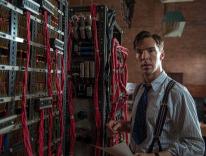
One movie too obviously geared to celebrate a Triumph of the Human Spirit; another whose writing and acting skillfully adduce the nature of the hero's character.
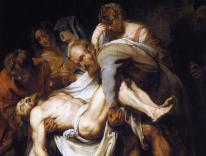
The Catholic painter Peter Paul Rubens presents a particular challenge to classification—decorative, theatrical, busy, pagan, and only superficially Christian.
Written before he and seven fellow monks were kidnapped and beheaded in 1996, this personal journal reflects story of Algeria in crisis and courageous spirituality.
How can a civilization that produced Michelangelo and Fellini also have spawned the Mafia and Mussolini? And how can 'The Godfather' be an expression of ethnicity?