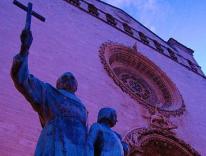
A book on four U.S. clerics who were involved in an early-twentieth-century theological controversy that sent Catholic intellectuals scrambling for cover.
Vivian Maier was so obscure that her first public notice was a death announcement. Now she has the world wondering why she hid hundreds of photographs.
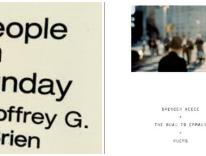
Two new collections of poetry from Geoffrey G. O'Brien and Spencer Reece both resist the "open-ended and often sloppy free-verse form of much contemporary poetry."
Gates saw himself as a manager working to get things done. But managerial skills used in the service of getting the wrong things done is of little help to anybody.
There are three key doctrines where Aquinas’s arguments lead to perplexing conclusions: immortality, creation, and the nature of God as both one and triune.
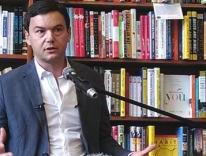
According to Thomas Piketty, the U.S. is the most inegalitarian nation in the world, and on current trends may soon become the most inegalitarian nation in history.
Four books on the failures of moral imagination and political will, spread across the political landscape, that doomed Europe to decades of totalitarian terror.
Darren Aronofsky, a master of misery, is very much in his element in 'Noah' as he envisions the sinful self-destruction of nearly the whole damned human race.
By 1982, although nominally still a Democrat, Michael Novak had become an enthusiast for Reaganomics and for every Republican administration to follow.
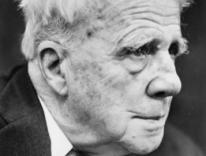
The poet discusses "accidental theologies," Gerard Manley Hopkins, faith in literature, and what it's like no longer being the editor of Poetry magazine.
The evangelistic fervor of its producers is evident throughout 'Son of God,' but so is bombastic filmmaking lacking in any nuance or freshness of approach.
With ample suspense and atmosphere, 'Fargo' will appeal to crime-caper addicts and anyone who wants more of the movie’s ready-for-ice-fishing-you-betcha vibe.
Yuval Levin reconstructs the conflict over Edmund Burke’s angry 'Reflections on the Revolution in France' and Thomas Paine’s incandescent reply, 'The Rights of Man.'
Imre Kertész is a concentration-camp survivor who keeps a distance from the slogans that remind us “never again.” His novels and short stories spell out these views.