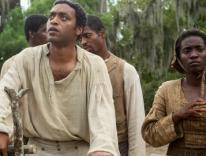
In this film slavery creates a hell in which everyone burns—blacks and whites, men and women, victims and victimizers, the well-intentioned and the malevolent.
The books I’m recommending here I more or less bumped into by accident, usually when some reviewer or author of a memoir took the trouble to cite something good.
Tempted as I am to recommend those I give as presents year after year, I’ll offer instead some very recent books that have already earned a home on our bookshelf.
No one says growing up is easy, and four novels I’ve read this year reiterate just how challenging the journey from youth (or youthfulness) to maturity can be.
Alice McDermott's latest novel is a compelling accounting of a life that begins in Depression-era Brooklyn and winds its way to the late-twentieth-century suburbs.
It is a mark of Antonin Scalia's pioneering influence that originalism and fidelity to text have become a staple of the Supreme Court’s interpretive methodology.
Nowhere is the sickness of privatization more apparent than in public education, where "reformers" promote it in the guise of the pursuit of excellence.
The author of the Fintan Dunne novels and "Banished Children of Eve" talks about the importance of cities, Catholic novelists, and the hard work of writing.
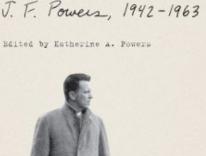
The trademark Powers irony is at work even in his daughter’s narrative arc, for sweet as the award must have been, it was hardly a launch to smooth sailing.
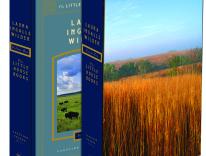
A new edition of the Little House books from the Library of America stakes a claim for Wilder’s work as an enduring part of the country’s literary heritage.
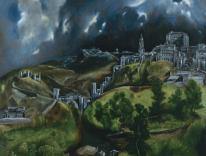
After an extensive renovation and reinstallation, the Met's European paintings galleries reopened in May. The collection now has fully one-third more space.
As Andrew Bacevich sees it, Americans have mutated into passive spectators, not active citizens, across a wide spectrum of once-sacred civic responsibilities.
"For Discrimination" offers the bravest and most honest defense of affirmative action in a long time (maybe ever), and for that we are in Randall Kennedy’s debt.
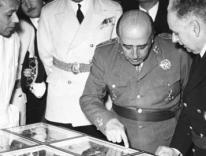
Four decades after Franco’s death, relics of the past are finding their way into Spain's museums, where they can be both preserved and politically neutralized.