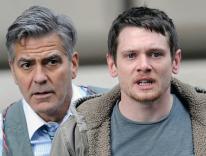
The rewards for close attention to every scene and shot in "Moonlight" are the same as those for any patient reading of Henry James serpentine sentences.
"Denial" comes off as preachy, obvious, and severely limited; it gets the basics of the story told, but little more. Even the stronger moments fall strangely flat.
As a Catholic, O’Connor believed that the physical, perceptible, photo-graphable world is always pointing toward a larger and more enduring metaphysical reality.
Twice on this trip home to Virginia, Douglas had drifted toward a wrong exit and now she had the wheel. She suspected he was more hung over than he admitted.
Sixty-five works on display in a recent exhibit reveal the Le Nains’ excellence in religious work and genre scenes, mythological allegory, and portraits.
In an oval world where / points of view are eye-shaped, / out of a round world, helpless, / where even the hamburger has/ an accredited helper, dirt cheap...
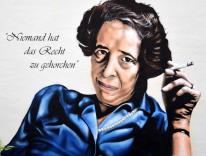
The enduring controversies surrounding Hannah Arendt confirm Wittgenstein’s insight: to think what we are doing was, and remains, much easier said than done.
Does pop music matter really? Is it “only rock and roll” or “all we have”? 'Love for Sale' misses out on a key opportunity to explore the deep questions.
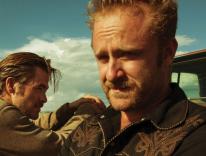
"Hell or High Water" breathes new life into familiar materials, dealing out anachronistic juxtapositions while de-romanticizing the iconic figures of the western.
Comedies with superficial characters aren’t necessarily bad, but ‘Café Society’ stays predictable. ‘Florence Foster Jenkins,’ however, makes room for pathos.
The writer Dan Burt discusses renouncing his U.S. citizenship, his law and writing career, and how he adjusted to Cambridge and English society from South Philly.
With its command of reverberant silences, its conveyance of past horror and ongoing pain, 'The Innocents' does what all good movies do: it lingers with you.
By the time Diego moved in, I was forty and Diego fifty, our marginal existences long established. We ranted about the torture regime he once fled. We danced tangos.
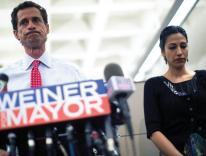
'Weiner' sets out to film Anthony Weiner’s unlikely political comeback, as he sought to put the disgrace behind him with a run for mayor of New York in 2013.
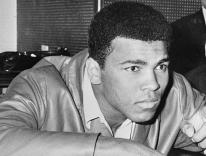
Muhammad Ali’s self-love was transferrable. He beat up his opponents and pick-pocketed their confidence but miraculously helped millions see fresh possibilities.
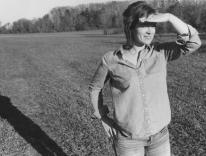
Award-winning novelist C. E. Morgan talks about "moral beauty," evil and empathy, and how landscape informs her work, including her latest, "The Sport of Kings."
Even the eagle is deep / into dailyness // acts as if safe, & is silly / during its courtship rituals // spends days / inspecting / impregnable building sites...
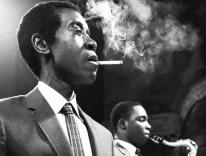
Two jazz trumpeters, now each the subject of a biopic taking its title from one of its hero’s hits: "Born to Be Blue" (Chet Baker) and "Miles Ahead" (Miles Davis).
The atmosphere of moral agony in Eye in the Sky reflects standard-issue Hollywood sentimentality. Politically, it offers Americans moral justification for drone war.