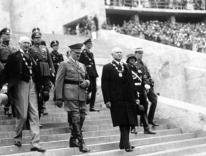
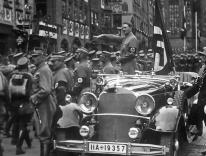
Most Americans suffer two blind spots about the 1936 games: distorted historical perception about the overall medal outcome and how the Nazis treated Jesse Owens.
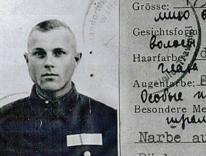
Lawrence Douglas’s immensely readable book absorbs the reader in the twists and turns of the legal saga of Ivan Demjanjuk, charged with Holocaust crimes.
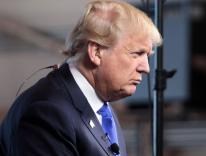
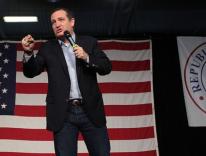
Now that he is the official GOP nominee, the most important fact about Donald Trump is not that he is ridiculous or contemptible, but that he is dangerous.
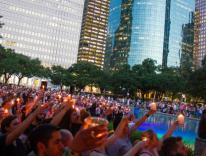
Online media in the wake of tragedy could be doing something good. It may be a modern means of activating an ancient genre: a particular subset of human sorrow.
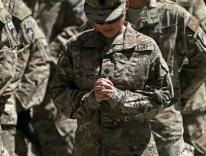
Church teaching about the use of force is paradoxical. “Just peace”—not just war—should be the distinguishing mark and calling of the global Catholic Church.
Poland's young extreme nationalists represent a revival for which being Catholic and Polish implies also being anti-European, anti-pluralist, and anti-liberal.
As a student of Reinhold Niebuhr, President Obama has sought out occasions on which he could preach about the ironies and uncertainties of human action.
Instead of jettisoning the just-war tradition, it would be better for the church to be more willing to condemn wars when they fail to meet its rigorous demands.
"Deeply Christian, she has no desire to impose her religion on others, but only to work together to make her country better. Her open, humble practice stays with me"
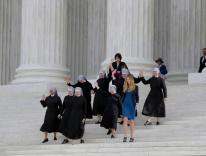
What do the plight of the Little Sisters of the Poor and the fate of persecuted Christians in the Middle East have in common? The USCCB "explains" in a video.
An interview with Sr. Elizabeth McAlister from 1971, co-founder of Jonah House in Baltimore and member of the "Harrisburg Seven" group of anti-war activists
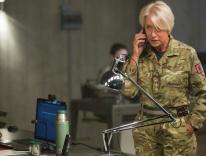
The atmosphere of moral agony in Eye in the Sky reflects standard-issue Hollywood sentimentality. Politically, it offers Americans moral justification for drone war.
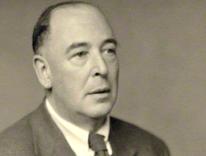
Marsden’s “biography of a book” traces the development of 'Mere Christianity' from a series of BBC radio talks into a religious "antidote for the attention to self."
In two new books, Hazareesingh and Bell incorporate American views into the 20th century struggles between republicans and Catholics in France over "basic freedoms"
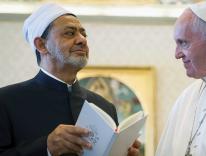
How media shunned Eastern Orthodox leaders visiting refugees with the pope; Which title Francis prefers; Why U.S. bishops fired Catholic News Service editor-in-chief
Among the merits of Roy Foster’s new book are the ways in which it moves past myths and conventional accounts to bring alive the intellectual ferment of the Rising.
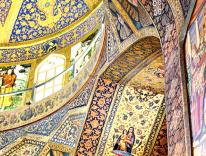
Though many Westerners think of Iran as a theocratic monolith, Christians of various kinds consider it home and see the Shiite majority not as hosts but neighbors.
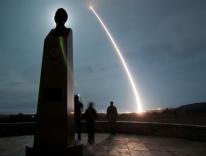
With little fanfare, President Obama is embarking upon an ambitious $1 trillion program to enhance U.S. nuclear striking power. How will his successor proceed?
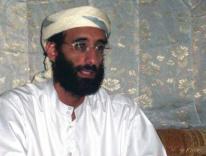
Scott Shane's telling of the U.S.-born Muslim preacher-turned-terrorist and his surveillance by the FBI reveals that the calculus for terrorism is political.
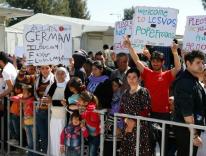
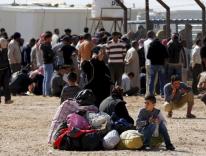
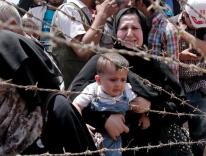
The contrast between the response in Europe—reactive, ill-tempered, and chaotic—and that of the countries bordering Syria ought to be a cause of shame.
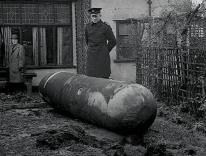
The air raids of May 1941 stand out in the memory because they were so ferocious. The norm—insofar as there was a norm—fell into a more predictable quasi-routine.
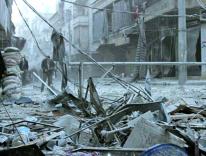
Considering how religiously diverse and culturally cosmopolitan its cities were before WWI, few could have foreseen today's calamity for the Middle Eastern region.
I’d ask a favor from these candidates: Please stop saying how Christian you are unless you show a few signs of understanding the social obligations the word imposes.
Catholic teaching emphasizes the obligation of nations to help the stranger in need. It is neither statesman-like nor Christian to close the door on Syrian refugees.
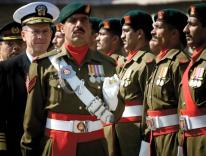
To understand how Islamic extremism grew, one must consider Washington’s decades-long military support to Pakistan, and its protection of the Saudi Arabian monarchy.
What Pope Francis is doing during his first trip to Africa, despite security threats; who among the cardinals thinks the pope is "wobbly" on church teaching, again.
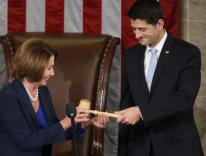
Congress needs to show that though voters have given the presidency and control of Congress to different parties, we're capable of being a functional democracy.
Pope sows "confusion" by inviting Muslims take part in upcoming Jubilee Year, giving a Eucharistic chalice to a Lutheran pastor, and remaining the Bishop of Rome.
How to remove ISIS is a puzzle whose solution will require resolve, patience, and international cooperation. For the United States to act alone would be a mistake.
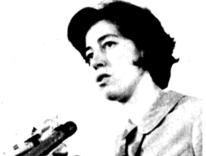
John Norris's new biography of Pulitzer prize-winning political journalist (and Commonweal Catholic) Mary McGrory is engaging, carefully researched, and sympathetic.
In "Christian Human Rights," Samuel Moyn concedes that the modern human-rights movement is untethered from its Christian origins. Is this something to worry about?