You don’t need to be a thespian to appreciate James Shapiro's "Year of Lear"—a brilliant, meticulously researched history of social tensions that inspired the play.
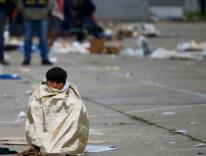
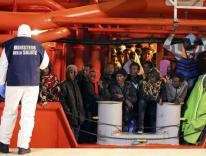
U.S. Paulist Fathers give moral prescription for Synod; Priest fired for announcing gay partnership reveals more in upcoming book; Families in Rome welcome migrants.
Stone's characters were human, and humans screw up; there wasn’t much to do about that except to situate the culprits in clarifying narratives of moral scrutiny.
Set in bombed-out Berlin of 1945, Petzold's 'Phoenix' questions who was guilty, and of what, in the daily workings of the Holocaust—and will there be a reckoning?
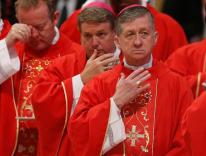
Vatican announces who will and will not be attending round two of the Synod; Hungarian cardinal silent on refugee crisis; Heated debates over paving stones in Rome.
Centered around the missing bomber pilot from 'Life After Life,' Atkinson's 'A God in Ruins' examines the interplay of real life and the life of the imagination.
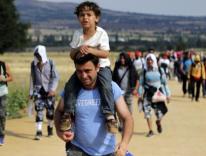
We should take in refugees because it's the right thing to do, because it’s in keeping with who we say we are, and because we remain a nation that can afford it.
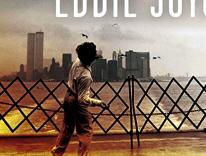
Set on present day Staten Island Eddie Joyce's 'Small Mercies' traces the effect of 9/11 on the families of people living in “the servants’ quarters of New York."
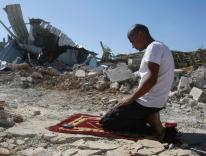
In Hebron I learned that the facts on the ground in the Palestinian-Israeli conflict tell a story Americans intent on "international diplomacy" don't want to hear.
Opening our doors to Syrian refugees is the right thing to do and an acknowledgement of the responsibility the United States bears for the chaos in the Middle East.
Biographer Randy Boyagoda paints Richard John Neuhaus as an unusually ambitious and politically engaged priest as public intellectual—but is his narrative too tidy?
Italian bishops join Francis in strongly denouncing European handling of migrant crisis; Are opponents of Cardinal Kasper's proposal releasing yet another book?
In the short run, Obama simply has to win enough votes for his Iran deal. For the long run, he has to persuade Americans that diplomacy is a safer path than war.
While my husband snapped photos of the flag, I stood in silent debate with Big Ed. And then I spied another Confederate flag; an unwelcome sensation came over me.
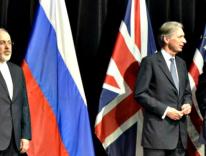
The deal struck by the United States and its partners with Iran to dismantle that nation's capacity to build a nuclear weapon looks like a remarkable achievement.
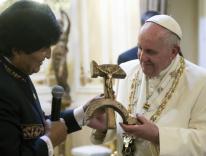
Bolivia's gift to Francis of a hammer-and-sickle crucifix implied its artist was a secret Marxist. I was disconcerted: This was not at all the Luis Espinal I knew.
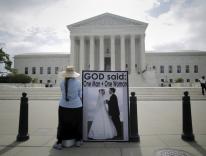
Whether or not U.S. support for LGBT rights goes beyond the rhetorical, societies still viewing themselves as “under God” will bridle at this sudden turn about.
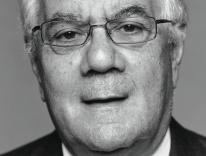
Amusing and engaging, Barney Frank's stories (from sixteen terms in Congress) tell what kinds of “inside politicking” informed the presidencies of LBJ through Obama.
Readers continue the conversation on the morality of contraception in 2015 and how Europe is handling its two most important crises and America its defunct railways.
Marx derided religion as an opiate destined to fade away but ultra-orthodoxy is on the rise. What happened to make faith one of the most dynamic forces in the world?
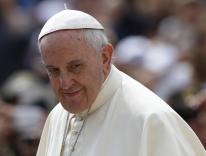
Oscar Romero will be declared a martyr, Francis tells bishops to stop "trying to tell Catholics what to do all the time," and cardinals deny the pope has enemies.
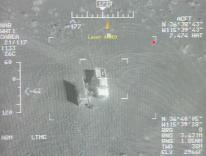
Andrew Cockburn's 'Kill Chain' examines the disastrous political effects of the U.S. military's targeted assassination practices--and the true motives behind them.
Unlike past Eurocentric taxonomies of world religions, the latest Norton anthology aims to let six major, living, international religions speak...in their own words.
Iranian author Azar Nafiri defends the value of canonical American literature—its imagination and humanity—against Common Core, market analyses, and Babbitt.
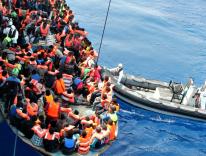
The European Union's intent to address migration from Africa comes as a welcome if belated development in a crisis that has been crying for moral leadership.
What's remarkable about the postwar era is the speed and depth of Western Europe’s recovery. But do its problems today come from pushing the accomplishments too far?
The pro-British kings archeologist-turned-spy-turned-colonel T.E. Lawrence helped establish in Arabia, Iraq, and Transjordan made "Arab unity" a "madman's notion."
This integrative, enjoyable "book for beginners" still may hold surprises for scholars: nuns absolving sins, petitioners humiliating saints, a woman pope, and more.
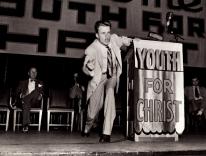
Kevin Kruse convincingly claims that the association of patriotism with Christianity comes from a libertarian reaction in American business to the New Deal.
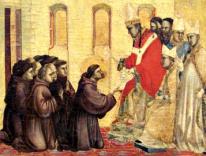
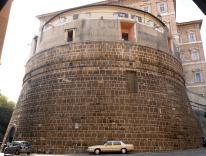
Posner’s attempt to intertwine Vatican finance with a history of the papacy—"rampant corruption, pervasive nepotism, unbridled debauchery"—isn't neutral, or correct.
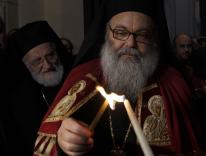
Worshipping with families of Antiochian Christians in Philadelphia, you are an interloper. At the coffee hour, they pile your plate with pastries—"you are new, yes?"
The Obama administration has not made grandiose claims about what a deal with Iran on its nuclear program can achieve. But there is reason for guarded optimism.
The political activist, public intellectual, and "father of modern linguistics" talks about Oscar Romero, Old Testament prophets, and the politics of fear.
The French writer Henri Ghéon lost his faith at fifteen and regained it after living through war. His 'Born in Battle' is a powerful account of religious rebirth.
The emergence of the Islamic state; the tension with Iran; and the sinister turn events have taken in Israel are attributed in Europe to American irresponsibility.