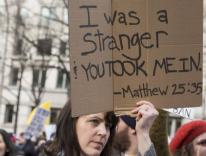
We have entered a time of authoritarian leadership that exalts the powerful and disdains the weak and vulnerable. This is the antithesis of Christianity.
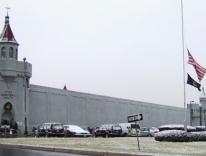
Heather Ann Thompson’s powerful book on the Attica prison uprising of 1971 forces us to think about how methods of incarceration are contrary to our core values.
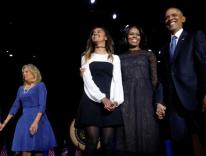
In his farewell, Barack Obama offered nothing less than a robust defense of the communitarian values that have long been central to Catholic social thought.
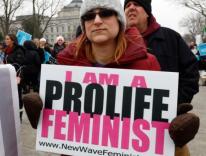
Nothing would do more to energize social-justice movements than a broad-based coalition able to break through the impasse of abortion politics in the United States.
The Vatican reaffirmed a controversial directive that excludes “persons with deep-seated homosexual tendencies” from being admitted to Catholic seminaries.
Simeon Zahl offers thoughts and comments on David Bentley Hart’s "blistering reflection on the economic ethics of the first Christians," and Hart responds.
It is worth stopping to reflect on what Francis has described as “the very foundation of the church’s life,” now, while the Year of Mercy remains fresh in our minds.
Willing the good to everyone doesn't mean we ought to contrive a cheap reconciliation that ignores the danger presented by Donald Trump to our society and the world.
'American Prophets' is a true exercise in hagiography in every sense of the word, detailing the lives of modern saints while extolling their extraordinary vision.
If the hollowness of the 1990s opened up a space for one kind of communitarian moment, perhaps the bewilderment of today is the occasion for another, different kind.
For many who work, their employment is precarious to the point of affecting their housing opportunities, marriage and family decisions, and general peace of mind.
The most important moral crisis of the twenty-first century may be a leading priority for Pope Francis, but it barely registers on the U.S. political radar.
In 'Success and Luck,' Robert H. Frank explains the human mind is just not designed to think rationally about luck and about how the successful got that way.
The powerful video images on which we fixate cannot answer the complex statistical questions needed to resolve the issue of police bias against black people.
The story of a group of intellectually disabled men contracted for low-wage work in a turkey-processing plant gets the full telling it deserves in Dan Barry’s book.
Canada’s long-standing ban on physician-assisted death is over. Though Canada has a predilection for polite and civil exchange, was the debate heated enough?
Online media in the wake of tragedy could be doing something good. It may be a modern means of activating an ancient genre: a particular subset of human sorrow.
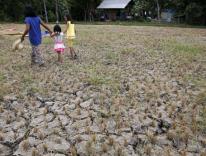
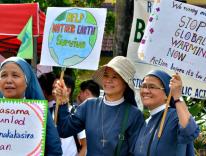
Though the Philippines’ poor have contributed the least to the nation’s climate-related crises, it is they who have lost the most, and who stand to lose still more.
Where is a compelling vision of human well-being? Missing is the sense that “we are all really responsible for all.” This feeds into the hands of people like Trump.
Donald Trump says things to appeal to whatever crowd he's talking to, but casting doubt on Hillary Clinton’s faith before a group of evangelicals is a new low.
In the aftermath of events like Orlando, it seems as though the God of Jacob does not perceive, and it is no impiety to say so. But that is not the end of the story.