Religious liberty has a damaged “brand” these days, and Catholic institutions have played a role. The nation's largest church now needs to lower the temperature.
Criticism and applause for Francis's newly created process to try bishops accused of covering up sex abuse; Where have certain "bad" bishops from the U.S. ended up?
Patrick Jordan brings an ease to his subject that comes from true friendship; he weaves together his living sense of Day’s personality with major themes in her work.
When Pope Francis issued a formal “bull” instituting the current Year of Mercy, he included in its appendix a lengthy informal interview with an Italian journalist.
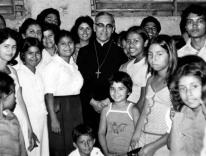
Romero refused to sacrifice his conscience to his country’s ruler. To be killed for doing right and speaking against evil in the name of Christ is to be a martyr.
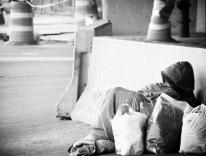
Can a progressive-minded approach can work in a city where the more severe measures of the past failed to prevent a steady increase in the number of homeless people?
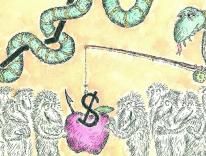
Robert J. Shiller and George A. Akerlof examine influences on the marketplace beyond supply and demand, and wonder: Why didn't economists see the 2008 crash coming?
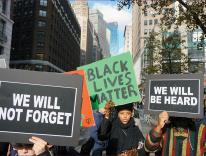
How can injustice be remedied when it is invisible? White Catholics—and indeed all white people—must learn how racism perpetuates black suffering and death.
Pope calls for change in economic theory and practice to deal with refugees in Europe while Rome's Augustinian Institute unveils "Master in Joseph Ratzinger" degree.
Acknowledging the significance of Populorum progressio and the second confrerence of CELAM is essential to understanding the post-Vatican II Latin-American church
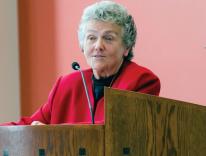
A full-length biography was on the minds of neither the author nor the subject met. But Roberts asked Chittister about her personal life. They began at the beginning
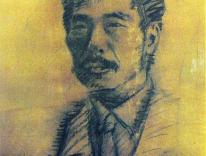
Simon Leys’s Catholic sensibility is never insistent, and never descends into preachiness. As he said of Confucius, sometimes it can be better to stay silent.
How media shunned Eastern Orthodox leaders visiting refugees with the pope; Which title Francis prefers; Why U.S. bishops fired Catholic News Service editor-in-chief
Reflecting on the two Notre Dame graduations clearly reveals that the latest rounds of the culture wars have sputtered to an end—and that we need a new way forward.
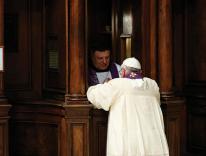
To understand Francis and support the direction he has been setting for the Church, we need to think more deeply about the ways and means of “forgiveness.”
The exhortation is a valiant and powerful exercise in the Petrine ministry of upholding church unity. Is it another starting point in Francis's pontificate?
If John Paul II was the philosopher and Benedict XVI the theologian, Pope Francis is the poet pope, giving voice to the dreams and wisdom of migrants and the poor.
With Pope Francis lifting up what can be called social justice Christianity, clichés that religion lives on the right end of American politics might be overturned.
Remembering responses to the rubella crisis might inform our reactions to Zika. Advocacy for mothers and appreciation for the work of pregnancy should be priorities.
Barry Crimmins is a funny, frightening man. His humor is so sharp it feels almost dangerous to laugh. There’s no telling when it could turn, or in what direction.
An outrage was perpetrated against voters in Arizona, and we can't ignore the warning that the disenfranchisement of thousands of its citizens offers our nation.
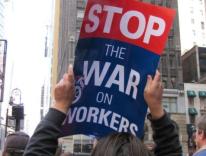
What's really at stake in the Friedrichs case is whether the right of workers to organize will be sacrificed to the Court’s contentious views regarding free speech.
Paul Misner's new book goes beyond social and labor movements in the church to deal with papal and episcopal action vis-à-vis the great powers between 1914 and 1965.
A fixation on slashing government spending on services without regard to the effect on the basic well-being of citizens helped bring the Flint crisis about.
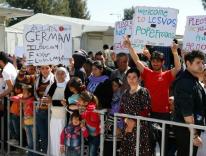
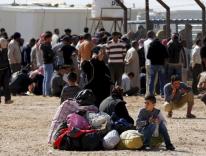
The contrast between the response in Europe—reactive, ill-tempered, and chaotic—and that of the countries bordering Syria ought to be a cause of shame.
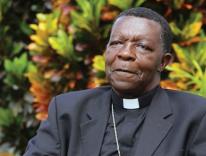
Like St. Gregory, Bishop Djomo of the Congo is committed to building unity among his own local people—and he lives in a world lacking effective public services.
How to cut through the entitlement or ambivalence of college students and get them to see the connections between economics, ethics, inequality, and oppression?
Andrew Hartman's argument is that while “cultural conflict persists,” it has come to partake of a highly ironic flavor—and continues to ignore economic inequality.
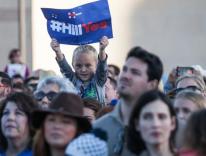
The debates we have witnessed have provided an incontestable answer to the question of which party embraces the United States of Now in all of its raucous diversity.
For the men I met with for a biweekly seminar at a mid-level security prison, the biblical struggle with Satan is an everyday affair, expressed in just those terms.
If we know for a fact more gun restrictions mean fewer gun-related deaths, why are the politics so complicated—even after Sandy Hook, Aurora, and San Bernardino?
People with disabilities present us with a mystery, Jean Vanier once explained; they are the very presence of Jesus. There is something particular in their kindness.