What implicates morality more than how we as a society and individuals treat those who are cut off from the ladders of advancement and the treasures of prosperity?
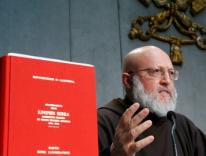
Argentine Archbishop predicts "the people of God" will support Francis's changes long after he's dead—and traditionalists cry schism while non-Catholics convert.
In Indiana there are plenty of service-sector jobs. But they don't pay nearly as well as the manufacturing jobs Indiana has lost. Can organizing address that?
Pundits will have great fun with a socialist in the race. But before laughing Bernie Sanders off, a short primer on socialism in the United States might be useful.
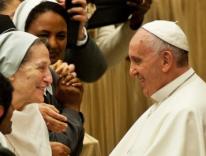
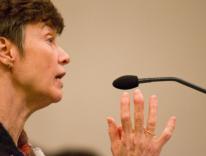
Tight-lipped officials reveal details of Jubilee year. Serra's canonization is almost complete. And for the first time, a woman bishop visits the Apostolic Palace.
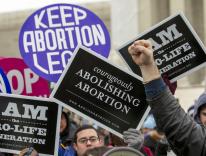
Charles Camosy believes we are “on the verge of a new moment in the abortion debate," politically capable of compromise. But has he misunderstood Catholic teaching?
Pinckney's short history deals with basic things—Reconstruction, Ku Klux Klan terrorism, crude political machinations like Plessy v Ferguson—white people can forget.
At a gathering of the Secular Coalition for America, the Delaware Democrat spoke on his own faith as well as the need to respect those who choose not to believe.
Catholic opinion on climate change matches the American political spectrum, and thus the polemics around this polarizing issue are Catholic polemics as well
Often the way our society treats "senior citizens" assumes that as bodies age, individuality decreases. But aren't whiskers and white socks a sign of unique wisdom?
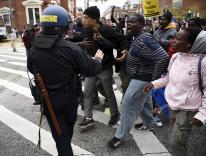
Baltimore is Exhibit A for the frustration over how the costs of globalization and technological change have been borne almost entirely by the least advantaged.
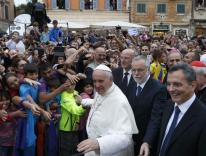
Controversy over the canonization of California's founding father continues; Bishop Finn is finally gone; and Pope Francis will make visit to U.S. Seminary in Rome.
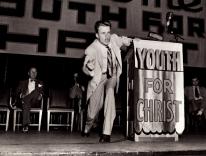
Kevin Kruse convincingly claims that the association of patriotism with Christianity comes from a libertarian reaction in American business to the New Deal.
How can we choose to have agency over our lives when we are bombarded by choices? Crawford proposes a way to reclaim your attention span and thereby reclaim yourself
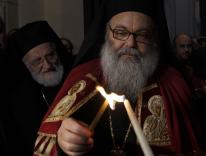
Worshipping with families of Antiochian Christians in Philadelphia, you are an interloper. At the coffee hour, they pile your plate with pastries—"you are new, yes?"
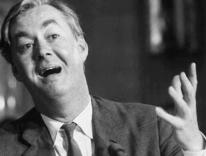
With his concern for evidence and skepticism about the ability to transform complex systems, Daniel Patrick Moynihan is worth recalling in today's political climate.
Catholic social teaching has always staked out a middle-ground position that opposes both the excesses of collectivism and laissez-faire individualism.
Paul Ryan’s "envy economics" label invites a description of his own approach, which would slash taxes on the rich and cut programs for the poor and middle class.
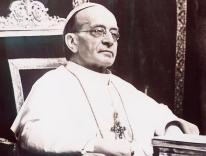
It only took thirty-five years, but the Vatican’s Congregation for Saints finally recognized what almost every rational Catholic in the world had already known.
In exposing Pope Francis's accomplishments, Austen Ivereigh presents “the concrete Catholic thing” as something that has the power to create true solidarity.
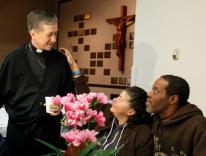
Archbishop Cupich talks about immigration, abuse and accountability, what happened at the synod on the family, and meeting the needs of Chicago Catholics.
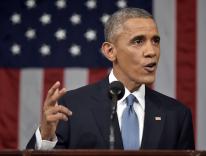
President Obama makes it clear that he thinks it’s more important to win a long-term argument with his ideological opponents than to pretend they'll work with him.
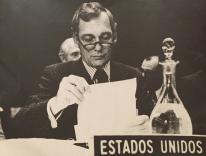
Robert White never forgot the murders of four churchwomen in El Salvador, and never ceased pressing for better political and economic conditions in Latin America.