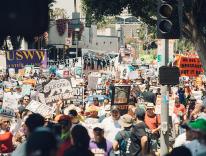
A protest outside a Texas detention center featured speeches and songs, but also revealed something more: God’s commitment to accompany those making their way north.
A new book proposes the abolition of life sentences. But meaningful criminal justice reform requires greater clarity about the nature and purpose of prison time.
In this installment, we take a back-to-the-earth approach, reading a Japanese treatise on natural farming alongside an Italian film about rural peasant life.
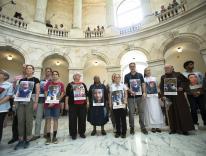
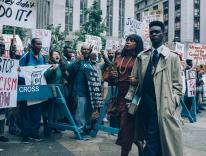
Progressive religious activists, including Catholic sisters, staged a sit-in at the Capitol, forming a human cross to protest Trump’s cruel treatment of migrants.
Why won’t the pope require bishops around the world to adopt the standards of the UN Convention on the Rights of the Child? It signed the treaty, but won’t comply.
Why did so many descendants of Ellis Island immigrants vote for a president whose speech echoes 1920s eugenicists? A new book traces the rise of ‘scientific’ racism.
The retrial of humanitarian border activist Scott Warren raises frightening concerns for all who would help migrants. A conviction would set a dangerous precedent.
Commonweal writers have long engaged with the church’s stance on labor rights, worker justice, and income inequality. Here are the best pieces from our archives.
Making real progress toward racial justice requires the input of all Americans, including the so-called ‘privileged’ side. We need alliances, not recriminations.
The case of the Central Park Five shows that the legal profession needs reform. It must do more to hold itself accountable when it reaches provably unjust verdicts.
In the debates about democratic socialism, we need a new idea of utopia. The life and work of nineteenth-century socialist William Morris is a good place to start.
I agree with the values of sacrifice and care, and I often find Briallen Hopper’s writing tenacious and lovely. So why did her book leave me not quite satisfied?
Most of the films in competition at Cannes were quieter, more richly textured meditations on love, loss, and identity. But the specter of Trump loomed large.
African influence is resurgent in world fashion, music, visual arts, and, increasingly, literature. Two new novels demonstrate the continent’s cultural vitality.
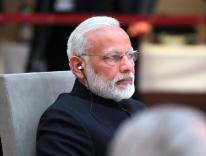
The landslide reelection of Narendra Modi as prime minister of India in May concentrates economic and nationalist concerns. It bodes poorly for the lower castes.
Tibetan art can be a challenge for non-initiates to decipher. But once you pierce its iconography, you find a moving testimony of faith lived against oppression.
Pro-life and pro-choice activists have seized on Alabama’s new abortion law to energize their supporters. But abortion demands more than performative politics.
Most states do not support raising the minimum wage to fifteen dollars per hour. But both economic reasoning and Catholic social teaching support the idea.
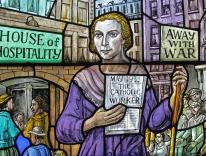
The Sisters of St. Joseph of Brentwood are an unlikely group of Amazon shareholders, but they’re forcing a vote on the company’s facial recognition software.
A classic of Chicanx cinema gives us the true story of Gregorio Cortez, a Mexican man hunted down by Texas Rangers and imprisoned for crimes he didn’t commit.
Poet Ilya Kaminsky’s second collection attends to the barbarism of war, but also speaks of the love—romantic, familial, and communal—that resists such violence.
Poet, editor, translator, and human-rights activist Carolyn Forché speaks about Óscar Romero, Liberation Theology, and the Catholic Church in El Salvador.
As the EU parliamentary elections approach, it’s worth examining the confederation’s real structural flaws: its arcane rules work for some, but not for all.
The Equality Bill, designed to bolster LGBTQ protections, provoked fierce opposition from the USCCB. But fears of infringement on religious liberty are unfounded.
Democratic socialism, increasingly appealing to young people today, extends democracy into the economic realm. The idea’s not new; we need to explore its history.
One hundred years after the restoration of national sovereignty, Poland is failing to preserve the values forged in its struggles against totalitarianism.
Powell and Pressburger’s seminal 1947 film about a group of Anglican nuns in India offers more than melodrama, as secondary characters reveal the face of Christ.
Codetermination, or the practice of including workers on corporate boards, is not only deeply rooted in the Catholic tradition; it aids democracy in the workplace.
Senate Republicans are unlikely to oppose Trump’s latest outrage on the border wall. Preserving the separation of powers will fall to the Supreme Court
New York State’s new Child Victims Act allows people who were sexually abused in childhood to sue public institutions. What does the law mean for the church?