In Robin Lane Fox's biography of St. Augustine, Augustine doesn’t convert to Christianity; he converts to whatever you get when you put aside worldly ambition.
Early stories of Jews, Christians, and Muslims; the politics of celibacy and marriage; reflections from Cardinal Kasper; afterlife and wealth in early Christianity.
Gregg looks at five of the two dozen stories with characters shared by the Jewish Bible, New Testament, and Qur’an, interpreting how they are told in each tradition.
As a student of Reinhold Niebuhr, President Obama has sought out occasions on which he could preach about the ironies and uncertainties of human action.
Instead of jettisoning the just-war tradition, it would be better for the church to be more willing to condemn wars when they fail to meet its rigorous demands.
In the 2016 campaign, there's a profound pessimism among conservative Christians that contrasts sharply with the movement’s hopeful spirit in its Reagan Era heyday.
"Deeply Christian, she has no desire to impose her religion on others, but only to work together to make her country better. Her open, humble practice stays with me"
Historian Frank Oakley rejects the idea that that Greece and Rome were secular. He insists that the “seedbed" for individual rights lies in the Latin Middle Ages.
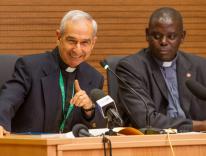
Cardinals grapple with Francis's unclear "but-also" logic; Bishops hesitate to implement changes pope called for three years ago; What will happen to Vatican Radio?
Lincoln is a riddle because we are a riddle to ourselves. We are his heirs, for good and for ill. We cannot escape his legacy, and we don’t know what to make of it.
Francis holds first private talks at Vatican with Grand Imam Ahmed el-Tayeb; Former aide to Bishop-emeritus of Rome claims Ratizinger never really resigned as pope
A historical, unprecedented “Holy and Great Council” to be held in June may have important consequences for the Orthodox Church and its relations with Rome.
Romero refused to sacrifice his conscience to his country’s ruler. To be killed for doing right and speaking against evil in the name of Christ is to be a martyr.
Award-winning novelist C. E. Morgan talks about "moral beauty," evil and empathy, and how landscape informs her work, including her latest, "The Sport of Kings."
The truth (and history) behind the pope's comments on a commission to "clarify" the role of women deacons; Italian bishops react to Italy legalizing same-sex unions.
What do the plight of the Little Sisters of the Poor and the fate of persecuted Christians in the Middle East have in common? The USCCB "explains" in a video.
Soccer fanatics live by a different cycle—and, perhaps, a different creed. Where baseball’s characteristic transcendental is the truth, soccer’s is the beautiful.
Pope calls for change in economic theory and practice to deal with refugees in Europe while Rome's Augustinian Institute unveils "Master in Joseph Ratzinger" degree.
Acknowledging the significance of Populorum progressio and the second confrerence of CELAM is essential to understanding the post-Vatican II Latin-American church
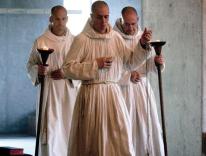
When Georges Vanier said he was going to become a Trappist, his father asked what his friends’ reactions would be. "They'll think I'm a crackpot," Vanier answered.
Francis reforms the "evangelical spirit" of the church as a rumored eighty-five percent of cardinals in the Curia disapprove, many because of his work with refugees.
The forced resignation of the widely respected Tony Spence, who had a long history of serving the Catholic press, raises questions about changes at the USCCB.
Pope Francis appoints new archbishop of Havana, releases new document on the laity in the church (in Spanish), and rumors say McDonald's is opening in Vatican city.
Simon Leys’s Catholic sensibility is never insistent, and never descends into preachiness. As he said of Confucius, sometimes it can be better to stay silent.
How media shunned Eastern Orthodox leaders visiting refugees with the pope; Which title Francis prefers; Why U.S. bishops fired Catholic News Service editor-in-chief
Some conservatives tend to confuse fidelity with a one-size-fits-all legalism. If there's one thing you can say about Pope Francis, it's that he's no legalist.
Reflecting on the two Notre Dame graduations clearly reveals that the latest rounds of the culture wars have sputtered to an end—and that we need a new way forward.
To understand Francis and support the direction he has been setting for the Church, we need to think more deeply about the ways and means of “forgiveness.”
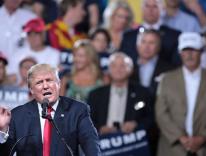
Glamour has imparted an important advantage to Donald Trump. He has used his persona to encourage and exploit an angry and violent undercurrent in American life.
Francis regards the sacrament's indissolubility as a “gift” rather than a “yoke,” and chides those whose efforts to defend marriage reduce the gift to a “duty.”
The exhortation is a valiant and powerful exercise in the Petrine ministry of upholding church unity. Is it another starting point in Francis's pontificate?
How and why Bernie Sanders was invited to the Vatican; Cardinal Burke's backlash and the pope's "bodies"; the important difference between "the Synod" and "synods."
If John Paul II was the philosopher and Benedict XVI the theologian, Pope Francis is the poet pope, giving voice to the dreams and wisdom of migrants and the poor.
With Pope Francis lifting up what can be called social justice Christianity, clichés that religion lives on the right end of American politics might be overturned.