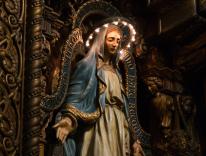
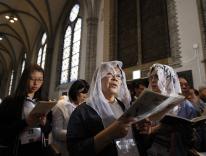
"I have wanted to create for myself a devotion to Mary that honors her as woman, as mother, that rejects the wickedness of sexual hatred and sexual fear."
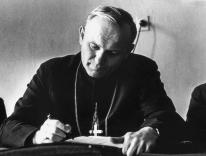
With the election of Pope John Paul II, we are facing one of those events marking a change in our vision of the world. Examining such events can even cause us to give up a few prejudices.
The Vietnamese and Cambodian refugees, who would rather risk the South China Sea in small fishing craft than stay where they are, deserve better from the United States.
Black Catholics are reaffirming their bonds with other Blacks, while embracing their identity as Catholics— and hopeful agents of racial progress within the Church.
We live in a world and in a Church that are changing at a mad pace—indeed, in the next decade both the United States and American Catholicism may face the greatest challenges either has ever seen.
When Catholicism could claim disturbingly little to be proud of, Christian democracy certainly played one of the more sympathetic roles. Its passing in France is cause for reflection.
Pope Paul comes to his exalted office with superb qualifications. The range and depth of intellect are notable in his voluminous writings; his warm personal concern for human well-being is clearly manifest.
It is no exaggeration to say that our times are Apocalyptic, in the sense that we seem to have come to a point at which all the hidden, mysterious dynamism of the "history of salvation" revealed in the Bible has flowered into final and decisive crisis.
Within a few short hours the new Pontiff had already impressed the world with a lengthy and vigorous papal address, an address that considered all the problems he saw before him