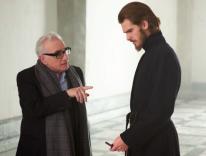
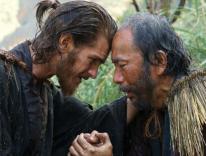
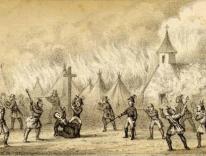
Martin Scorsese talks about apostasy and faith, and how some of the films he's made (and some he's influenced by) have taken up these ideas in different ways.
Martin Scorsese talks about the challenges of filing a story set four hundred years ago, the similarities between Endo and Graham Greene, and the idea of vocation.
The director talks about growing up on the Lower East Side, his early dream of making a film about Jesus in New York City, and what led him to Endo's "Silence."
Losing to the “atheistic progressive agenda” might be good for the American church. Just look to that specter haunting the nightmares of U.S. conservatives: Sweden.
The Vatican reaffirmed a controversial directive that excludes “persons with deep-seated homosexual tendencies” from being admitted to Catholic seminaries.
Some of the anxiety pervading reception of 'Amoris laetitia' invites misconstruals of the text that dwarf whatever legitimate worries that critics may have.
Simeon Zahl offers thoughts and comments on David Bentley Hart’s "blistering reflection on the economic ethics of the first Christians," and Hart responds.
Henri Nouwen, a Pierrot-like figure with many masks, turned personal vulnerability into spiritual exploration, addressing other people’s pain by sharing his own.
There is deep malaise among people who work in the curia about whether or not Francis's reforms will improve working conditions for its over 3000 lay employees.
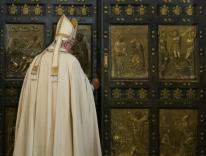
It is worth stopping to reflect on what Francis has described as “the very foundation of the church’s life,” now, while the Year of Mercy remains fresh in our minds.
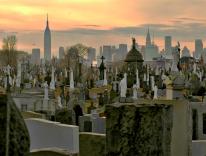
Fond memories and beautiful places are fine, but they are not all that matters. Indeed, there is a “Catholic way of doing things” when it comes to death.
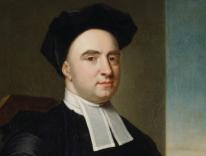
Bishop George Berkeley was one of the most interesting men of his age. Even today, his philosophical maxims are correctives to the abuses of patriotism.
Willing the good to everyone doesn't mean we ought to contrive a cheap reconciliation that ignores the danger presented by Donald Trump to our society and the world.
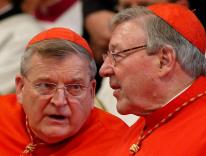
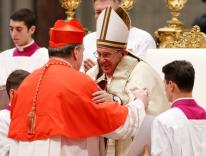
As Pope Francis gave the red hat to thirteen new papal electors and four others, he faced very public criticism from four cardinals and an Australian journalist.
Problems with faith cross religious boundaries. Here are the fruits of a conversation that I’ve been conducting, with my friend and in my mind, for a long time.
One of the biggest problems confronting Catholics engaged in the public square is our failure to develop a body of political thought relevant to this modern moment.
As U.S. Catholic leaders elect the latest head of its national conference, there are few signs that they are willing to embrace the pastoral priorities of the pope.
The USCCB meeting offers another opportunity to ditch a style of culture-war Catholicism that has failed to persuade even many of the faithful in the pews.
The prospect of a Trump presidency has sent shivers up the spines of most officials in the Vatican, though Americans who work in the Curia feel differently.
As a Catholic, O’Connor believed that the physical, perceptible, photo-graphable world is always pointing toward a larger and more enduring metaphysical reality.