“Some days, although we cannot pray—because we are too busy, or because we are in too much pain, or simply because the words will not come—a prayer utters itself.”
Mary Ward’s trajectory proves an axiom in church history: it is often those who suffer humbly and patiently from the church’s contradictions who end up redeeming it.
What we find outside are physical manifestations of the holy, representative of the sloughing off of old skin, the salt of blood and the sea, signs of the divine.
The church is a liminal space I’m lingering in: a space of transition, of walking along boundaries, of being neither in nor out, of neither staying nor leaving.
As Lent approaches, I’ve been in a state of spiritual anxiety over the inevitable renunciation that the season demands. God wants harmonious balance, not excess
Long before Patrick ever set foot in Ireland, the pagan Celts believed their island was a thin, holy place, where the veil between heaven and earth vanishes
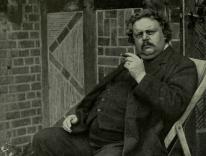
G.K. Chesterton, huge in every sense, was provided with a special chair during a 1930 conference at St. Michael's College in Toronto. Where is this memento now?
I don’t think I’m unusual in being a father who had expected to live a life in conformity with the law and comfort with the society in which he was raising a family
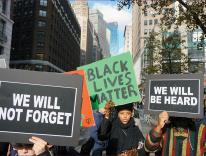
How can injustice be remedied when it is invisible? White Catholics—and indeed all white people—must learn how racism perpetuates black suffering and death.
When Georges Vanier said he was going to become a Trappist, his father asked what his friends’ reactions would be. "They'll think I'm a crackpot," Vanier answered.
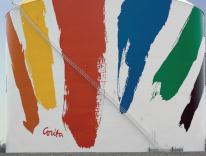
The changes of Vatican II and the turmoil of the civil-rights and anti-war movements made for heady days, and Sister Corita Kent’s art further exemplified the times.
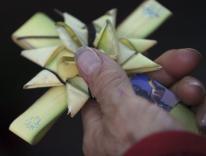
Around the dining room table, paisanas from the old country cut and wove strips of palm into intricate crosses and flowers, and Grandpa, eyes shining, told stories.
After he died a bunch of us were playing basketball one night, in one of the parks where we used to play summer-league ball—eight of us. And then this thing happened
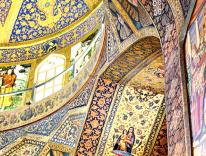
Though many Westerners think of Iran as a theocratic monolith, Christians of various kinds consider it home and see the Shiite majority not as hosts but neighbors.
One day after Mass, my devout husband told me that he wanted to sign up for an hour of silent protest outside of the abortion center. I understood, of course.