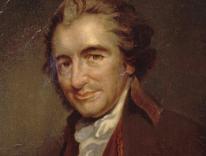
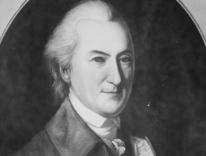
Yuval Levin reconstructs the conflict over Edmund Burke’s angry 'Reflections on the Revolution in France' and Thomas Paine’s incandescent reply, 'The Rights of Man.'
Imre Kertész is a concentration-camp survivor who keeps a distance from the slogans that remind us “never again.” His novels and short stories spell out these views.
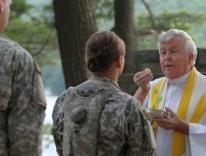
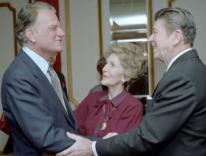
Hansen includes a diverse collection of denominational affiliations and explores some of the most compelling conundrums confronting today’s military chaplaincy.
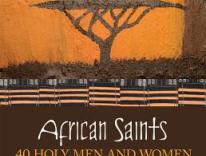
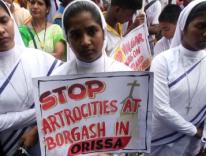
Though the number of Christians killed and persecuted every year is contested, Shortt clears away misconceptions that other religions are the source of the problem.
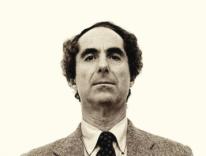
Pierpont presents a picture of Philip Roth’s works that contains necessary qualifications: there is no dutiful approval of every word the master has written.
Evangelicalism is still very much around, and understanding such a diverse movement is a formidable challenge. Molly Worthen is to be commended for helping meet it.
Hauerwas divides Approaching the End into three parts dealing respectively with eschatology, the church, and what he calls “the difficulty of reality.”
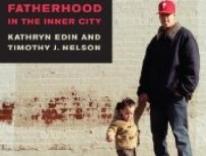
The men who tell their stories in 'Doing the Best I Can: Fatherhood in the Inner City' know that they don’t look much like Ward Cleaver or Cliff Huxtable.
'Religion Without God' is a lovely swan song. It is short—it’s based on the Einstein Lectures delivered at the University of Bern in 2011—but eloquent and rich.
Williams astutely alerts us to Evdokimov’s proposition that the vows of a religious are analogous to Christ’s response to the temptations in the desert.
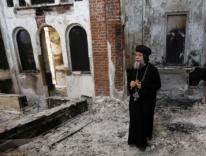
Not many Christians in the West are aware that in many parts of the world Christians still risk their lives just by going to church to celebrate the birth of Christ.
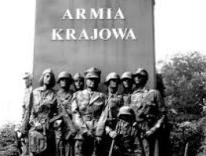
'Story of a Secret State' promises an insider’s perspective on Poland’s Home Army, the largest resistance organization in Nazi-occupied Europe --- and delivers it.
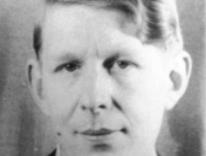
As with many of Auden’s longer poems, 'For the Time Being' is a slippery beast. Whenever you think you’ve got a hold of it, it goes off in another direction.
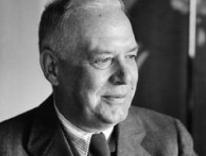
Did Wallace Stevens convert to Roman Catholicism as he lay dying in the summer of 1955? This question has provoked more controversy than one might expect.
The books I’m recommending here I more or less bumped into by accident, usually when some reviewer or author of a memoir took the trouble to cite something good.
Tempted as I am to recommend those I give as presents year after year, I’ll offer instead some very recent books that have already earned a home on our bookshelf.
No one says growing up is easy, and four novels I’ve read this year reiterate just how challenging the journey from youth (or youthfulness) to maturity can be.
Alice McDermott's latest novel is a compelling accounting of a life that begins in Depression-era Brooklyn and winds its way to the late-twentieth-century suburbs.
It is a mark of Antonin Scalia's pioneering influence that originalism and fidelity to text have become a staple of the Supreme Court’s interpretive methodology.