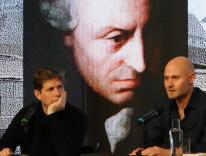
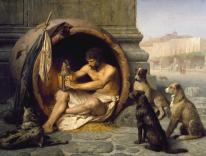
We don't need uncritical reverence toward the Western intellectual tradition. But we do need to read it with generosity, rather than hardened suspicion.
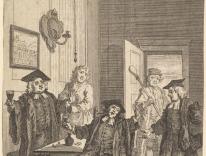
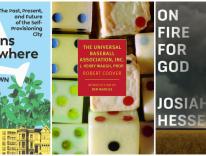
America's nineteenth-century country editors are fun to read about, but they shouldn’t be regarded as a foundation for solving today’s crisis in local news coverage.
Ben Rhodes's new book makes an earnest case for the political power of words. But the degradation of our public life can’t be reversed by rhetoric alone.
Three writers—a Jewish theologian, a legal scholar and intellectual historian, and a Catholic philosopher of religion—reflect on Omri Boehm’s call for a "radical universalism."
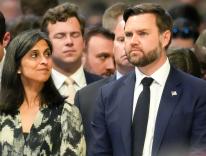
J. D. Vance’s ‘Communion’ and Lena Dunham’s ‘Famesick’ are two sequels to splashy, confessional memoirs by millennial authors. Only one of them is fun to read.
Jim Thompson, the most "titillatingly depraved crime novelist of the twentieth century," penned iconic psychopathic protagonists and redefined the genre of noir.
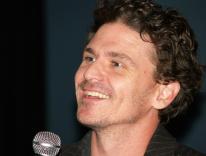
Dave Eggers’s latest novel is the meditation of an older, successful artist on what his life might have been if he had been unable to work successfully.
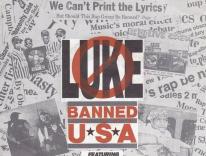
In the last quarter of the twentieth century, provocative art came to be leveraged for right-wing political power. We're still dealing with the consequences.
Bernd Roeck traces the roots of the Renaissance as far back as the sixth millennium BCE. His long view of history explores the “why” of Western culture’s success.
Among twentieth-century British artists, there seemed to be a mad rush to Rome. A new book endeavors to explain this explosion in Catholic conversions.
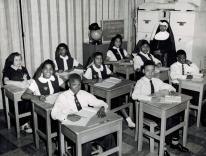
In fiction and nonfiction by Black American Catholics, the parochial school looms large as a place of education, formation, and conversion—for good or ill.
When literature was still recognized as an incomparable source of liberty and dignity to millions, the CIA spent decades distributing banned books behind the Iron Curtain.
Hosts and 'Commonweal' contributors Daniel Steinmetz-Jenkins and Nick Tabor chat with professor and author Jonathan Sheehan about the history of sacrifice, from the sacred to the secular.