A parasite is a homemaker, living in its host. In Bong Joon-ho’s new film it could be property, capital, commercialized art and artifice, or all of them together.
Australian critic Clive James passed away last month. His writings show us that we need not choose between high and low culture: Dante matters, but so do the Doors.
Every crusade was both more and less than a religious war. No one had a monopoly on brutality, and economic motivations mattered as much as religious ones.
Heaney’s legacy and his continued popularity as a lyric poet rest on the twelve volumes from which this selection is chosen. What makes his work so alluring?
A new show at the ICA in Boston addresses the global migration crisis by posing a simple question: what is a home? And why do more than 60 million people lack one?
The Shakers, who arrived in America in 1774, are a religious community facing extinction. Their decline means nothing less than the end of an idea of heaven.
Thirty years ago, the Velvet Revolution marked the demise of Soviet control of Czechoslovakia. My enthusiasm for Vaclav Havel’s lucid writing continues to this day.
Thanksgiving is at once the most traditional of holidays and the most radical. Even the best things we do are contingent on support and help from others.
The territory along the Syrian-Turkish border is the ancestral homeland of an ancient tradition of Aramaic-speaking Christianity. They’ve been betrayed before.
A new play about a reunion of four friends, all conservative Catholics, is quietly heroic. It reveals the limits of rhetoric as it probes the nature of suffering.
Should the church continue to oppose the safe, therapeutic injection of opioids? No, according to this ethical primer on the philosophy of harm reduction.
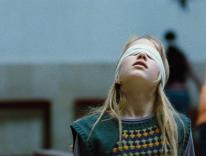
The latest novel from Hungarian writer László Krasznahorkai shows his melancholic passion for sin and the apocalypse, and his compassion for the world as it is.
Fr. Luigi Giussani’s experience as a student and teacher made him especially attuned to the rhetorical challenge of helping young people mature in faith and reason.
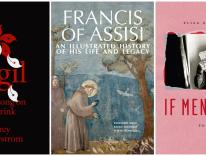
Recent nonfiction increasingly takes ego as starting point. Jia Tolentino and Leslie Jamison use self-aware essays to examine popular culture and female experience.
Guadalupe began as a paradoxical figure, both symbol of indigenous faith and tool of colonialist oppression. Now, she demands we listen to the poor and marginalized.


Museums have recently tried to expand our picture of Native American life, coupling indigenous art with contemporary American works. This approach has limits.
The first of a series by Fr. Incognitus, who has worked in Southwest parishes serving immigrants from Central America, Mexican Americans, and Euro-Americans.
2019 marks the 800-year anniversary of St. Francis of Assisi’s meeting with Egypt’s Sultan Malik al-Kamil during the Fifth Crusade. The dialogue must continue.
Unlike most revolutions, the Irish War of Independence ultimately led to a democracy, not an autocracy ruled by a new gang of tyrants. It deserves to be remembered.
Mike Wallace contributed both good and ill to the evolution of American journalism. Perfect for an era of fake news, a new documentary traces his evolution.
Poet and novelist Fanny Howe is an experimental writer’s experimental writer, the author of dozens of books, one who remains publicly, committedly Catholic.
Global warming, the rise of the Latino vote, and, of course, millennial socialism. New books to keep an eye out for next time you browse the bookstore.
In this final installment of our summer conversation series, we discuss Henry James’s classic novella ‘Washington Square’ and William Wyler’s ‘The Heiress.’
Famed documentarian Ken Burns traces the long and complex history of country music, revealing old American tensions between personal and collective freedom.
Personal data has become a valuable commodity. What if we were given ownership rights over our data—not only to retain control, but also to receive compensation?
Available for the first time in English translation, the letters of a young German couple whose love of God and each other sustained them against Nazi oppression.
A new show at the Barnes in Philadelphia transports audiences into the heart of the Bill Viola’s pioneering inquiries into the phenomenon of visual perception.
In Mexico City there is an ancient agricultural system that consists of manmade islands, called chinampas. They risk ruin in the face of climate change.
Someone churchy thought a girl’s outfit was more important than her presence at church. Religion offers many excuses for emotional predation; we have to call it out
Soviet novelist Vasily Grossman is not often thought of as a religious thinker. But his Armenian travelogue shows a different, more numinous side of his work.
Easy Rider is a lasting work of art not only because it reflects the “spirit of the Sixties,” but because it depicts a bona fide tragedy that transcends its time.
A timely new novel from Oscar Cásares captures not only the vulnerability of newly arriving immigrants, but also the anxiety of simply trying to acclimate.
Because I’d read all the relevant names in college, my family made the error of looking to me to help mend my brother Vin’s blighted mind, to somehow rescue him.
In this installment, we take a back-to-the-earth approach, reading a Japanese treatise on natural farming alongside an Italian film about rural peasant life.
Daniel Callahan was one of the most influential editors in Commonweal’s history, and the preeminent creator of the field of bioethics. He passed away on July 16.