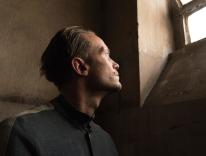
Rather than the politics of sainthood, Malick’s film mirrors the reality of things themselves. Like faith itself, they can’t be so much articulated as experienced.
At the center of Malick’s film is Jägerstätter’s incomprehensible decision to give his life away, ostensibly benefiting no one. But such heroism ultimately wins.
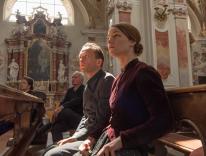
With the release of Terrence Malick’s Jägerstätter biopic, the martyr’s biography has finally come into broader public view. But his sacramental devotions haven’t.
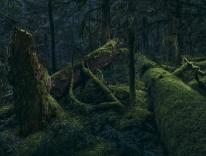
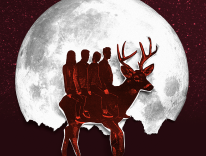
In an old-growth forest, everything is connected. No individual plant or animal, and indeed no species, is an island. As Pope Francis warns, we should pay attention.
William Blake critiqued the Enlightenment, industrialization, and the expansion of the British empire. His work shines at the Tate as the shadows of Brexit loom.
What we find outside are physical manifestations of the holy, representative of the sloughing off of old skin, the salt of blood and the sea, signs of the divine.
Refugees and migrants encounter homesickness as they struggle to establish identities in unfamiliar, often unwelcoming territory. Three books show how they do it.
Fiction is hard. Nonfiction is hard for different reasons: the need to ensure accuracy, the risk of angering your subjects. These books succeed brilliantly.
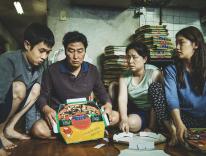
A parasite is a homemaker, living in its host. In Bong Joon-ho’s new film it could be property, capital, commercialized art and artifice, or all of them together.
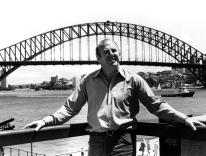
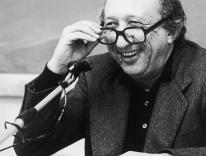
Australian critic Clive James passed away last month. His writings show us that we need not choose between high and low culture: Dante matters, but so do the Doors.
Every crusade was both more and less than a religious war. No one had a monopoly on brutality, and economic motivations mattered as much as religious ones.
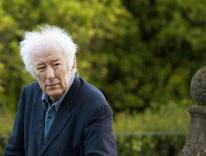
Heaney’s legacy and his continued popularity as a lyric poet rest on the twelve volumes from which this selection is chosen. What makes his work so alluring?
A new show at the ICA in Boston addresses the global migration crisis by posing a simple question: what is a home? And why do more than 60 million people lack one?
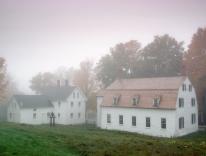
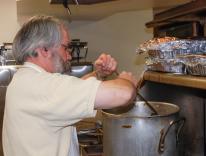
The Shakers, who arrived in America in 1774, are a religious community facing extinction. Their decline means nothing less than the end of an idea of heaven.
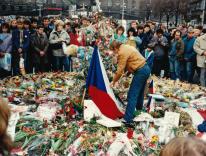
Thirty years ago, the Velvet Revolution marked the demise of Soviet control of Czechoslovakia. My enthusiasm for Vaclav Havel’s lucid writing continues to this day.
Thanksgiving is at once the most traditional of holidays and the most radical. Even the best things we do are contingent on support and help from others.
The territory along the Syrian-Turkish border is the ancestral homeland of an ancient tradition of Aramaic-speaking Christianity. They’ve been betrayed before.
A new play about a reunion of four friends, all conservative Catholics, is quietly heroic. It reveals the limits of rhetoric as it probes the nature of suffering.
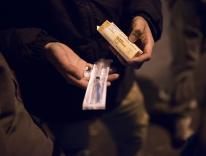
Should the church continue to oppose the safe, therapeutic injection of opioids? No, according to this ethical primer on the philosophy of harm reduction.
The latest novel from Hungarian writer László Krasznahorkai shows his melancholic passion for sin and the apocalypse, and his compassion for the world as it is.
Fr. Luigi Giussani’s experience as a student and teacher made him especially attuned to the rhetorical challenge of helping young people mature in faith and reason.
Recent nonfiction increasingly takes ego as starting point. Jia Tolentino and Leslie Jamison use self-aware essays to examine popular culture and female experience.
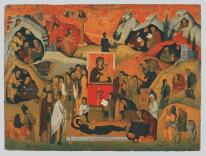
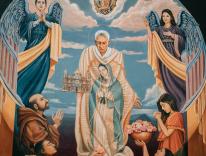
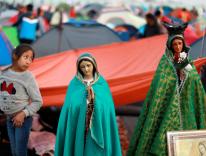
Guadalupe began as a paradoxical figure, both symbol of indigenous faith and tool of colonialist oppression. Now, she demands we listen to the poor and marginalized.
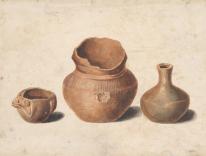
Museums have recently tried to expand our picture of Native American life, coupling indigenous art with contemporary American works. This approach has limits.
The first of a series by Fr. Incognitus, who has worked in Southwest parishes serving immigrants from Central America, Mexican Americans, and Euro-Americans.
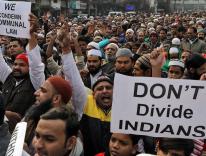
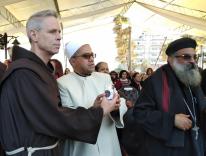
2019 marks the 800-year anniversary of St. Francis of Assisi’s meeting with Egypt’s Sultan Malik al-Kamil during the Fifth Crusade. The dialogue must continue.
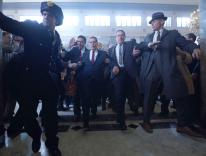
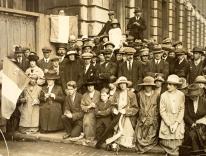
Unlike most revolutions, the Irish War of Independence ultimately led to a democracy, not an autocracy ruled by a new gang of tyrants. It deserves to be remembered.
Mike Wallace contributed both good and ill to the evolution of American journalism. Perfect for an era of fake news, a new documentary traces his evolution.
Poet and novelist Fanny Howe is an experimental writer’s experimental writer, the author of dozens of books, one who remains publicly, committedly Catholic.
Global warming, the rise of the Latino vote, and, of course, millennial socialism. New books to keep an eye out for next time you browse the bookstore.
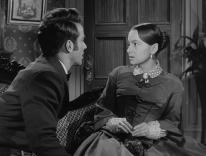
In this final installment of our summer conversation series, we discuss Henry James’s classic novella ‘Washington Square’ and William Wyler’s ‘The Heiress.’