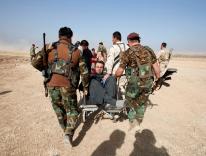
Refugees and migrants encounter homesickness as they struggle to establish identities in unfamiliar, often unwelcoming territory. Three books show how they do it.
Fiction is hard. Nonfiction is hard for different reasons: the need to ensure accuracy, the risk of angering your subjects. These books succeed brilliantly.
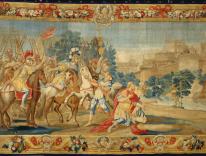
Every crusade was both more and less than a religious war. No one had a monopoly on brutality, and economic motivations mattered as much as religious ones.
As anyone who uses Facebook knows, we too quickly explain, meaning explain away, the world and each other. It’s not so simple; three books help complicate things.
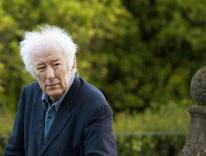
Heaney’s legacy and his continued popularity as a lyric poet rest on the twelve volumes from which this selection is chosen. What makes his work so alluring?
In recent decades, the institutions created to prevent corrupt dealings have themselves become complicit. Whistleblowers need protection, now more than ever.
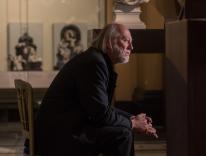
The latest novel from Hungarian writer László Krasznahorkai shows his melancholic passion for sin and the apocalypse, and his compassion for the world as it is.
Fr. Luigi Giussani’s experience as a student and teacher made him especially attuned to the rhetorical challenge of helping young people mature in faith and reason.
Colombian novelist Gabriel García Márquez wanted to be known more for his journalistic prose than his novels. A new collection reveals the flaws of that desire.
Studies show that the rich tend to be less empathetic and more selfish. Electoral politics, and policy change, is a promising way to take back what they’ve stolen.
Organized labor was once the backbone of American democracy. A new book argues that the future of collective bargaining requires adaptation to new economies.
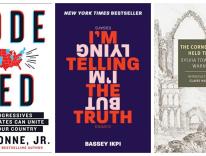
Why do we tell lies and indulge in half-truths? A new novel confronts monsters, both real and metaphorical, as it experiments with the boundaries of narrative.
Recent nonfiction increasingly takes ego as starting point. Jia Tolentino and Leslie Jamison use self-aware essays to examine popular culture and female experience.
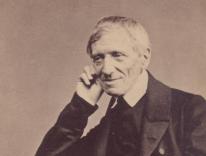
Best known for his autobiographical and educational works, John Henry Newman now has the distinction of being the only saint with two published novels to his credit.
How did mainstream American Christianity became intellectually respectable and modern? The critical study of post-biblical Christianity played a key role.
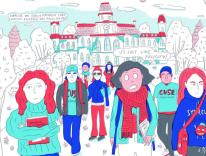
There is a basic division in contemporary Jewish life, and in all communities that purport to interpret a religious tradition: that of self-expression and community.
Kathryn Tanner offers a pointed theological critique of finance capitalism, which inverts the Christian understanding of human dignity and the dignity of work.
Poet and novelist Fanny Howe is an experimental writer’s experimental writer, the author of dozens of books, one who remains publicly, committedly Catholic.
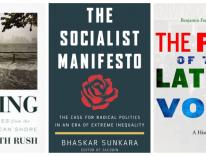
Global warming, the rise of the Latino vote, and, of course, millennial socialism. New books to keep an eye out for next time you browse the bookstore.
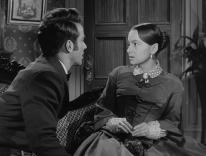
In this final installment of our summer conversation series, we discuss Henry James’s classic novella ‘Washington Square’ and William Wyler’s ‘The Heiress.’
I’m nineteen years old, the year is 1958, and I’ve already made it through the first nine months of probation. More than anything in the world I want to be a saint.
A timely new novel from Oscar Cásares captures not only the vulnerability of newly arriving immigrants, but also the anxiety of simply trying to acclimate.
Because I’d read all the relevant names in college, my family made the error of looking to me to help mend my brother Vin’s blighted mind, to somehow rescue him.
The idea of religious liberty was not simply the product of the Enlightenment. It has ancient origins, going back to early Christians suffering persecution in Rome.
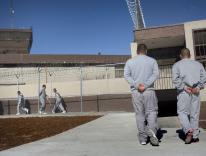
A new book proposes the abolition of life sentences. But meaningful criminal justice reform requires greater clarity about the nature and purpose of prison time.