Humans are hardly the ‘rational actors’ social scientists pretend they are. With COVID-19 cases rising again, epidemiologist Joshua Epstein proposes another model.
Although the Union defeated the Confederacy, the Civil War did not eliminate the Confederate worldview. The oligarchic ideology grew and spread to the American West.
A new, polyphonic collection with poems by more than a hundred Latinx writers responds to the vexed problem of identity with expansiveness, not reductionism.
A Czech priest and writer, Fr. Tomáš Halík served as a spokesperson for the church during the Velvet Revolution. His autobiography is now available in English.
Joanna Kavenna’s latest dystopian novel tackles surveillance capitalism and artificial intelligence with sharp satire, intelligence, and faith in the human spirit.
Shouldn’t we be paying attention to those minor miracles of creation that occur all around us, even when we’re stuck at home? Marilynne Robinson can help.
As Colson Whitehead argues in his Pulitzer Prize-winning novel, the legacy of injustice is not something we can simply move past. Old crimes continue to shape us.
Dorothy Day is well-known for her ‘paradoxical’ nature, which resists political characterization. A new biography also contextualizes her life, filling in the gaps.
Many of us are familiar with the absurdity-unto-death that is working remotely. Forget the zoom-and-gloom: put down your devices and pick up these new books.
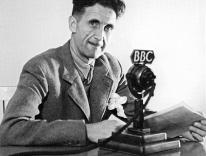
George Orwell was an ornery person, irritable and impatient, and he took an unholy pleasure in upbraiding his left-wing brethren. What would he say to the left now?
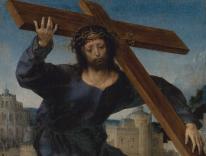
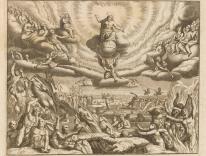
David Bentley Hart’s book makes the case for universal salvation, arguing that a belief in eternal damnation is morally repugnant and theologically insupportable.
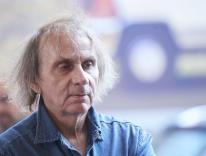
Set in a miserable dystopia, Houellebecq’s latest novel is both thought-provoking and wearying, fronted by a hypercynical yet dangerously nostalgic narrator.
A new book on Francis by noted papal biographer Austen Ivereigh promised to be more critical. And yet in important ways, it again lets Francis off the hook.
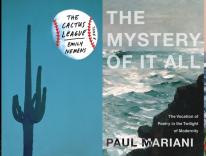
The short poems of Samuel Menashe are unique: self-contained epigrams, charms, wishes, prayers, descriptive one-shots, shapely units of quotable wisdom.
Constitutional issues—like guns or speech—are often seen as coming from opposite points of the ideological spectrum. But they may be more similar than we think.
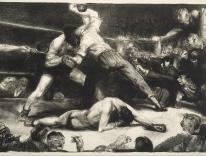
What can boxing teach us about the good life? Gordon Marino riffs on Sartre, Kierkegaard, and Camus, finding that in order to save our lives, we must risk loving.