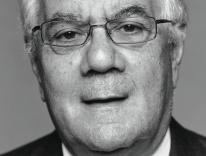
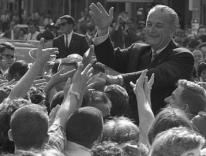
Amusing and engaging, Barney Frank's stories (from sixteen terms in Congress) tell what kinds of “inside politicking” informed the presidencies of LBJ through Obama.
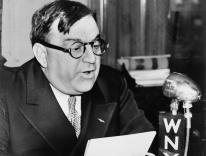
Paul Moses's history of Irish-Italian relations in 19th century New York delves into the causes for "race war" between the immigrant groups and how they overcame it.
Right away, anyone who wants to discuss the implications of the shooting is scolded for “politicizing a tragedy.” Thus debate is delayed until the urgency passes.
The pattern of income inequality is more than a social problem, Robert Putnam says; it's a social tragedy, most devastating in the lives of poor American children.
Iranian author Azar Nafiri defends the value of canonical American literature—its imagination and humanity—against Common Core, market analyses, and Babbitt.
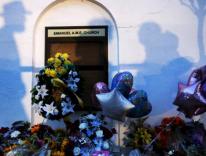
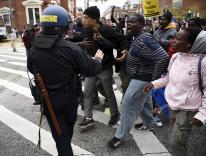
At the 126-year old Catholic Church in Freddie Gray's neighborhood, where structural sin can be fatal, parishioners find ways to work for justice, not just charity.
Pinckney's short history deals with basic things—Reconstruction, Ku Klux Klan terrorism, crude political machinations like Plessy v Ferguson—white people can forget.
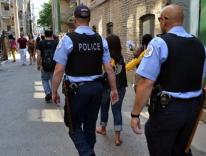
Baltimore is Exhibit A for the frustration over how the costs of globalization and technological change have been borne almost entirely by the least advantaged.
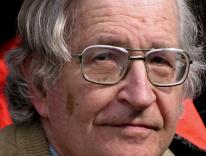
The political activist, public intellectual, and "father of modern linguistics" talks about Oscar Romero, Old Testament prophets, and the politics of fear.
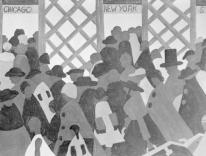
Lawrence painted what he saw and what he knew: strivers and beggars, children and prostitutes, gamblers and preachers, and above all women, like his mother.
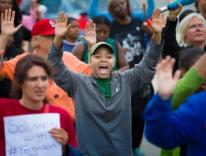
What you may have heard is how racially polarized the country is in its reaction to the shooting of Michael Brown. But polarization is the wrong concept here.
Falling crime rates mean that prison and sentencing reforms are among the few matters on which there is hope for cooperation across partisan and ideological lines.
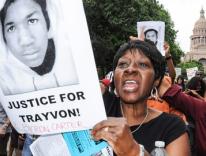
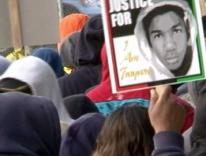
It tells us something about America in 2013 that two successful African American men chose independently to underscore the same truth about Trayvon Martin's killing.