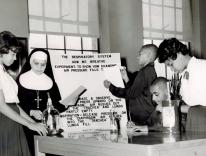
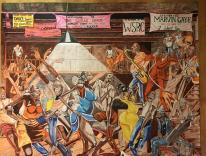
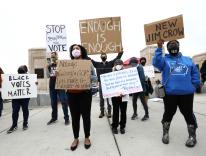
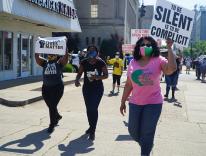
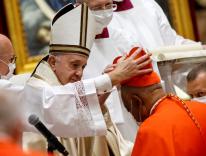
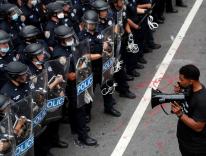
It’s no secret that racism is pervasive in the Church. The fight for Black Catholic education and vocations in the 1960s and 1970s showcases one striking example.
“Racism is a system designed to mess with your head, and I think Black people need to forgive ourselves and one another for the different ways we respond to it.”
Democrats can’t rely on changing demographics to guarantee majorities; American immigration history proves there is much more at play than race or ethnicity.
Bishop John England leaves behind a complicated legacy: a useful method of thinking beyond clericalism, and a warning about the application of natural law.
Deep disagreements over politics are as old as the nation itself. As we approach the November election, we need to think carefully about how we got here.
To understand and address the structural sin of racism, we should look to Pope John Paul II’s explanation of social sin. Only solidarity can help us overcome it.
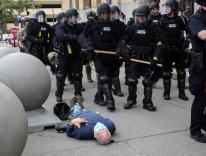
Martin Gugino, recovering from police-inflicted injuries, reminds us of how our current system fails to protect the constitutional right to free speech and protest.
Wendell Berry’s book about American racism, The Hidden Wound, is half-a-century old this year. It can be considered an exercise in white vulnerability.
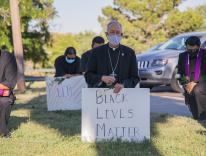
It’s been one year since the El Paso massacre. In part two, we discuss immigration reform, and ask Bishop Mark Seitz about his vision for an anti-racist Church.
It’s been one year since the El Paso massacre. In this two-part episode, we speak with El Paso natives about how life has and hasn’t changed along the border.
One consequence of Trump’s order to send federal immigration enforcers to Portland is that Americans will get a better sense of the unjust ways these agents operate.
This time of pandemic and mass interracial demonstrations has revealed gaping wounds in our body politic. The ancient homilist Origen can help us heal them.
The gift of the Holy Spirit allows us to passionately fight for the peace of Christ, a peace far greater than the one offered by oppressive authorities.
How should we answer calls to ‘defund the police’? To start, we must begin meeting urgent social needs instead of reflexively resorting to arrest and prosecution.