How do we come to believe what we believe? That’s the question asked and, with varying degrees of success, answered by every narrative of conversion. For John Henry Newman, “paper logic” could never fully explain such matters. As he writes in Apologia Pro Vita Sua, “It was not logic that carried me on; as well might one say that the quicksilver in the barometer changes the weather.” In order to understand how a celebrated Anglican theologian became a Catholic, for instance, we must consider the man in full: “It is the concrete being that reasons; pass a number of years, and I find my mind in a new place; how? the whole man moves; paper logic is but the record of it.” Human reason is an embodied thing because humans are embodied creatures. History shapes our intellect; language informs our feeling; both help constitute our beliefs. To truly understand belief, it is not enough to be a good logician. We must also be good biographers and good critics, attending to “the whole man” as he lives and speaks and, through these things, believes.
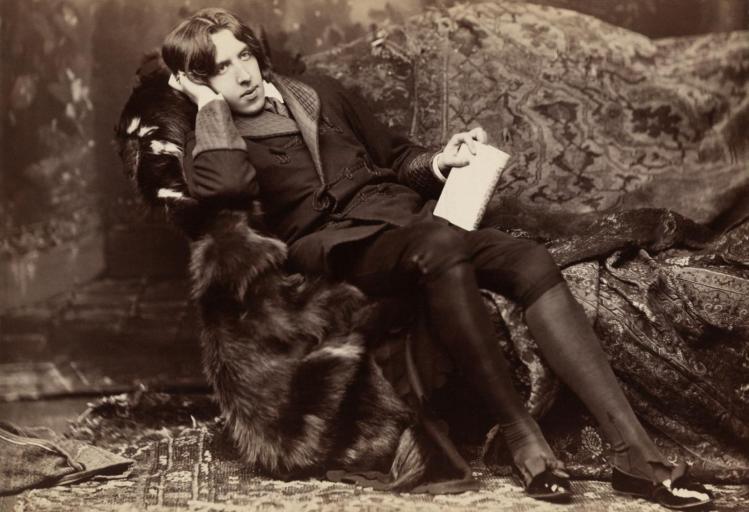
“This is not a book of criticism,” Melanie McDonagh writes in her introduction to Converts: From Oscar Wilde to Muriel Spark, Why So Many Became Catholic in the 20th Century (Yale University Press, $38, 368 pp). Nor, she admits, is it “an exercise in biography.” And it’s “certainly not a condensed history of the Church.” What exactly is it, then? It is, she asserts, “what it says it is, an attempt to look at one element of converts’ lives, their conversion.” McDonagh is interested in the period stretching from about 1900 to about 1960 when there seemed to be a mad rush to Rome. In 1910, there were roughly three thousand converts in Britain. In 1959, there were sixteen thousand. All told, about half a million people in England and Wales joined the Catholic Church in the period McDonagh writes about. Many of them were artists and writers of the highest regard. Converts considers a range of these figures—Newman, Oscar Wilde, Gwen John, David Jones, Evelyn Waugh, Muriel Spark, Elizabeth Anscombe, and others—in the hopes that “their experience may cast a light on that movement and that a focus on their conversion may illumine their lives and work.”
Both aims are admirable, but neither is quite achieved. This is partly a methodological problem. All people are strange. Great artists are even stranger, and this makes it hard to extrapolate general trends from the experiences of these exceedingly particular beings. Oscar Wilde’s peculiarities are the stuff of legend, but to take one minor example: while reading, he would rip off a corner of the page, roll it into a ball, and eat it. The poet and engraver David Jones was an eccentric genius—his poems look and sound unlike anyone else’s—who lived an eccentric life: serial infatuations but no marriage; agoraphobia and depression brought about by his experiences at the Somme; the habit of wearing a dyed-black greatcoat that went to his ankles, no matter the weather. As McDonagh notes, the Catholic sculptor Eric Gill, Jones’s friend and mentor, “dressed in smocks, in imitation of craftsmen of an earlier period (he also disapproved of trousers for restricting the genitals).” Gill also sexually abused two of his daughters, one of whom, Petra, was the most devastating of Jones’s failed romances. Shortly before her conversion, Muriel Spark believed that T. S. Eliot was sending her secret messages encoded in lines from his plays. (He wasn’t; it was her diet pills talking.) The philosopher Elizabeth Anscombe didn’t much care for housekeeping. John Searle recalled her flexible standards of cleanliness:
When I was tutored by her husband, Peter Geach, I went weekly to their house at 27 St John’s Street. The first week I noticed there was a half empty cup of coffee sitting in the middle of the living room rug. As the weeks passed that cup of coffee grew first a cover of detritus which then gradually turned into a mould that developed during the term and was still growing in my last week.
McDonagh is an able researcher and her book is filled with odd, lovely details like this. But it’s hard to see how Jones’s conversion experience in 1917 (he was looking for firewood in the battle-scarred French countryside and saw Mass being celebrated in “a wasted land of ubiquitous mud and rusted iron”) rhymes with Graham Greene’s conversion in 1926 (in his own telling, he came to Catholicism because of a girl) or with Elizabeth Anscombe’s conversion in 1934 (after reading G. K. Chesterton’s The Everlasting Man, she recalled, “it came to me that I believed in God and ought to pray”). And it’s hard to see how any or all of these conversions, extending from Newman’s in 1845 to Siegfried Sassoon’s in 1957, explain why so many in the aggregate came over to Rome. It would be like trying to explain the recent rise in conversions by considering Mary Karr and Shia Lebouf.
The book also fails in its second goal of showing how artists’ conversions might “illumine their lives and work.” To illumine an artist’s work, one has to actually engage with it. A Handful of Dust (1934) is, to my mind, Waugh’s best novel, and it’s an interesting one to consider in light of his 1930 conversion. (As Frank Kermode put it, the novel’s “callousness of incident and the coldness of tone work by suggesting the positive and rational declarations of the Faith.”) A Handful of Dust is such a strange book that you can forgive McDonagh for noting only that The Tablet’s editor claimed it was “too morbid for a Catholic worldview.” But what to make of McDonagh’s almost total lack of consideration of Brideshead Revisited? On page 11, we’re told that Waugh “had a religious intention in Brideshead.” On page 196, we read that “religion invests [Waugh’s] novels, most obviously in Brideshead Revisited and the Sword of Honour trilogy.” That’s it. In a chapter on Jones, we get a short passage from the preface to The Anathemata, the great Catholic poem of the modernist period, but not a single line from the poem is quoted. In a chapter on Sassoon, we get a generous and moving selection of Sassoon’s letters to Mother Margaret Mary McFarlin but, again, nothing from the poetry that justifies his inclusion in this book.
McDonagh is trained as a journalist, not a critic, but it’s hard to fathom why one would choose to write about artists if one doesn’t care about their artistry. McDonagh’s prose is clear, but it can be inelegantly repetitive. Ellis Hanson’s Decadence and Catholicism is introduced first as “Ellis Hanson’s provocative book,” then ten pages later as “his stimulating account,” then seventeen pages later again as “his stimulating and witty study.” We read that Graham Greene’s affairs were “to keep him from confession and taking Communion—though not from attending Mass—for a long time. He had this in common with the reclusive writer in his short story from 1960, ‘A Visit to Morin.’” Four pages later, we read, “His affairs meant that he could not easily receive the sacraments and, as his short story ‘A Visit to Morin’ suggested, that had its effect, though he continued to attend Mass.”
Converts is at pains to prove that, in the first half of the twentieth century, aesthetics wasn’t the driving force behind conversion, even for writers and artists. “Catholic churches tended to be repositories of hideous taste in religious trappings,” McDonagh writes, and “many convert accounts emphasise that the reality of the faith emerged in the most unprepossessing buildings and despite markedly unimpressive clergy.” In McDonagh’s telling, it was substance, not style, that brought people over to faith. “David Jones was profoundly influenced by beauty,” she admits, “but his Catholicism was never simply aesthetic. His favourite word for it was ‘real.’” Of the writer Maurice Baring, she argues that “beauty—liturgical and sensual—wasn’t for him the essence of the thing.” She quotes from the poet John Gray’s account of going to Mass “in a small wayside chapel, with half a dozen peasant women. It was an untidy, neglected place, and the priest an unshaven figure at the altar, slovenly and in a hurry…. It was then it came for me. I said to myself, ‘John Gray, here is the real thing.’” For McDonagh, Gray’s story and others like it prove that, if we’re asking why so many became Catholic in the twentieth century, “another issue that mattered less than everyone assumed was the question of ‘aesthetics.’”
Of course, for writers and artists, there is no absolute division between substance and style, between the beauty of a religion and its essence. If you are a writer or an artist, you don’t hold “aesthetics” at a distance. And if you are a believing Catholic, you don’t have to choose between the real and the beautiful because God is both. Another convert, Gerard Manley Hopkins, opens a poem by declaring, “The world is charged with the grandeur of God”: a grandeur that is both real and beautiful, beautiful because real and real because beautiful. “There lives the dearest freshness deep down things,” Hopkins continues. For Hopkins, for Jones, and for the other figures considered in Converts, this freshness was the essence of things, and it called to both their reason and their aesthetic sense: to their whole “concrete being.”
We welcome your comments about this article. Please send your response to [email protected].