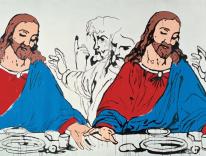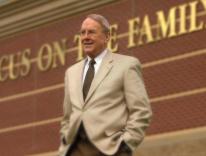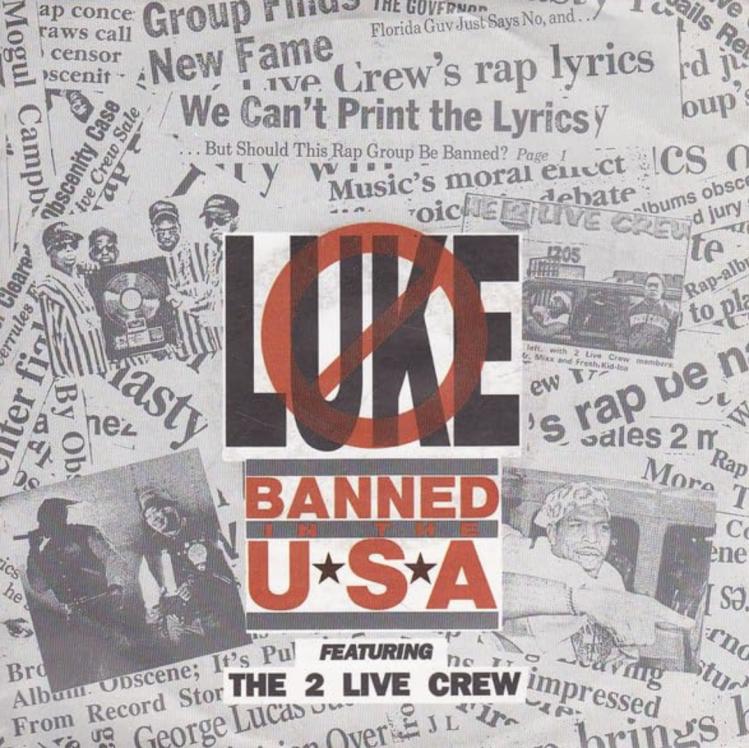
In June 1988, James Dobson, radio host and founder of Focus on the Family, rallied his listeners to protest a film he declared “the most blasphemous, evil attack on the church and the cause of Christ in the history of entertainment.” Never mind that he and the rest of a self-declared group of “offended brethren” had not actually seen the film in question, Martin Scorsese’s as-yet-unreleased The Last Temptation of Christ. All they’d experienced of the film was an outdated draft of the screenplay. Scorsese, raised Catholic, had repeatedly insisted that his adaptation of Nikos Kazantzakis’s 1955 novel was intended as an earnest tribute to his faith. Still, any movie that dared to imagine Jesus in sexual congress with Mary Magdalene, or kissed sensually by John the Baptist, was doomed to offend—and more to the point, to offend faith leaders who could rally followers to vote with their dollars and boycott both the film and the studio that produced it.
Heterodox art is, of course, nothing recent—Candide, Madame Bovary, and the complete works of Émile Zola were condemned by the Catholic Church. But in the last quarter of the twentieth century, art became lashed to financial, religious, and political power in unprecedented ways. In his fine book The Perfect Moment: God, Sex, Art, and the Birth of America’s Culture Wars, critic Isaac Butler revisits this period to better understand how provocative art, or art that a well-positioned person declares provocative, came to be leveraged for political power—a mechanism whose consequences we’re still living with.
Scorsese’s Temptation sparked a serious discussion about what a mainstream representation of Jesus should look like, but it can be easy to forget now how laughable some of the culture-war skirmishes of the late twentieth century were. The Simpsons was targeted by the George H. W. Bush administration not just as a gateway drug for juvenile delinquency but a potential cause of drug-abuse recidivism. “That’s not going to help you,” lamented drug czar Bill Bennett, spotting a Bart Simpson poster at a rehab center. A midsize municipality’s worth of law-enforcement and prosecutorial resources were wasted attacking 2 Live Crew’s 1989 album, As Nasty as They Wanna Be, a collection of sex raps. Bush’s vice president, Dan Quayle, famously threw a sack full of social ills at the feet of Murphy Brown, a fictional TV journalist who’d decided to raise a baby as a single mother.
Whatever you might think of “Don’t have a cow, man” and 2 Live’s track “Me So Horny,” it’s clear that the American republic survived the dangers they allegedly presented. Even if we accept that the fury against such works was sometimes expressed in good faith, it’s clear that the incidents had less to do with the nation’s moral standing than with exploiting art for political points. The art world, as Butler chronicles, came to be used as a factory for fundraising prompts by the likes of Dobson and Rev. Donald Wildmon, head of the American Family Association. Art also became central to voter-mobilization drives for culture warriors like North Carolina senator Jesse Helms.
To say the least, scapegoating art for social problems was a lamentable shift of legislative resources. But there’s no denying that it was effective public relations. By the 1992 presidential election, Butler writes, “even issues of police brutality, systemic racism, and poverty could be blamed on American art.”
Most of Butler’s attention is dedicated to ’80s and ’90s battles over the National Endowment for the Arts (NEA). Butler runs through the furors generated by artists like Andres Serrano, whose photograph Immersion (Piss Christ) was the best-known example of controversial work that had received public funds, albeit indirectly (it was an exhibit featuring the piss-immersed crucifix that received NEA funding, not Serrano himself). Likely alerted to the photo’s existence by a letter to the editor, Wildmon’s American Family Association distributed fundraising mailers focusing on the outrage. He also had the ear of Helms, who at that point was in his third senate term and had the experience and clout to begin scrutinizing the NEA’s policies, procedures, and very existence. Serrano’s argument that his work was no hollow provocation but a reckoning with his own Catholic upbringing fell on deaf ears. So, too, did the NEA’s argument that its use of art-world experts to determine grants was democratic, not abject cronyism.
When you’re falling in love, every song you hear sounds like a love song; during the summer months of 1989, every work of art seemed like blasphemy to Wildmon and Helms’s growing army of anti-NEA warriors. There was David Wojnarowicz’s image of Christ with a hypodermic needle in his arm. And then, infamously, The Perfect Moment, a touring Robert Mapplethorpe exhibition supported in part by an NEA grant. It featured a mix of elegant black-and-white portraits, still lifes of flowers, shots of Manhattan leather-scene figures, and photos of two children with their genitalia exposed (photographed with their parents’ consent).
The pressure campaign intensified with Mapplethorpe. The Corcoran Gallery of Art in Washington D.C. canceled the exhibit, and federal legislators moved to amend the NEA’s appropriation bill with language by Helms forbidding agency funds to be used in service of “obscene or indecent” works, including those featuring “sadomasochism, homoeroticism, the exploitation of children, or individuals engaged in sex acts,” or work that “denigrates the objects or beliefs of the adherents of particular religion or nonreligion.” The NEA was on the path to becoming the National Endowment for Nice Art, agency insiders lamented.
In retrospect, the moment can seem like a peculiar flare-up of right-wing contempt for secular society, set off by fundraising might and political clout, connected to an era when many Americans were discomfited by the AIDS crisis, race riots, and a cratering economy. But Butler smartly widens his lens to see this period as part of a larger throughline of right-wing Evangelical activism that started with comparatively small-bore protests. The Perfect Moment opens in 1974, in Kanawha County, West Virginia, where activists, upset at new textbooks selected for multiculturalism, shut down the school board’s typically pro-forma approval process. They succeeded, at least temporarily, in gagging any classroom conversations about controversial topics, and put a chill on textbook companies.
Kanawha, Butler writes, marks a key moment in the slow erosion of the “postwar consensus”—the sense that while Americans might disagree on the particulars, they all agreed on the importance of good-faith argument, religious tolerance, and free speech as a civic virtue. By the ’80s—and certainly by now—it should be clear that consensus was always shaky. The religious right, recognizing that its broader goals of classroom prayer, abortion bans, and draconian anti-LGBTQ laws could not be achieved through compromise, moved more aggressively post-Watergate, thanks especially to a savvy direct-mail operation led by Richard Viguerie and legislative parrying led by Helms. This accumulation and brazen seizure of power blindsided the left in 1974, Butler writes. “The liberal establishment’s inability to see [its] opponents for who they really were would haunt it for decades and lead to its undoing over the next forty years.”
The Perfect Moment suggests that we keep running through an absurdly well-worn routine. A citizen professes outrage over a film, book, or artwork; a right-wing religious organization takes up the cause with calls for donations and messages to legislators; a legislator attempts to punish whatever public institution can be blamed, be it a school, a library, or a federal agency. Meanwhile, progressive artists and agency administrators suffer from an extreme case of short-term memory loss, standing agape at the ritual every time they’re back-footed. By the end of 1989, Butler writes, “it had finally dawned on liberal arts advocates how well organized and deep-pocketed their opposition really was.”
But their inability to effectively counteract the opposition continued into the ’90s. Artists took their protest of the new NEA “decency clause” to the Supreme Court, and the Cincinnati Contemporary Arts Center defended its right to host the Mapplethorpe exhibition. During the 1990 trial over whether the center and its director, Dennis Barrie, had violated obscenity laws, the prosecution brought in an AFA affiliate who believed homosexuality had given rise to the Nazi Party. Defense attorneys openly called her an “idiot.” Fran Lebowitz similarly indicted the scolds Wojnarowicz was battling in his own suit: “You’re not going to change their minds. They don’t have minds!” Ridicule might have been an understandable response to some of the gambits deployed by Wildmon, Helms, Dobson, and more. But ridicule is not a strategy; it’s a reflex—one that right-wing critics have exploited to fundraise against out-of-touch brie-and-chablis snobs.
Frustratingly, Butler doesn’t explore in depth why the reflex to ridicule overwhelmed any effort to outspend, outlegislate, or otherwise outflank the scolds. Butler suggests that Bill Clinton, as president, was too much the glad-hander to get into a culture-war battle. The tensions around race and homosexuality would do the Democratic Party no favors. That, combined with the deregulation and media mergers his administration ushered in, only multiplied the reasons for timidity. Multinational media companies, with an eye on profit, became more risk-averse and lobbied to extend copyright protections, which made art less about innovation than whatever intellectual property they locked down. Meanwhile, today, Moms for Liberty promulgates attacks on school and public libraries, and its ginned-up accusations of Disney as a “grooming” operation are leveraged into anti-LGBTQ policies. Advocates for Serrano and Mapplethorpe might have been infuriated by the heckler’s veto, but the shabbiness of heckling cuts both ways. Late-night comedians mock the narrow-mindedness, but the fundraising and legislation continues apace.
The postwar consensus has given way to nice art, intellectual-property-driven remakes, and meme-mongers (many of them politicians) ready to dismiss the least artistic provocation as “woke.” The Trump administration is trying to turn an already defanged NEA into a hollowly patriotic institution concerned only with God-and-flag artwork. Butler can only throw up his hands in his conclusion: “It’s hard to see, at this moment, how we could possibly put these various Humpty Dumpties back together again. Or, as doing so is probably both impossible and unwise, what we should do instead.”
But The Perfect Moment does suggest at points what a different, healthier environment might look like. First, it makes little sense to take the bait. Entertaining conversations about the appropriateness of particular works of art made the NEA look like it had little faith in its own stress-tested processes. Letting itself be strongarmed into one compromise, it was soon bullied into a host of others. As Serrano said, “I thought that was a stupid move from the beginning. In giving in and acting like they had done something wrong, they just empowered politicians like Jesse Helms and Alfonse D’Amato and the others. They didn’t have my back. They didn’t have their own back.”
In addition to acquiring backbone, progressive art advocates might also have faith in the public. People will see through the sham protests and dismiss the kind of flimsy art it leads to. “The problem with propaganda is that most artists don’t want to make it, and the moment audiences know they’re encountering it, they become less susceptible to its charms,” Butler writes. This is playing out in real time. The purported vibe shift has been short-lived. Artists have abandoned Trump’s planned concerts; administration-adjacent social media feeds are polluted with embarrassing AI slop; and a mixed-martial-arts event on the White House lawn prompted eyerolls from all but the most slavishly devoted. The Trump School of Art requires no ridicule. People need only to see it to be disturbed by it and to recognize how, in many ways, they’re paying for it.
We welcome your comments about this article. Please send your response to [email protected].